
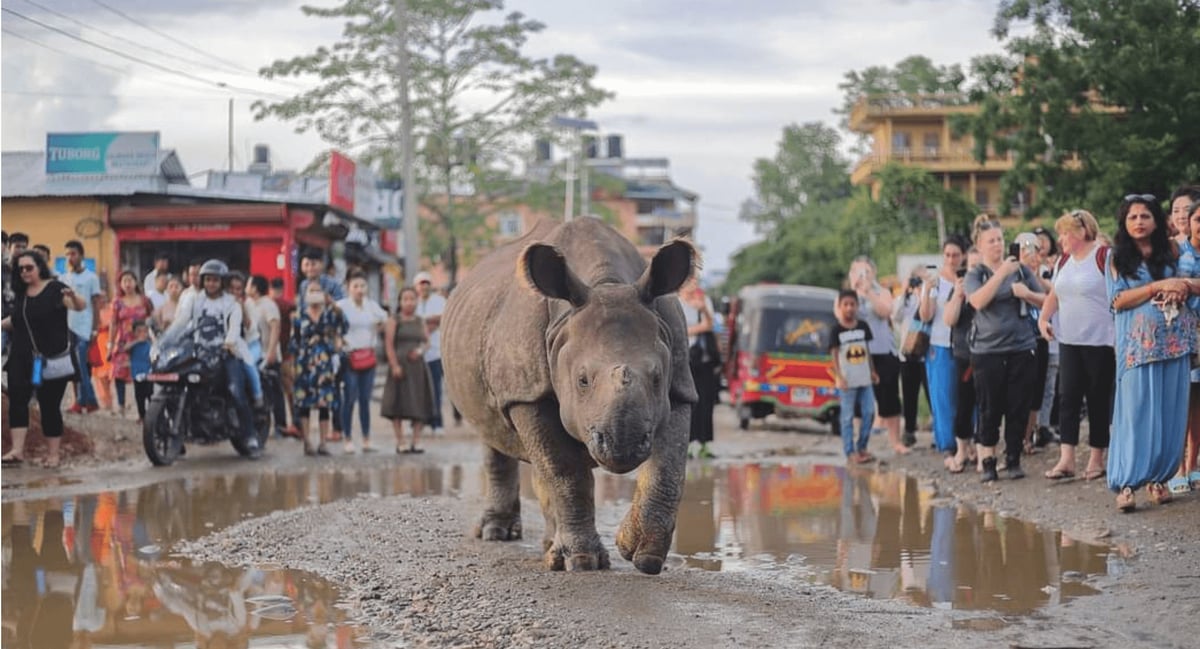
Rhino sightings in the wild used to be rare in Nepal. Not any more, nowadays videos of them coming out of ATM booths or patrolling the sidewalks in Sauraha often go viral on YouTube.
Tourists hashtag the videos with #OnlyInNepal, getting the country’s wildlife tourism much traction. But these visuals also underline new concerns about the conservation status of the endangered pachyderms.
The rhino population in Nepal was nearly decimated by poaching and clearing of the Tarai jungles in the last century, but have sprung back. Last week marked two years since a rhino was poached in Nepal.
These higher numbers mean that the national parks are getting crowded with rhinos and tigers, leading to more human-animal contact.
“When old, most male rhinos are pushed out by other young male rhinos. The old male rhinos then roam around the peripheral areas in search of food and safety,” explains conservation biologist Shanta Raj Jnawali of the animals seen out in the streets.
The greater one-horned rhinoceros was once found from Pakistan to Burma. Over the years, as human settlement expanded, encroaching on the habitat of the animals reduced rhinos to parts of India, Nepal and Bhutan.
The last rhino census in 2021 put the total number of rhinos in Nepal at 752, with most of them in Chitwan National Park, which has 694. Another 38 rhinos are in Bardia, three in Parsa and 17 in Shuklaphanta national parks.
The rhino census is undertaken every 4-5 years and the authorities were supposed to conduct a new one this year, but it did not go ahead because of budgetary cuts.
For any species to flourish, management of the ecosystem, food and water sources as well as forest cover for reproduction and protection are important. But the Tarai now has 53% of Nepal’s population and human-wildlife contacts have increased.
“Both humans and wildlife are dependent on nature. But we are the wiser species, so we must learn to coexist,” says Kamal Jung Kunwar formerly with the Chitwan National Park. “Rhinos almost never attack humans, unless they feel threatened or sense danger for their offspring.”