The B.1.617.2 strain of SARS-CoV-2 that started entering Nepal from India in early April first affected the border cities and districts in the plains, but is now spreading rapidly into the mountains and even the remotest villages.
From a rolling seven-day average for the past week of about 8,000 daily, Thursday’s caseload showed a decrease to 6,731 nationwide. Recoveries also rose to 7,226, exceeding the daily new infections for the second time this week.
The national infection rate has been pulled down by the decrease in the Tarai, but it is spiking dramatically in Nepal’s mountain districts, where health facilities are even more rudimentary. Most infections and fatalities in these remote areas are not even tallied, which means the official statistics are certainly an underestimate.
Rural Nepal fights back Covid-19, Masta KC
Even though the national total showed a drop on Thursday, for example, Kathmandu saw an increase of 500 over the previous 24 hours to 1,139 new cases. Similar increases have been reported in Pokhara, Surkhet, Okhaldhunga and even the remotest villages.
When the number of daily new cases in Kailali on the Indian border was 527 on 17 May, to the north in Achham there was only one new case. Now, the tables are turned. On Thursday, new cases in Kailali had dropped to 31, while Achham recorded 68 new coronavirus infections.
Similarly, while Kanchanpur in the plains saw only 45 new cases on Thursday, it had shot up to 86 in Baitadi. The daily caseload in remote Rukum West district has nearly doubled in the past ten days from 24 to 51, and from 21 to 47 in Dailekh.
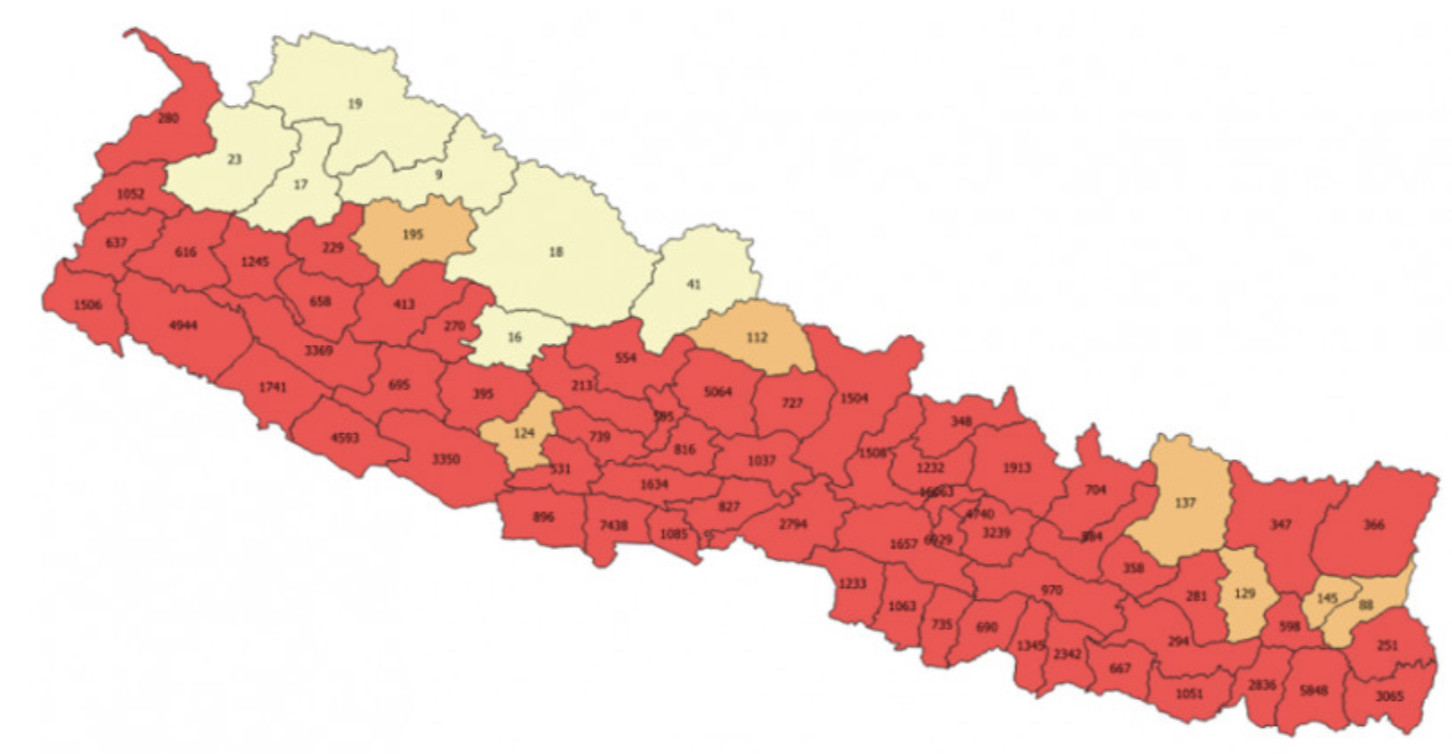
Banke, Dang and Rupandehi in Lumbini Province were all hotspots of Covid-19 till two weeks ago with hospitals overwhelmed with patients begging for beds and oxygen. This week, the infection rates are down and the virus has now moved to the province’s more northern districts. Rolpa had only 7 new cases on 17 May, but on Thursday it recorded 56.
However, despite the drop in cases in the plains, hospitals in the Tarai cities are still full because of critical patients in need of ICU and oxygen being referred from the mountain districts to the north.
Some of the increase in the mountains could be explained by the fact that more tests are being done there now, but public health experts say the positivity rate is also very high in west Nepal hinterland. In one village in Rolpa, 23 of the 25 people tested last week came out Covid positive.