We have all been taught in school that human beings communicate through only five senses: touch, taste, sight, smell and hearing.
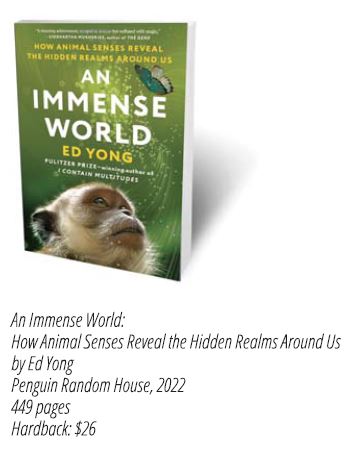
American science writer Ed Yong’s spellbinding new book An Immense World: How Animal Senses Reveal the Hidden Realms Around Us proves to us just how woefully limiting that definition is. It not only disregards other human sensory faculties, but also those possessed by the many species we share the planet with.
We refer to people who show a supernatural ability to communicate as having a ‘sixth sense’, but Yong weaves a fascinating tale of the scores of other ways that organisms perceive — charting their environment through echolocation, magnetic and electrostatic fields, vibration, air and water currents, and many other stimuli.
Read also: Microchipping Nepal's dogs, Aria Shree Parasai
After reading An Immense World, we will not think of ourselves and fellow animals great and small in the same way again.
‘Senses that seem paranormal to us only appear that way because we are so limited and so painfully unaware of our limitations,’ Yong writes, describing the mantis shrimp’s eyes that brim with 20 types of photoreceptors, allowing it to ‘see’ polarised light.
Other animals smell what they see, hear what they touch, and see the earth’s magnetic field. They use one or many senses to make sense of their world, their Umwelt.
The dog we worship at Kukur Tihar sees its marigold garland and the vermilion as green and yellow because of its dichromatic eyes, compared to the human trichromatic vision. We know dogs can hear sounds in a frequency range inaudible to humans, but they are probably also able to detect seismic waves that precede earthquakes.
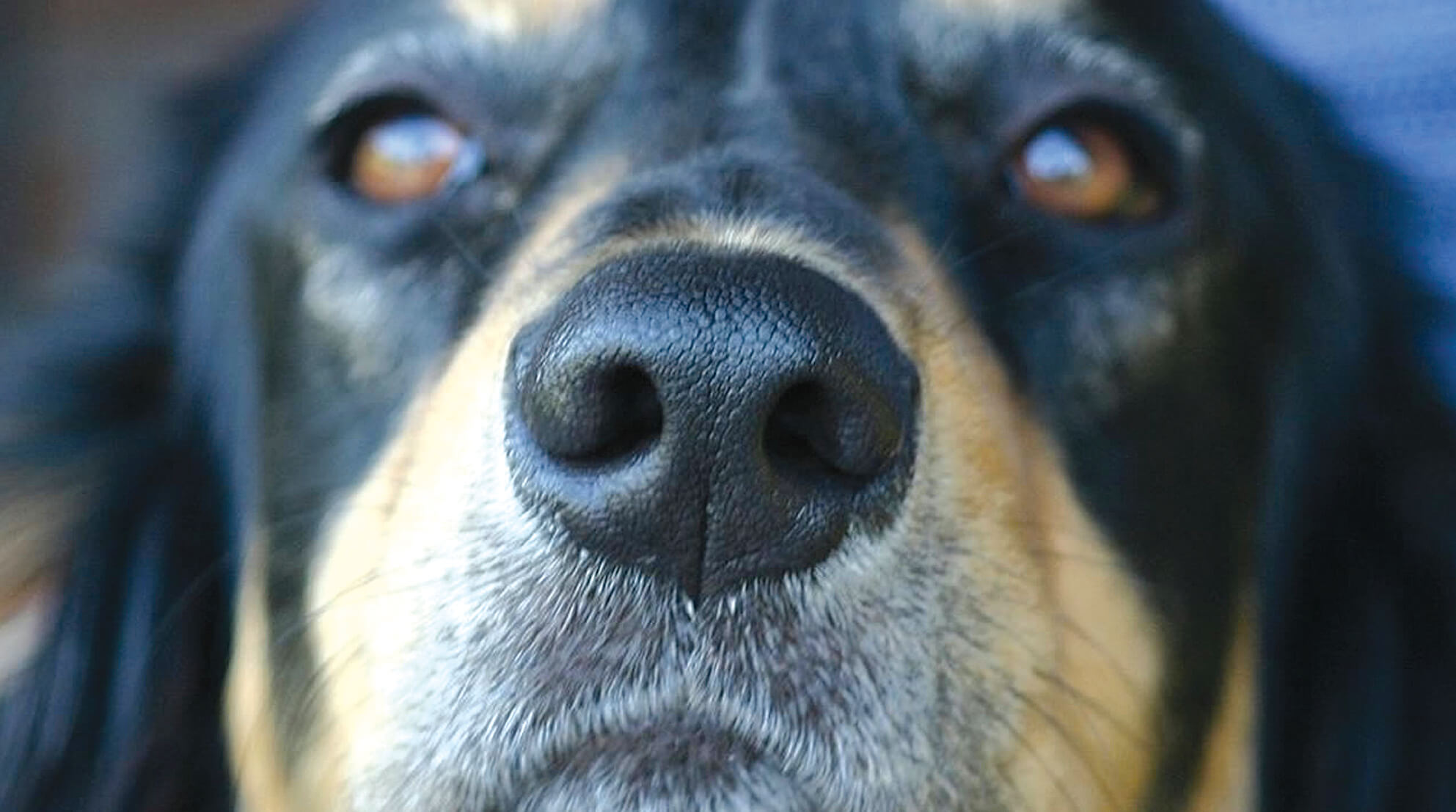
The dog’s nose scoops up odour molecules, sniffing six times a second through nostrils with side-slits that allows it to smell even while exhaling. Dogs' moist noses may even have inherited some of the infrared detection ability of their wolf ancestors.
Read also: Saving Nepal’s last dogs, Yadav Ghimirey
Ed Yong talked to hundreds of scientists around the world doing cutting-edge research on sensory perception. Besides our five senses, we humans also have the sense of balance (equilibrioception), awareness of our own bodies (proprioception), as well as sensations of pain and pleasure.
Other animals either have enhanced senses that we already know of, or means to perceive their surroundings that defy belief.
A rattlesnake uses its forked tongue to smell in stereo and turn its world ‘into a map and a menu’. We know bats use ultrasound echolocation to intercept insects mid-air, but scientists have found they use Doppler compensation of radar signals to chase moths.