
Pranay Limbu’s Urmi (उर्मि) opens with the early hours of dawn in Buddha Chok of Dharan. The sky is velvet black, crickets chirp in the background. Every once in a while, a motorcycle or a car rushes by and the screen turns momentarily bright, filled with the rattle of engines.
At the centre of the shot is a lonely house, its first floor bathed in an eerie yellow falling squarely upon figures that look almost alive from a distance. Slowly, the sun creeps in from all directions, signalling the start of another day.
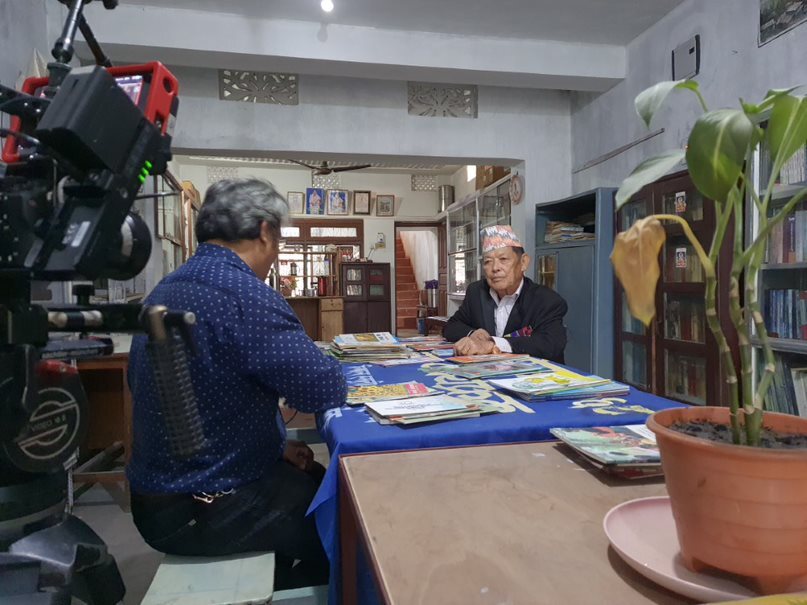
The house gains more colour, more features. A blue signboard at the top reads, ‘Late Poet Bimal Gurung Memorial Library’ in Nepali and English. Purna Gurung, can be seen walking about inside, arranging books. He pauses occasionally, his calloused hands run across the tables and the books, eyes rippling and wandering like pools of water in the monsoon.
Urmi is a story primarily of absence, where every note is sustained and every shot lingered. The protagonist is an ex-British Gurkha coming to terms with his son’s death 28 years ago. But there is no way the grief can be truly expressed, even after all this time. Purna Gurung says so himself early in the film: “I don’t know how to explain.”
Bimal Gurung, the son, was 20 when he died in a bus accident in 1991. Always abroad on duty, Purna never really got to spend time with his son and truly bond. So, he establishes the library in his son's name, as he was a voracious reader.
Purna also visits his old teachers and friends, flips through the family album, reads Bimal’s passionate and politically charged poems – all in an attempt to understand and build the character that was his son.
Shot in nine days over two years, the film is a strange blend of documentary and drama. Certain events, such as when a real estate broker from Kathmandu dressed garishly in denim struts into the library to try and buy it from Gurung, are the amalgamation of various middlemen who continue to try and coax Gurung into selling the property.