
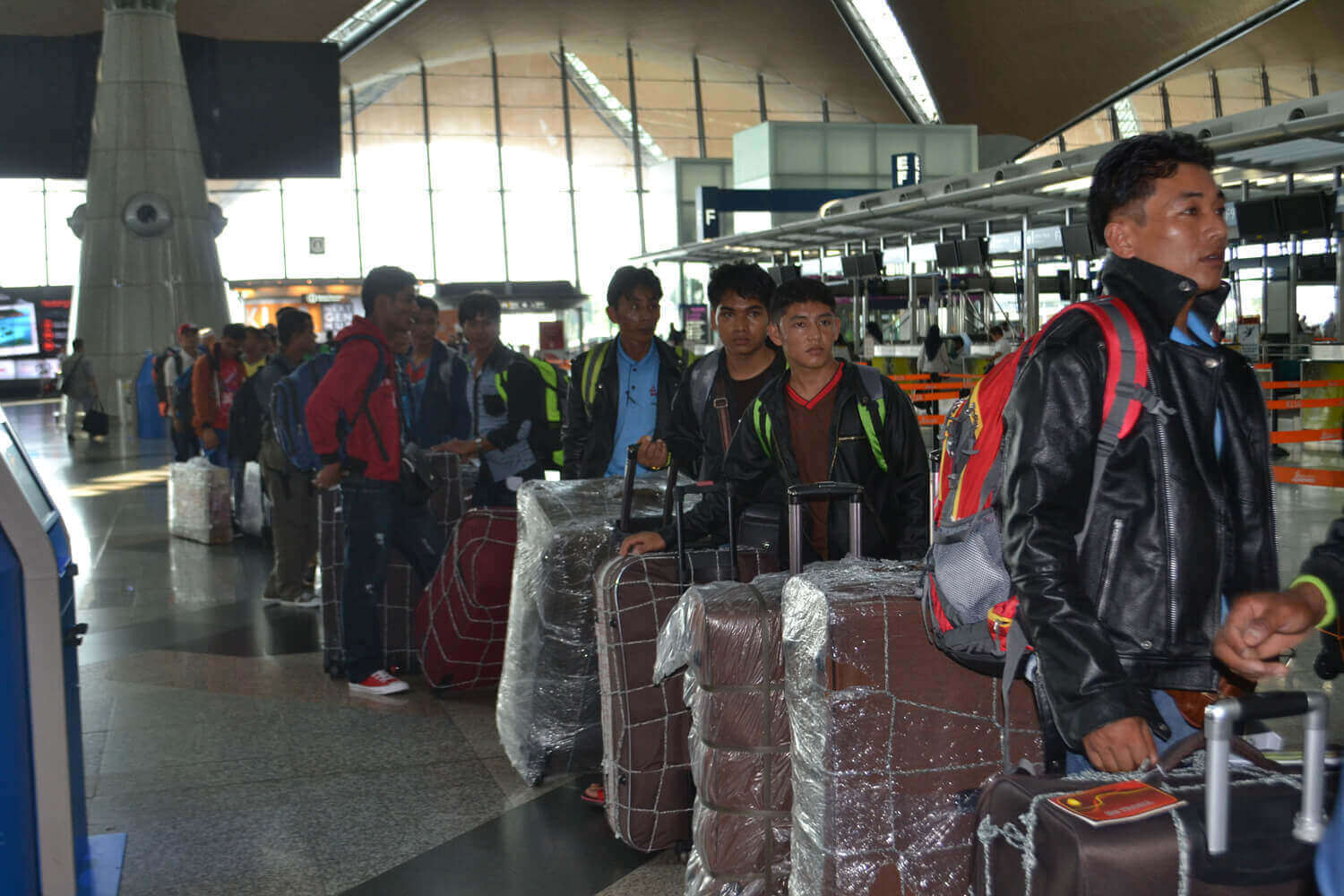
Another year, yet another May Day. As Nepal emerges from the ravages of the pandemic and the economic crisis created by Russia’s invasion of Ukraine, the role of remittances in supporting families and indeed the country’s economy is more vital than ever.
On this year’s May 1 Labour Day, Nepalis are also preparing to vote in local elections. But not the country’s estimated 4 million workers abroad who prop up the economy. They are still not allowed to exercise their Constitutional right to vote, even after the Supreme Court ordered the government in 2018 to make arrangements to facilitate absentee ballots.
Political leaders have ignored that ruling. Nepal’s main parties have made such a mess of governance that they sense (probably correctly) that the diaspora vote will be anti-incumbent.
And, as Tilu Sharma argues from Qatar, Nepal’s migrant workers know only too well the hurdles the government puts on their path, while using the money they send home to keep the national economy afloat.
The fight to be heard is even more challenging abroad where our workers, despite filling jobs not wanted by locals, in what are known as the ‘D3’ (Difficult, Dangerous, Dirty) are treated as invisibles.
In this Labour Day Special edition, Madhusudhan Ojha walks us through the struggle of the Migrant Worker Union in Korea to gain legitimacy. The pioneers of that labour movement included Nepalis who risked deportation and detention for better rights in a foreign land. Ojha’s experience shows the importance of collective bargaining, while also demonstrating how it is an ongoing and often thankless process with some of their demands the same as what it was decades ago.

If this is the situation in one of the better-run bilateral migration programs, it is not difficult to imagine how Nepali workers are treated in other destinations like Qatar, the UAE, Saudi Arabia, Malaysia, or India. In most of these places, migrant workers are banned from unionising.
UAE resident and journalist Umakanta Pandey is currently in detention, not for criticising the Emirati government but on a complaint by the Nepal Embassy for posting about visit visa misuse that put workers at risk. When a Nepali citizen is serving time in the UAE at the request of a Nepali state organ, how can we expect Singha Darbar to be more vigilant about protection of our overseas workers?