
A little more than one month into its six-month term, Nepal's interim government recalled ambassadors from 11 countries: China, Japan, Malaysia, Qatar, Saudi Arabia, Israel, Russia, Spain, Germany, the UK, the US, and Japan.
Mostly appointed by previous governments, they have to return to Kathmandu by 6 November. The envoys who were retained, even if they were political appointees, tended to be women or from various ethnic minorities.
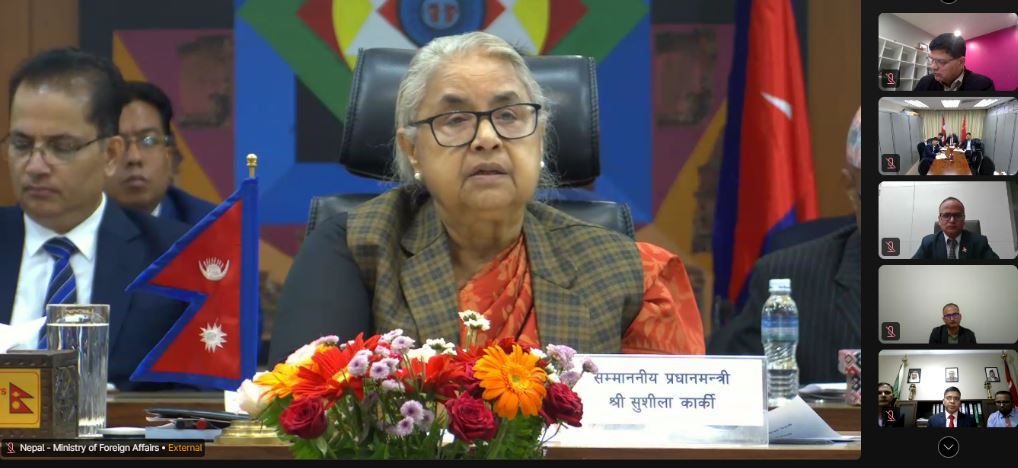
The recall has met with criticism back home. Prime Minister Sushila Karki is blamed for borrowing a page out of its predecessors’ playbook. Although it was a symbolically inclusive move in a diplomatic corps dominated by established groups, the government may have got its timing wrong.
On Sunday, however, the Supreme Court issued an interim order against government decision to recall the 11 ambassadors. The court questioned the neccesssity and justification of such a move, concerned that it could affect Nepal's relations with the host countries.
Karki has said her priority is to hold elections in March, and by recalling Nepal’s emissaries from important capitals like Washington, London, Bonn, Tokyo, Abu Dhabi and Kuala Lumpur her government has cut channels of communication and support from development partners and with the international community.
Nepal’s anti-corruption GenZ protest and the devolution of the youth movement into arson, looting, and violence after the targeted killing of protestors in September put the nation in the international spotlight. And the interest was especially keen in neighbouring New Delhi and Beijing.
The Nepal unrest has sparked similar protests across the world from the Philippines to East Timor, Madagascar and Peru. But there is also worry in India where exposure of #nepokids on social media as well as corruption in high places could instigate copycat youth unrest.
And in China, there is still a lingering memory of the deadly protests in 1989 Tiananmen Square. But the Chinese also suspect that some in the GenZ movement have links to free-Tibet.
Foreign policy experts in Nepal reject conspiracy theories about foreign backing for the GenZ, characterising it as mostly triggered by home-grown outrage over chronic corruption of the governing elite.
Throughout its history Nepal has always had to balance the geo-strategic interests of its neighbours: the British in India and the Chinese Empire, and more recently independent India and Communist China.
When former PM K P Oli resigned, he had just returned from a visit to Beijing and was a week away from making an official visit to India. A new Nepali prime minister typically makes the first visit to India, but Oli broke that tradition last year by going to China to sign the Belt and Road Initiative (BRI) framework agreement.
"Oli was China's trusted partner supporting Nepal’s participation in BRI and SCO (Shanghai Cooperation Organization)," says geopolitical analyst Sanjay Upadhya. "Now, some in Beijing are apprehensive that there is external support for the youth protests that contributed to Oli’s sudden departure. It is perceived as a strategic setback for China."