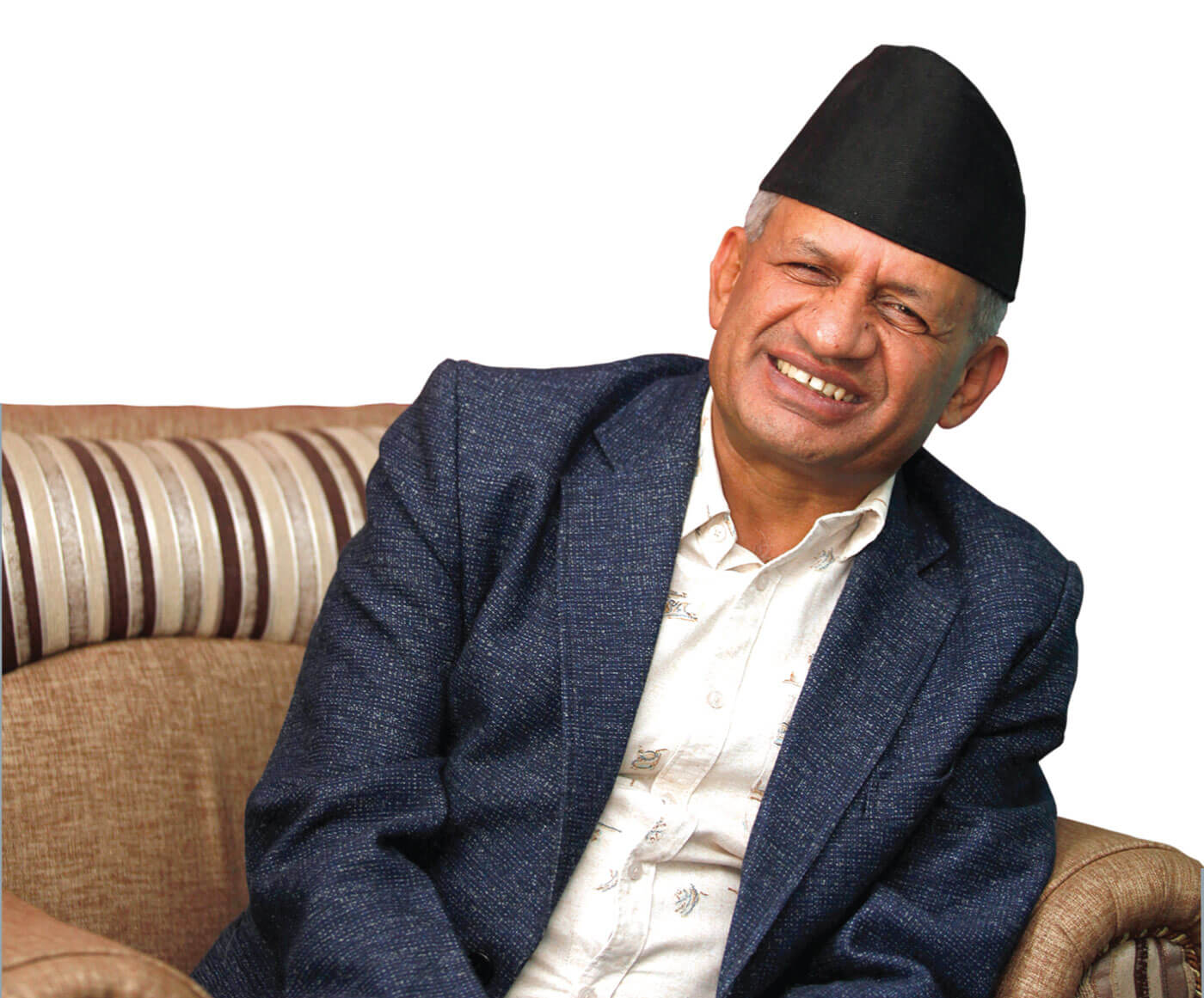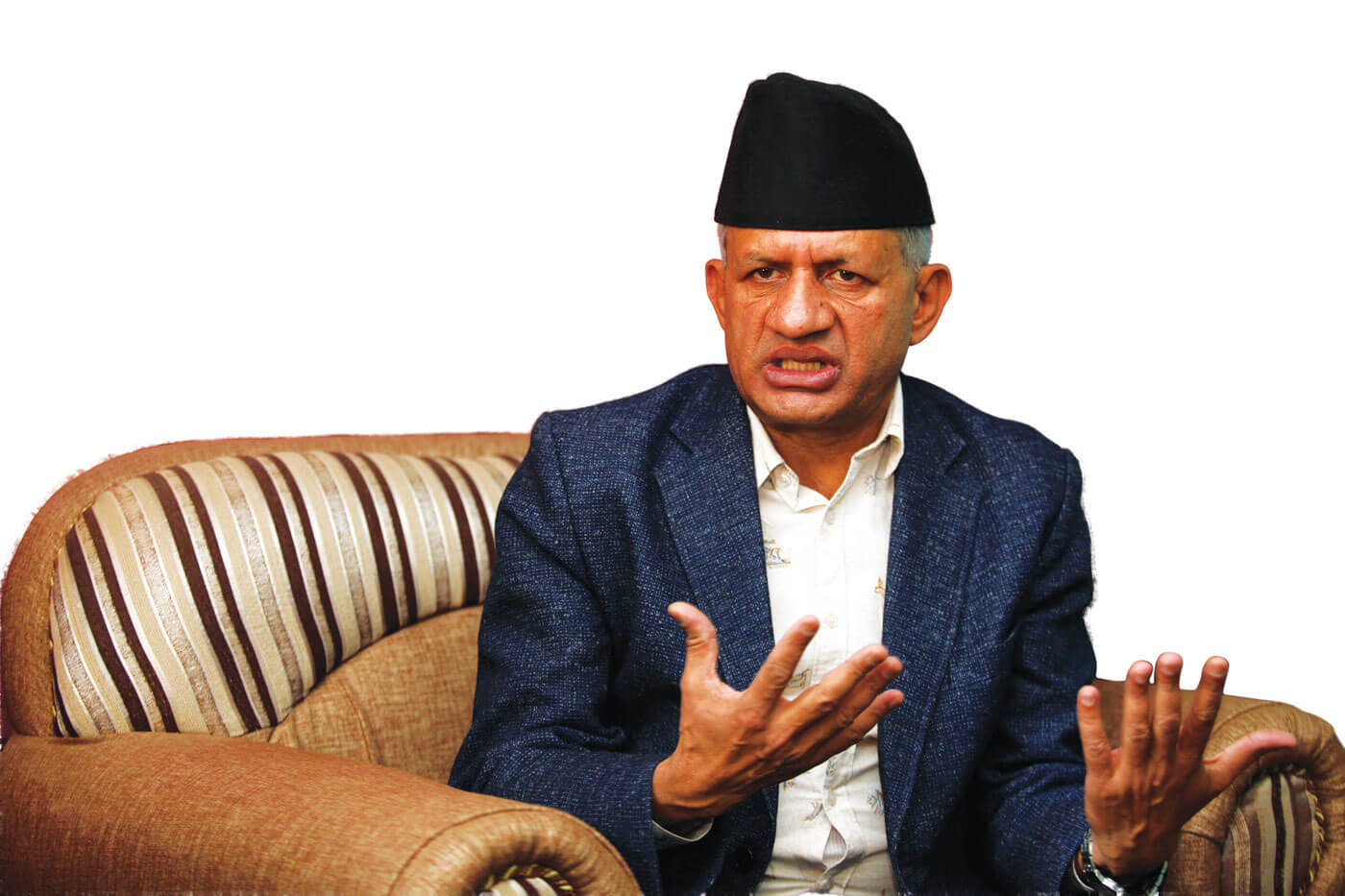
When Nepal’s politicians were asked to list their assets, many disclosed property, bank balances and jewelry. Among his possessions, Nepal’s well-read Foreign Minister Pradeep Gyawali declared that he owned 2,500 books. The soft-spoken Gyawali now has the responsibility of steering the country’s foreign policy at a time of heightened geopolitical polarisation in the region. Sound bites from an interview this week:
- Nepal used to be a back-bencher in international fora. Now we are being seen and heard. The Prime Minister’s participation at Davos and hosting the BIMSTEC Summit in Kathmandu has raised Nepal’s international profile.
- It could be that some cannot digest Nepal’s higher international engagement and are uneasy about it. But there is no question of Nepal ever joining any strategic alliance.
- We look at our own national interest, and we also try to make sure that our decisions and involvement do not hurt the interests of our neighbours, development partners or other friendly countries.
- Our long-term foreign policy goals have not changed, but we are trying to adapt to new geopolitical realities by analysing them and formulating new policies of engagement.
- We want to benefit from the economic growth and development of our two neighbours.
- We are conveying to China and India that a prosperous and stable Nepal is also in their interest.
- We are telling our development partners that Nepal is a safe country for foreign investment, from where it is easy to export to other countries.
- We are very sensitive to the fact that 4 million of our young men and women are working abroad and through diplomacy we want to ensure their security, rights and respect.
- In the 1990s and 2000s many Latin American countries went nearly bankrupt and had to be bailed out. It was not called a ‘debt trap’, none of them had loans from China.
- If it is in the national interest, we can take not just aid, but also loans. But if it is against our interest, we will not even take assistance.
- The suspicions about the Indo-Pacific is a storm in a tea cup. Our Chinese friends are not really worried, they are sure that Nepal will not allow anti-Chinese activities.
- We do not lean more or less on any one side. We don’t try to compare the relationship we have with our two neighbours.
"Nepal has spread its wings"
Full Interview with Minister of Foreign Affairs Pradeep Gyawali
Nepali Times: There have been transformative changes in international diplomacy and geopolitics. But Nepal seems to be stuck.
Pradeep Gyawali: Every country has a set of long-term goals, and some flexible policies that change with the times. Nation states have permanent values like sovereignty, territorial integrity, dignity and independence. These beliefs do not change with changes in governments, they do not even change with a change in governance systems. Our adherence to the concept of panchashila, or the United Nations declaration does not change. That is why we also look into our fixed goals and immediate policies based on changes in international and regional relations. We have adapted to new realities from the standpoint of our national interest.
Will this be enough for Nepal to reach its goal of being a middle-income country in the next ten years?
We have to keep in mind global changes, and specifically the geopolitical, economic, demographic changes in Asia. We have to adapt to the fact that our two neighbours are moving forward rapidly. For this, we do not play favourites, or let our relations with one country be at the expense of another. We want to benefit from the economic growth and development of our two neighbours. We are conveying to China and India that a prosperous and stable Nepal is also in their interest. We are telling our development partners that Nepal is a safe country for foreign investment, from where it is easy to export to other countries. We are very sensitive to the fact that 4 million of our young men and women are working abroad and through diplomacy, we want to ensure their security, rights and dignity. And we will extend our involvement and cooperation with multilateral agencies.