- Two years ago after going through a bad relationship, a 36-year-old Kathmandu-based doctor started getting suicidal thoughts. During the long months of lockdown, he would be on the rooftop and imagine jumping off to end it all. But before long he realised that he was causing self-harm, and sought help. He was diagnosed with depression, eight months into treatment he is rid of suicidal thoughts and is back to his outgoing ways.
- The bubbly young woman used to be the life of every party, but few of her friends and relatives realised what was going on inside her mind. As the pandemic hit, she started having violent thoughts about harming others and herself. The 22-year-old tried to deal with it herself, but two months ago she sought help from a mental health doctor. She was diagnosed with Obsessive Compulsive Disorder (OCD) and started treatment. Looking back, she advises others to also seek professional help in time.
- The young woman felt worthless, lacked confidence, avoided crowds and had self-inflicted cuts on her arm. Her inability to come in terms with her sexuality aggravated her sense of insecurity. When the pandemic foiled her plans, she blamed everything on herself, she felt irritated and uncertain, stopped attending virtual classes and her eating habits changed. She finally sought help for her depression and she is now under regular psychiatric counselling and medications. Grounding exercises in particular have helped her overcome self-harm and feelings of inadequacy. “I am okay now,” she says.
As the pandemic turns lives upside down, there has also been a global outbreak of mental health disorders, and Nepal has reported a rise in suicides. However, as these cases show, professional counselling and medication can save lives.
Recoveries rarely make news, only suicides do.
“Most of my patients who attempted suicide have gone on to lead normal lives after they get treatment, and oftentimes they look back to their mental health crisis as nothing more than a lapse of judgment,” says psychiatrist and researcher Rishav Koirala.
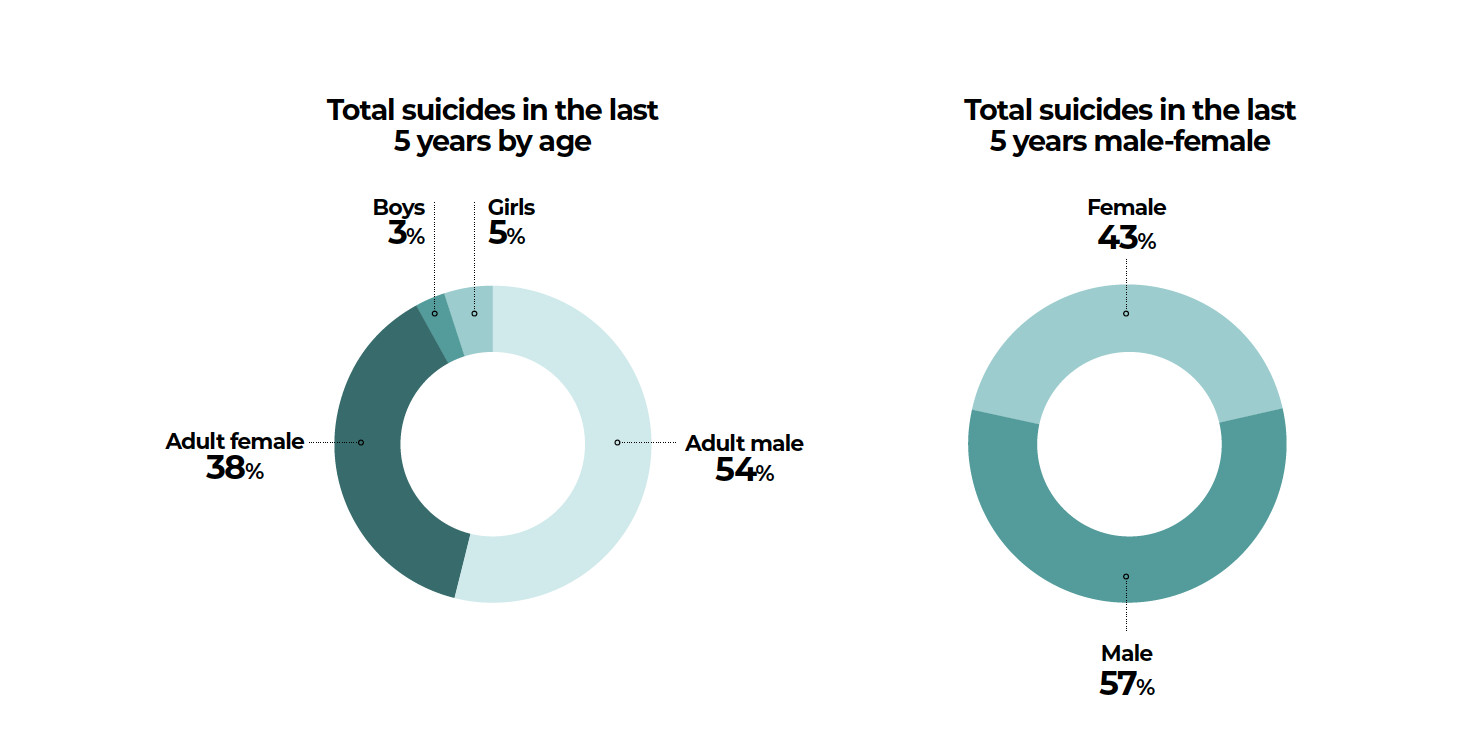
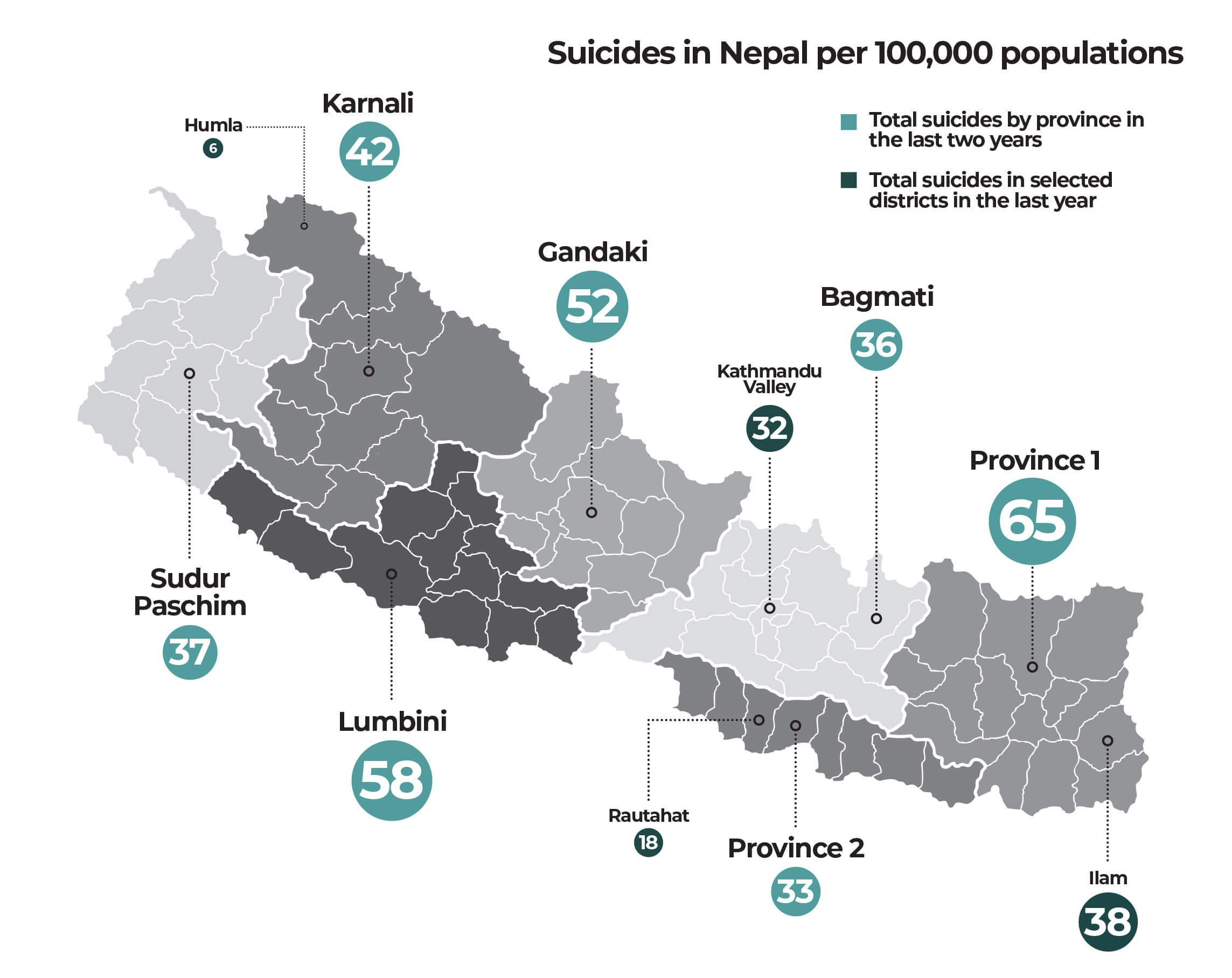
There has been a sharp rise in suicides in Nepal since the Covid-19 pandemic in March 2020 and subsequent lockdowns. Nepal Police data shows that in the last 12 months, there have been 7,141 reported deaths due to suicides nationwide, up from 6,252 the year before.
Do not shy away from seeking help. If you, or anyone you know, would like to speak to a trained mental health professional, please contact:
TUTH Suicide Hotline: 9840021600
Transcultural Psychosocial Organisation-Nepal Crisis Hotline: 1660 0102005
Mental Health Helpline Nepal: 1660 0133666
Centre for Mental Health and Counselling Nepal Toll-free: 16600185080, Hotline: 1145
Koshish Toll-free helpline: 166001-22322 (Bagmati Province)
Patan Hospital Helpline: 9813476123
National Suicide Prevention helpline operated by Mental Hospital Lagankhel and TPO: 1166
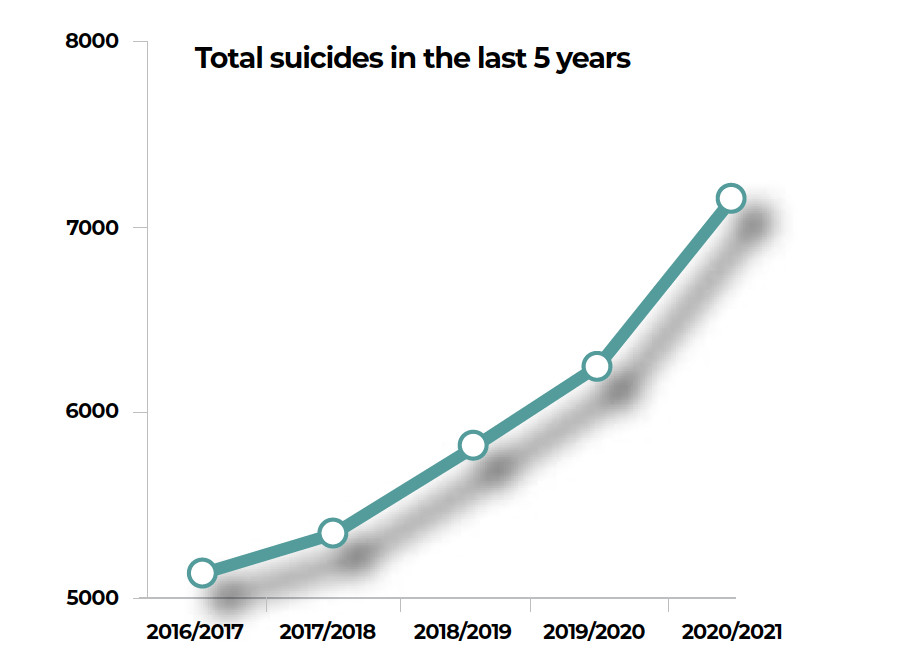
In a survey last year, Transcultural Psychosocial Organisation (TPO) Nepal which works with mental health compared five years of suicide data for March-July to see if there was any change during the lockdowns in 2020 and 2021.
The results are revealing: suicides have been increasing steadily at an average rate of 8.5% every year, but it spurted to 19.4% in the first four months of the lockdown. Researchers also conducted key informant interviews across Nepal, who reported witnessing an increase in suicidal behaviours in the community as well as health facilities.
“We now have both quantitative and qualitative evidence that mental health problems have increased following the pandemic,” says TPO Nepal’s executive director Kamal Gautam. “And given that the majority of suicides are caused by psychological problems, we can say that Covid-19 has significantly contributed to its increase.”
Mental health professionals have long been warning of an epidemic of psychological disorders following the Covid-19 crisis. They have reported an increase in anxiety, depression, post-traumatic stress disorder (PTSD), hypochondria, obsessive disorders and psychotic symptoms among the general population in the last two years.
Economic collapse, job loss and slashed income due to the pandemic as well as increased domestic and sexual violence and added workload during the lockdowns have all acted as contributing factors. In addition, those afflicted do not have normal social interactions that used to be a safety valve during more normal times.
Moreover, many patients on treatment and medication have relapsed due to the limited access to health services, counselling and psychotropic drugs during the pandemic, and in many cases because of Covid phobia.
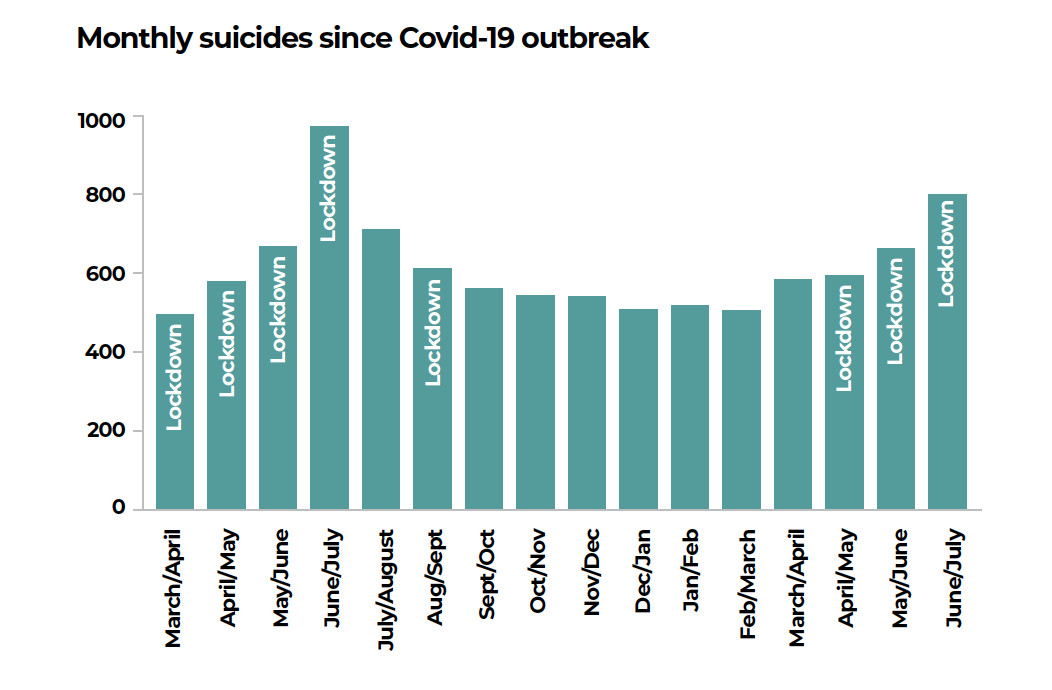
Up to 80% of suicides have mental health disorders as an underlying cause. A significant portion of cases are also a result of impulsive behaviour.
Experts agree that the official numbers on suicides are vastly underestimated due to a lack of suicide registry. Official figures are based solely on police data and post-mortems, and because of stigma associated with mental health, many families also often refrain from revealing the actual cause of death.
Official records also do not take into account suicides of Nepali migrant workers overseas, mainly Malaysia and South Korea. Similarly, suicides among those in the LGBTIQ community who have lost their limited sources of livelihood during the pandemic have been largely neglected.
“Reported cases alone are not conclusive, but given that we now have a year and a half long trend and data, we have seen a significant increase in mental health disorders, and can assume that pandemic has played a crucial part in the rise in the number of suicides,” adds Rishav Koirala.
More than 700,000 people die by suicide every year around the world, that is one in every 100 deaths -- more than HIV, malaria, breast cancer, or war and homicide. And for every suicide, there are many more who make attempts to end their lives.