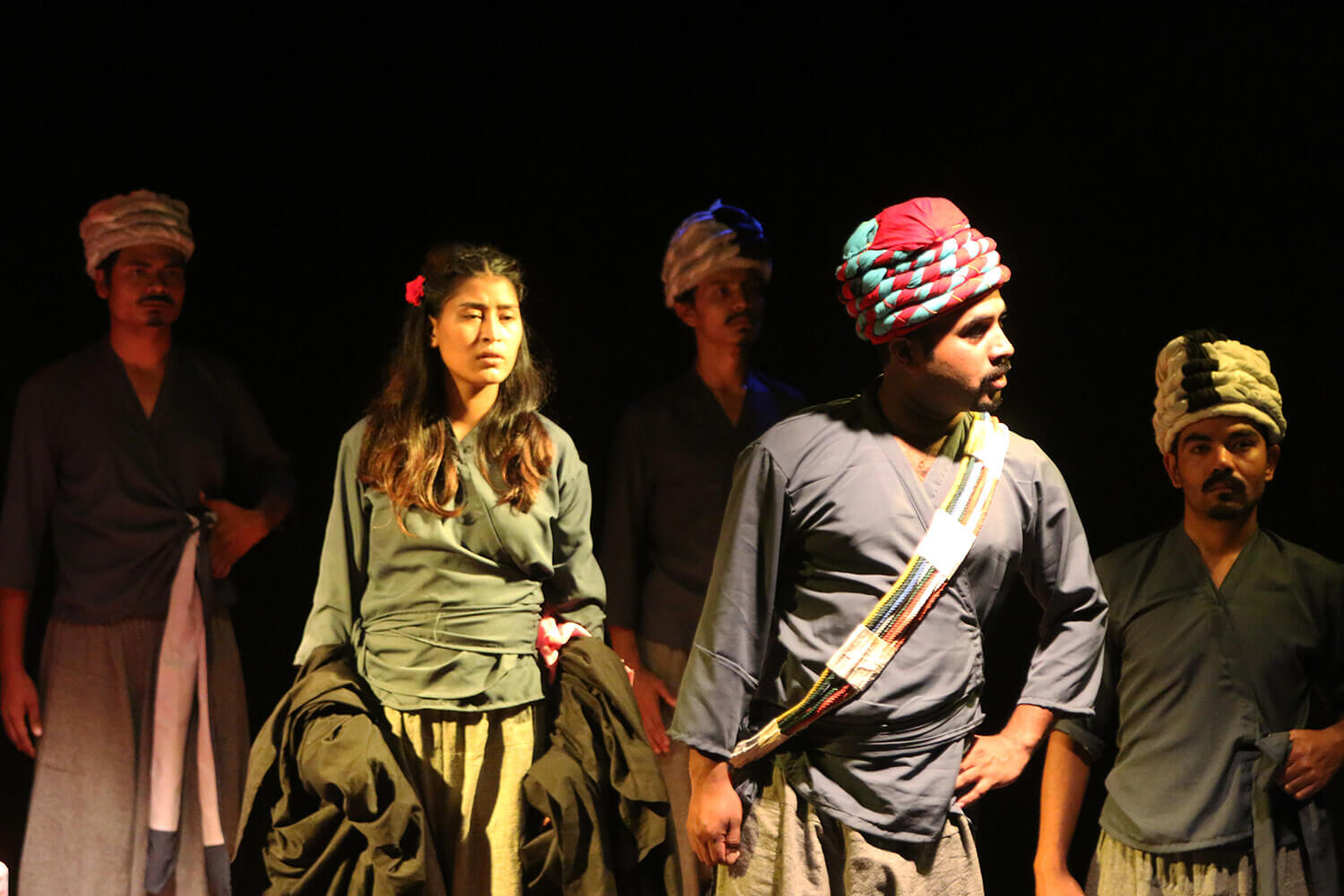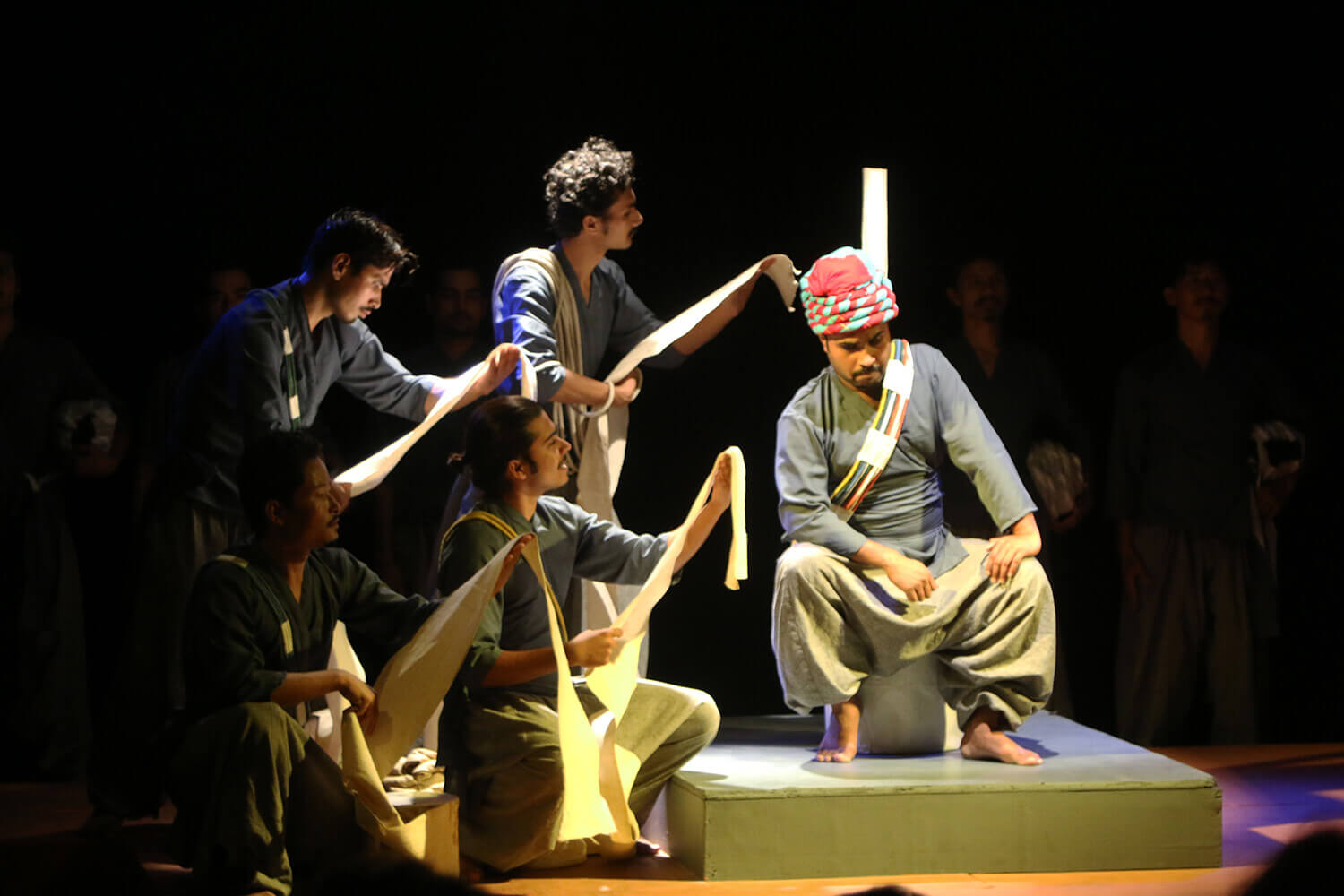
After staging plays by foreign writers, Mandala Theatre has forayed into an original Nepali folktale, with a sharp contemporary socio-political message.
Jalini is a short story in Dhruba Satya Pariyar’s book Kairan that was shortlisted for this year’s Madan Puraskar, and adapted by the author and director Dayahang Rai into a play that is a satire with a message of inclusion.
An arrogant king wants to stand out in history, and is told he will do so only if his daughter makes a sketch of him. He imprisons her in a palace so that she can see no other man.
The folktale of Rapunzel springs to mind. Even the Buddha was confined to his palace so that he could not see the sufferings of the world. But, as expected, the unseen holds the most fascination, which is what happens to Jalini.
Read also: Highway, Sophia Pande
Degree Maila, Sunir Pandey
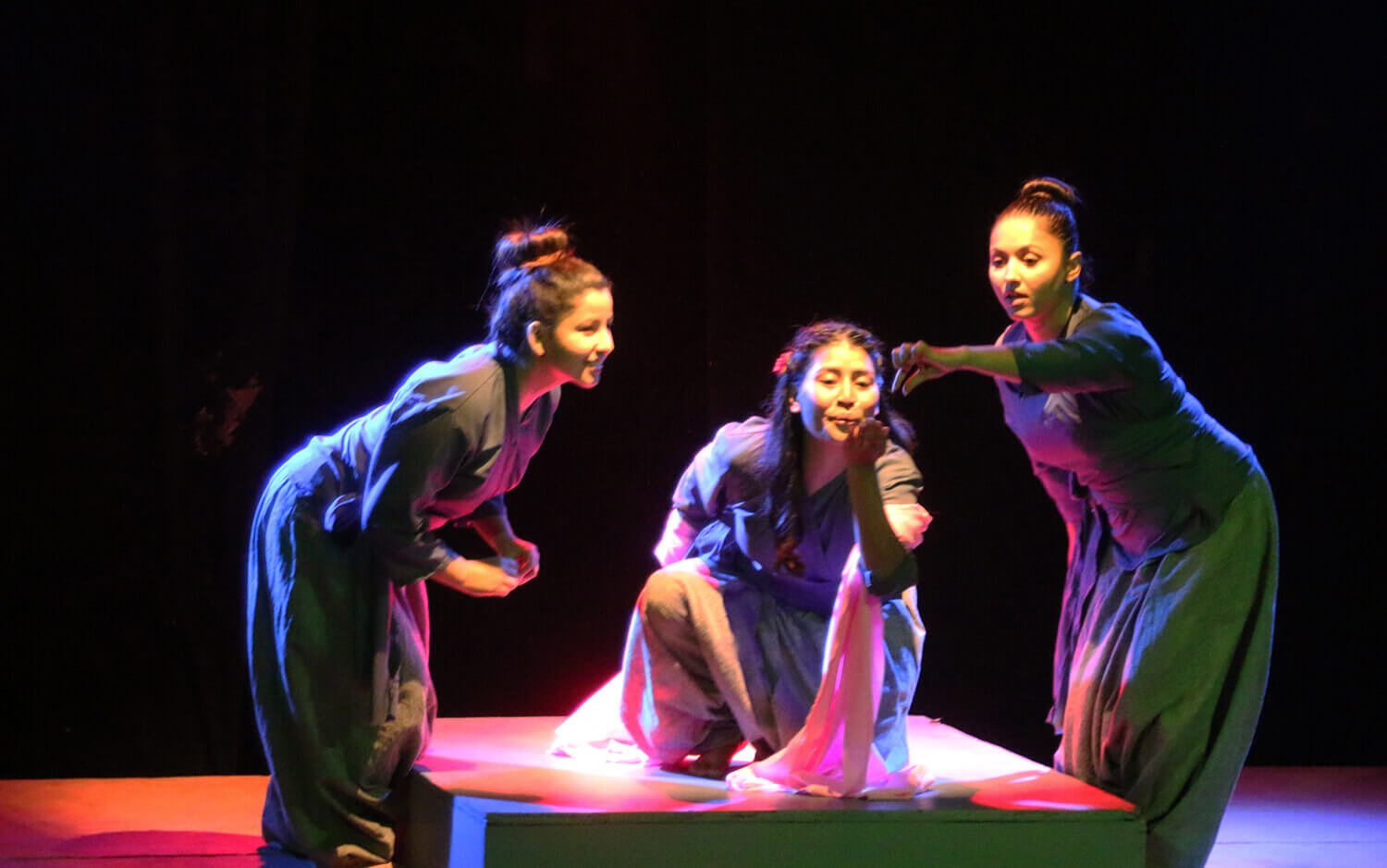
Jalini's story attempts to trace how the imprisonment of women in homes leads to their subjugation, and secondary place in society. It is not just Jalini's body that is confined, but her heart and mind as well. And this just to satisfy the whims of a king unhinged with power. Jalini is not just a princess but a symbol of womanhood, and you will have to go watch the play if you want to find out if she finally breaks out of her confinement.
The stage is taken up by a powerfully choreographed movement of the kingdom’s good citizens labouring to construct a palace for Jalini. A woman named Jaljala (so named perhaps to remind us of the mountain in Rukum that became a symbol of the Maoist revolution) speaks out boldly against tyranny, and the plot thickens as Jalini is brought to confront a world she had never seen.