
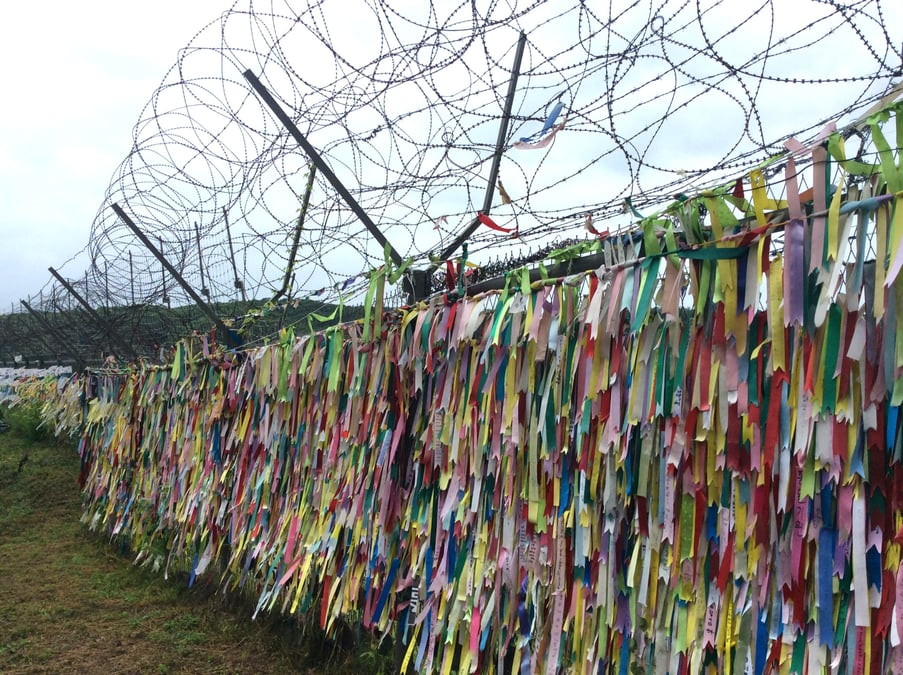
The armistice agreement that ended the Korean War in 1953 has been mentioned as a possible model for how to end the fighting in Ukraine. This makes sense. The Trump administration, however, seems to opt for a quick deal like the 1973 Paris agreement on Vietnam or the Minsk agreements of 2014–15, combining “ceasefires in place” with vain prospects of subsequently reaching a genuine peace agreement.
One lesson from the negotiations that led to the Korean armistice is that patient diplomacy is needed to end a stalemated war. When talks began in July 1951, the impatient Mao Zedong estimated that two weeks would be enough to conclude. The negotiations instead took two years.
The result was a long text, detailing the exact border line and establish a demilitarised zone across the peninsula under UN supervision. The stated intention was to follow up with a peace agreement. This came to nothing. The conference established for the purpose in Geneva decided instead to reach an agreement on Indochina, dividing Vietnam for the next 21 years and replacing the French with American military forces.
The biggest difference between the Korea and Ukraine wars is that the Ukrainians are fighting alone, with only external military support, while the Korean War was primarily fought by American and Chinese forces on Korean soil.
Back then, the armistice agreement was concluded by the commanders of the US-dominated UN forces, the Chinese “volunteers”, and the North Korean army, against the wish of Syngman Rhee’s government in Seoul. He wanted to continue the fight for national reunification. Only after being offered a defence pact with the US did he accept the negotiated outcome, yet did not sign the agreement. South Korea has never signed the armistice that has prevented new outbreaks of war.
The key similarity between the Korean and Ukrainian wars is the prominent role of the USA as a supporter of the governments in Seoul and Kyiv. In both cases a condition for ensuring that an armistice can hold is that the US take responsibility for any agreement and joins up with others in providing security guarantees.
Read also: Is the time ripe for an end to the Ukraine war? Herbert Wulf
A key reason why war has not resumed in Korea for the last 72 years is the continued US presence in the south. American troops act as a "tripwire," ensuring that any North Korean invasion would lead to a war it would surely lose. For the same reason, the US needs to have boots on the ground in Ukraine.
Another similarity is that any attempt to conclude a genuine peace agreement is futile. A genuine peace in Korea would require that North and South agree either on national reunification or on recognising each other as independent states, just as East and West Germany did in 1973.
A peace agreement was even more unthinkable for Syngman Rhee and Kim Il Sung in 1953–54 than it is for Seoul and Pyongyang today. It is just as inconceivable that President Vladimir Putin will withdraw voluntarily from Donbas and Krym as it is for President Volodymyr Zelensky to conclude a definitive peace agreement that does not recognise Ukrainian sovereignty to its entire territory.