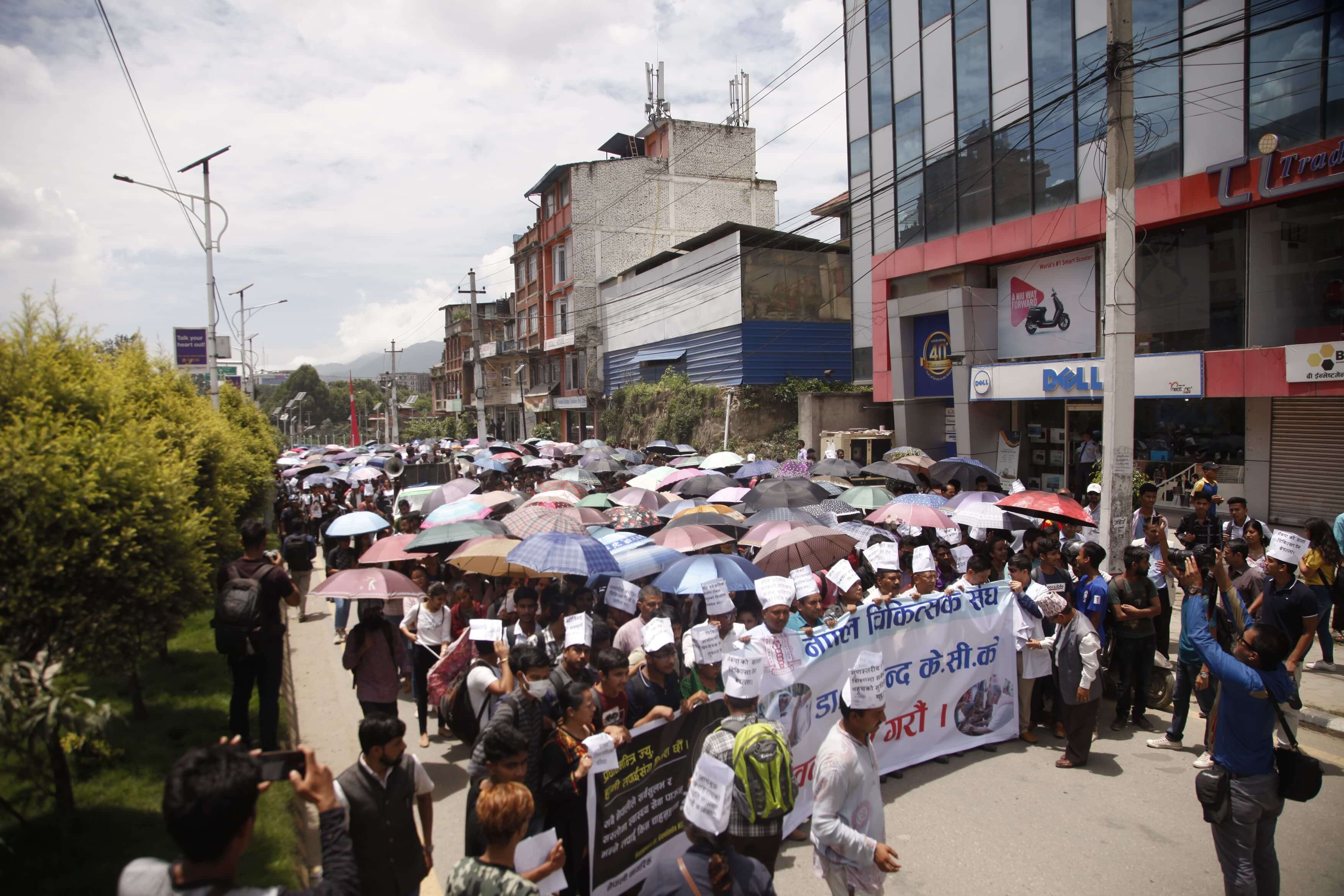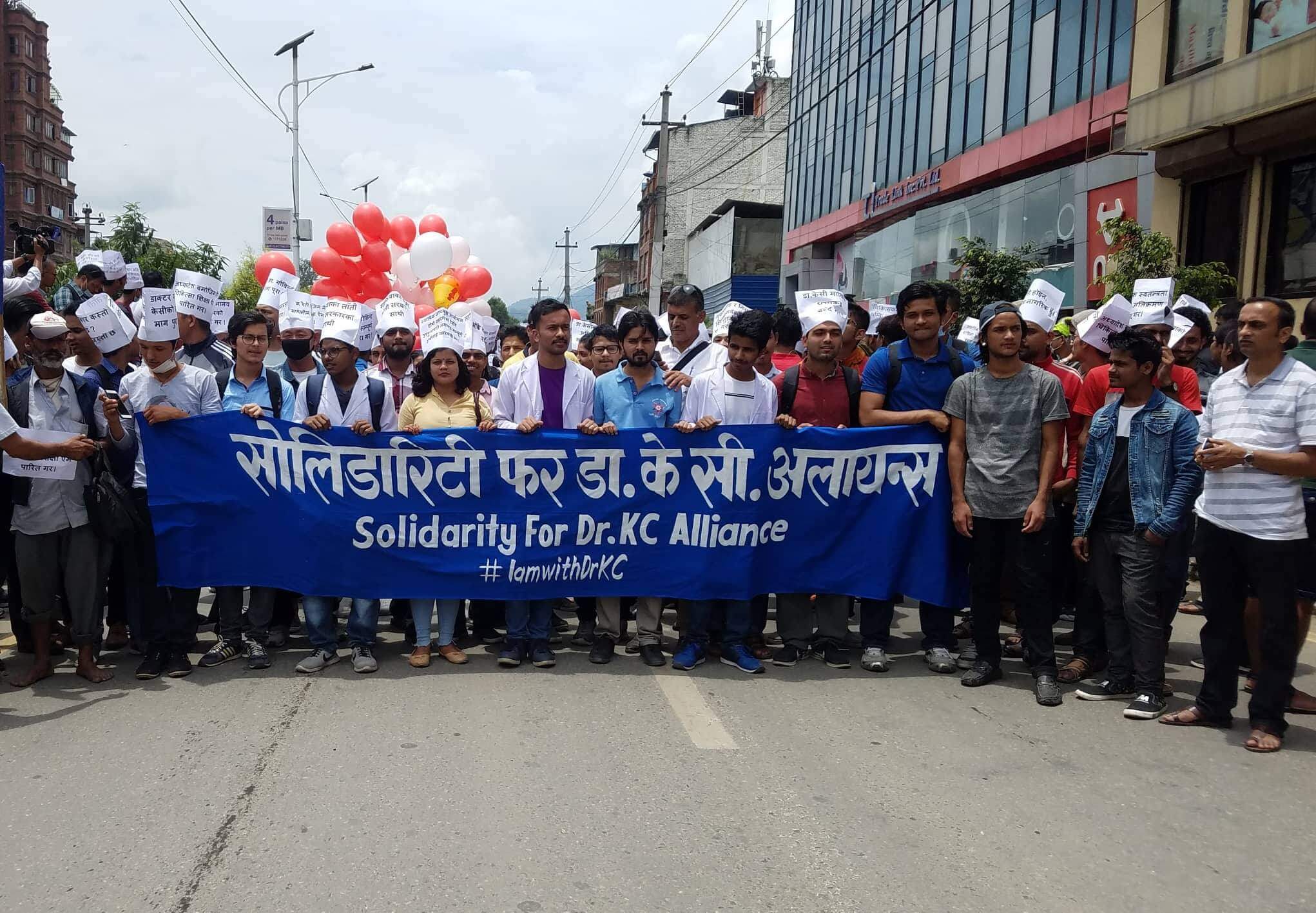
Medical care should be affordable and accessible to all. In one sentence, that is all Govinda KC wants on behalf of Nepalis.
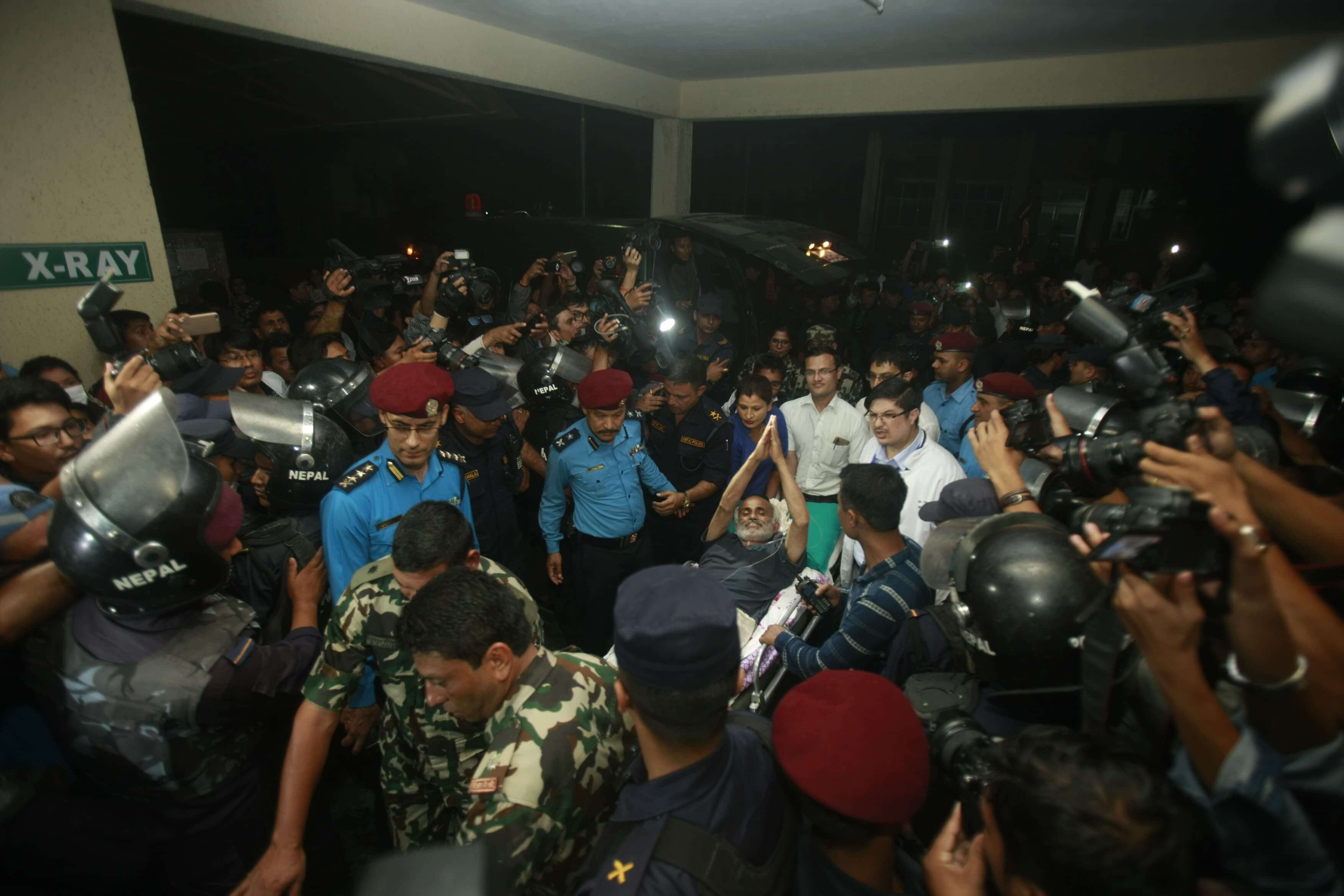
On Thursday, the government ordered police to use force inside a Jumla hospital where KC was on the 20th day of his hunger-strike demanding an end to commercialisation of the medical sector. Local administration admitted to media that it spread rumours that a policeman had been killed to convince KC to agree to go to Kathmandu.
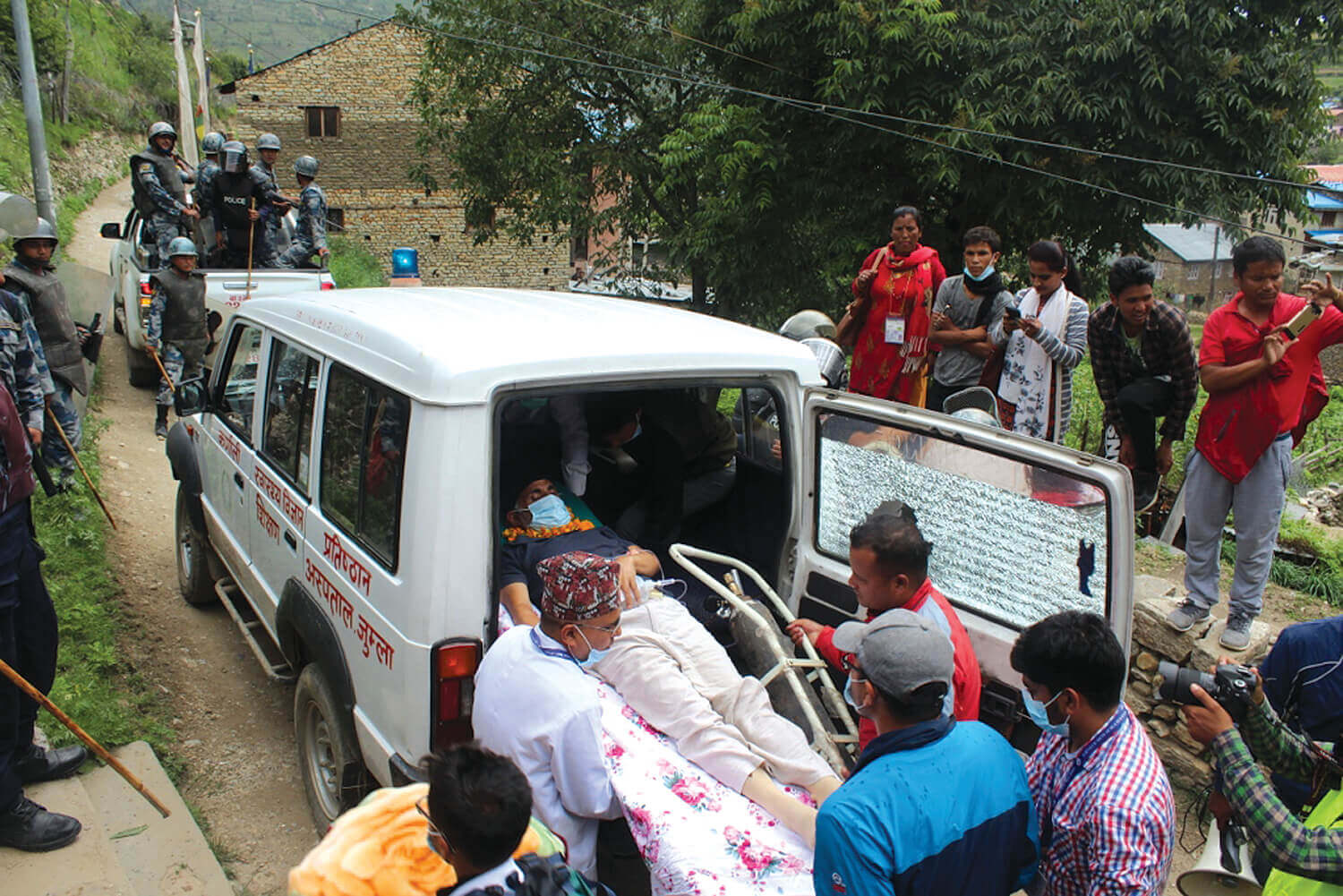
Amidst protests in Jumla and Kathmandu, and a nationwide hospital strike, KC finally agreed to be flown back on an Army helicopter, saying he wanted to prevent any more violence.
The reason quality health care is out of reach of Nepal’s predominantly poor people is that subsidised government hospitals are so shoddy, ill-equipped, poorly-managed, under-funded and under-staffed.
State neglect and mismanagement at its facilities means expensive private hospitals have stepped in to fill the gap. Medical care has therefore become a lucrative business, where rampant over-charging is the norm.
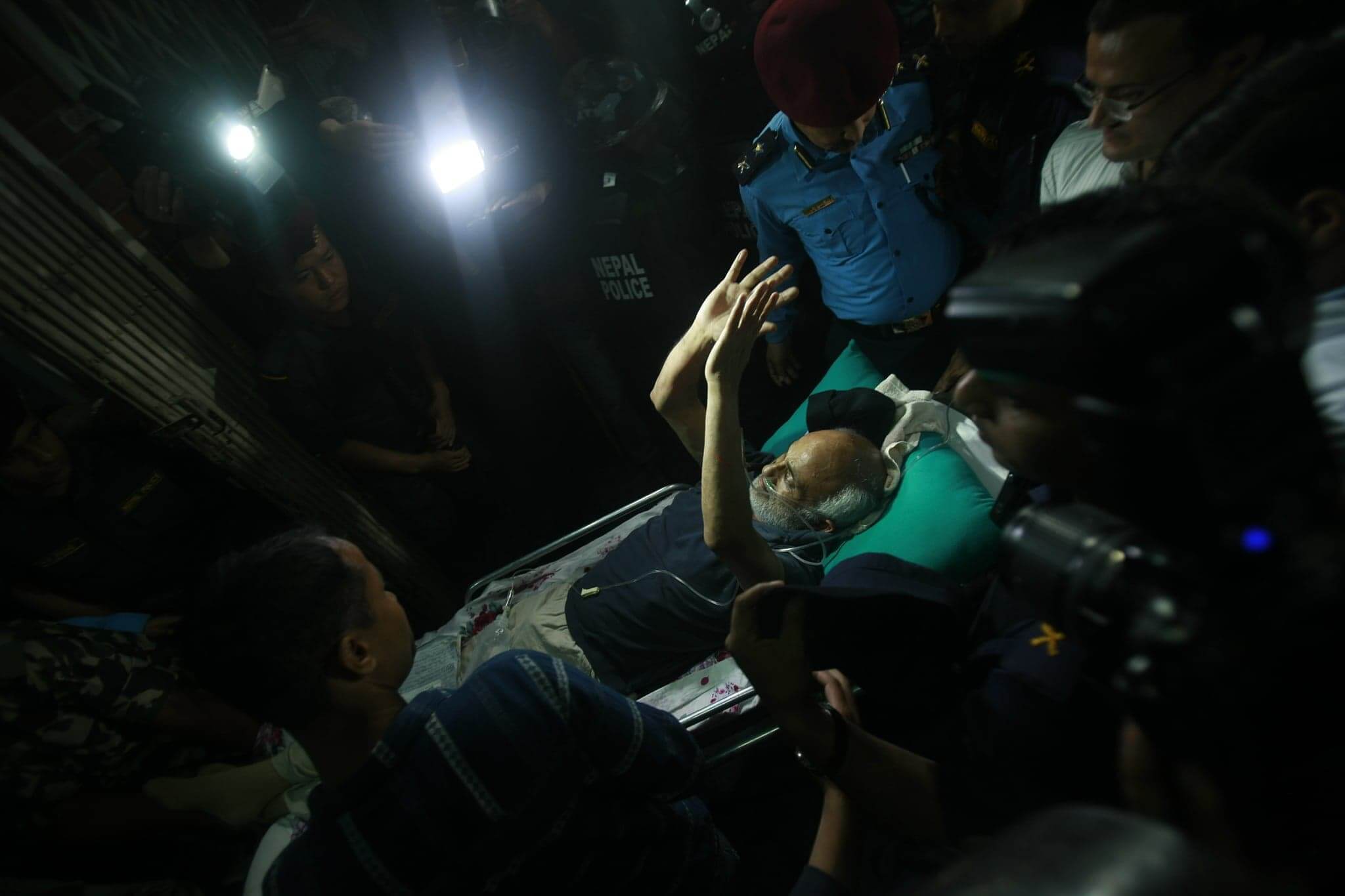
But that is not where the real money is. The bonanza is in medical education, where billions can be made overnight charging students for admission fees and royalty to feed the demand from private hospitals. It is no secret that the medical mafia enjoys strong political protection.
KC’s main demands follow the recommendations of the Kedar Bhakta Mathema Commission two years ago: an end to universities giving random affiliation to new medical colleges in return for kickbacks, restricting universities to maximum five affiliations, limiting private medical colleges in Kathmandu Valley to ten. Successive governments over the past decade have promised to meet these demands to make him end his fasts, but never fulfilled them.