
Nepal’s Terai Arc Landscape (TAL) was recently recognised as one of the seven UN World Restoration Flagships for involving local communities to protect the 2.5 million hectare biodiversity hotspot on the border with India.
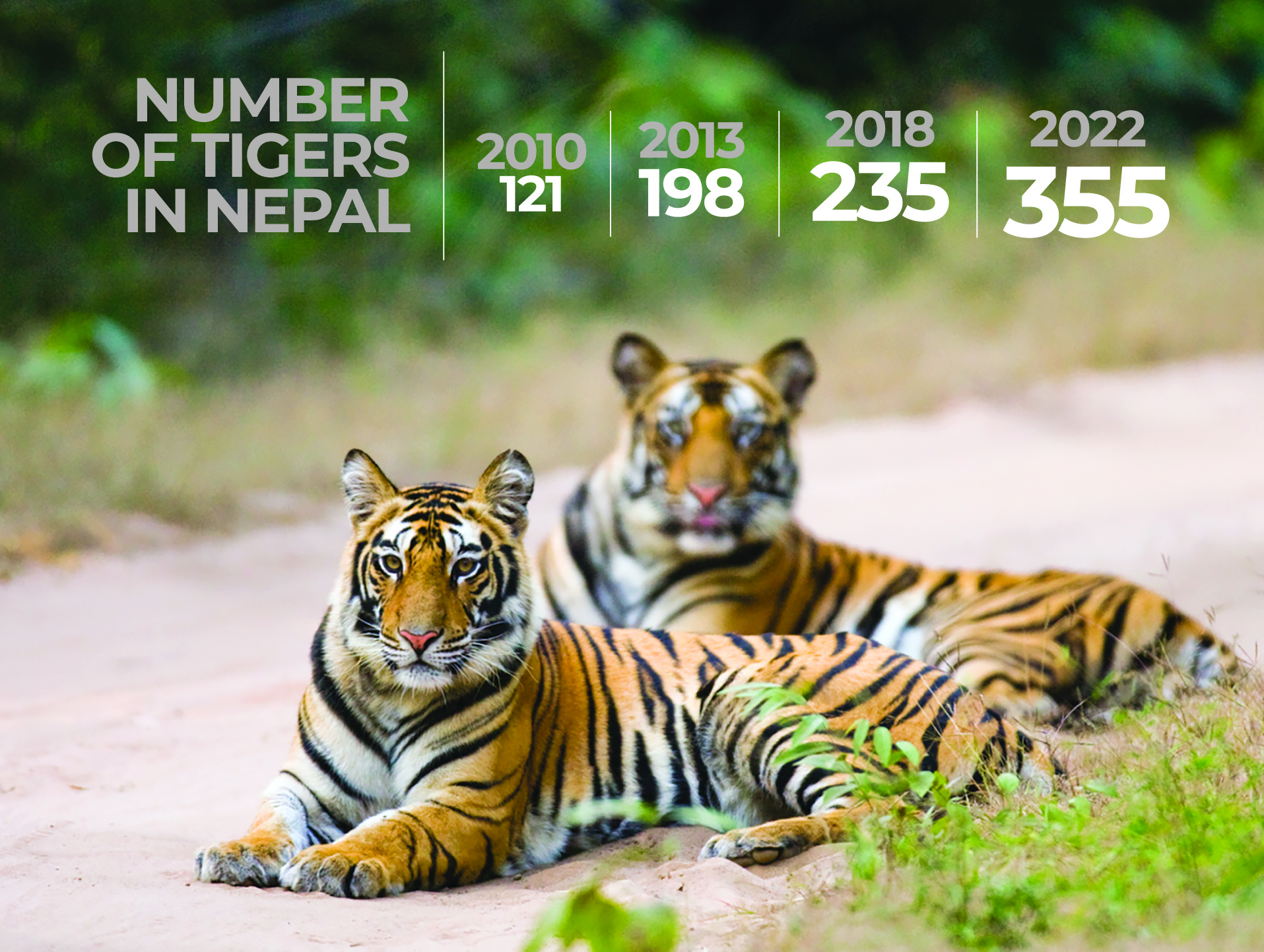
Despite the region’s 7.5 million human population growing rapidly, the transboundary conservation effort has tripled the number of tigers in Nepal from 121 to 355 in the past 14 years, and doubled it on the Indian side to 819.
“The success is all the more remarkable because of the rising human population and new infrastructure,” said Ghana Gurung of World Wildlife Fund (WWF Nepal) at the Saving Nepal’s Tiger and Livelihoods dialogue in Kathmandu on Tuesday.
The Terai Arc Landscape initiative was launched by the Nepal government even though the country was going through a conflict in 2001. It has mobilised local communities in forest protection and anti-poaching units, and promoted eco-tourism — benefiting 500,000 households.
“Conserving tigers was the key component of poverty reduction, this was not conservation for conservation’s sake only, but contributed to Nepal’s development,” said Valerie Hickey, Global Director for Environment, Natural Resources and Blue Economy at the World Bank which co-sponsored the Dialogue. “Nepal has grown faster because you have grown greener."
Studies around the world have shown that every dollar spent on nature conservation can yield up to $6 in economic development, creating jobs and raising living standards, and in the process communities on the fringes of national parks understand that protecting nature is good for the economy and ecology.
Chitwan is a prime example of this. After tigers were nearly driven to extinction because of hunting, poaching and logging up to the 1960s, Chitwan National Park’s success in reviving its tiger population has boosted the economy, with 3% of the adults depending on eco-tourism jobs.
Tiger range countries met in St Petersburg in 2010 and set a target to double their populations in 12 years. Nepal did not just double its tiger numbers but nearly tripled it. As a keystone species at the top of the food chain, saving tigers has also meant that its habitat was protected.
The World Restoration Flagship awards are part of the UN Decade on Ecosystem Restoration led by the UN Environment Programme (UNEP) and the Food and Agriculture Organization (FAO). It aims to prevent, halt, and reverse the degradation of ecosystems on every continent and in the ocean.