

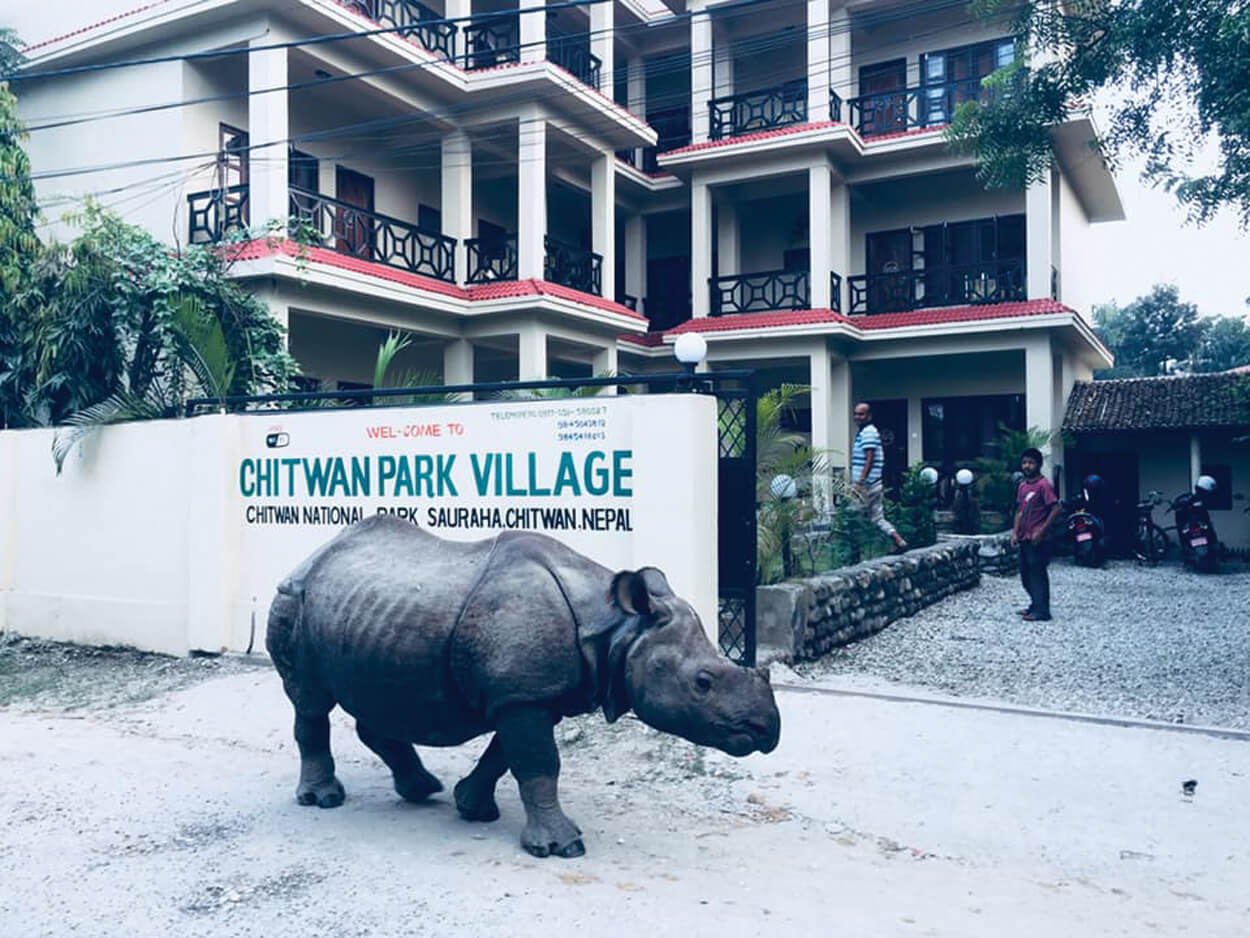
As a Wild Ass, I can vouch for the fact that Nepal is one of the most biodiverse countries on Earth. And the incredible thing is that this wealth of flora and fauna is now living cheek-to-jowl with the country’s human population without eating each other up.
Humans with herd mentality are leaving en masse along crossborder migration corridors, whereas wildlife species conduct themselves responsibly to defecate only in designated spots.
In fact, as Nepal rises in the UN’s Human Development Index (HDI) to meet the Sustainable Development Goals (SDG) by 2030, we can safely say that the country’s rankings in the Animal Development Index (ADI) has risen even faster. This means members of our erstwhile animal kingdom who are now protected citizens of the Federal Democratic Republic enjoy living standards and social welfare safeguards that would be enviable in any other country.
Proof of this was the news last week that a female endangered One-horned Rhinoceros heeded the call of the Ministry of Wild Life and Animal Husbandry to further improve the rate of institutional delivery in Nepal by giving birth to a healthy male calf in a maternity Ward in Bharatpur. This is a heart-warming example of how wildlife and humans have learnt to coexist in a country whose patron deity is the Lord of the Animals.