
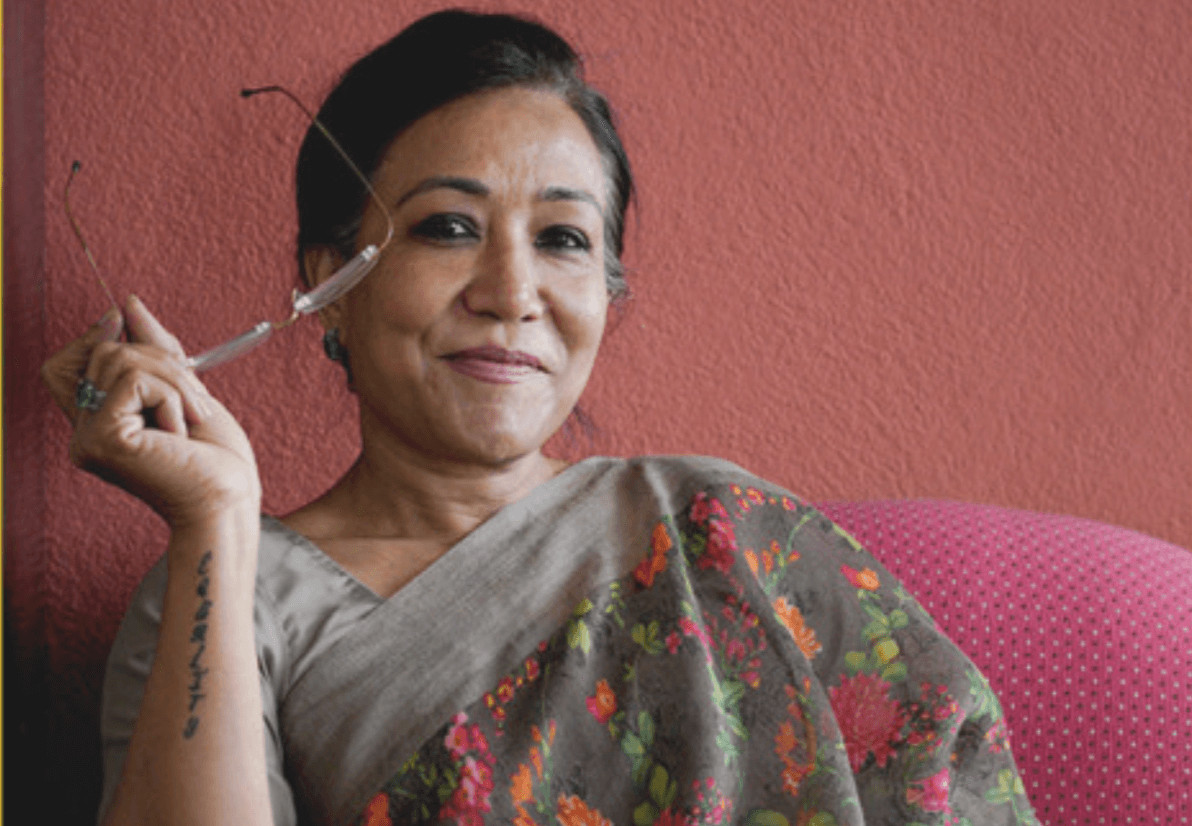
As the world celebrates 110th International Women’s Day, Nepali Times caught up with Supreme Court Justice Sapana Pradhan Malla to discuss progress of Nepal’s feminist movement, and the legal challenges that lie ahead. Translated excerpt:
Nepali Times: How far has the Nepali feminist movement come?
Sapana Pradhan Malla: It has evolved from discourse about the right to education and property, child marriage, exploitation, harmful religious and socio-cultural practices to ‘inter-generational feminism’ where young women, men, and even children can raise their voices for the right to privacy, rights of different genders, languages, geographies and religious minorities, encompassing the rule of law and the democratic process as a whole.
Where does Nepal stand among South Asian nations in terms of women's rights?
If we look at the Gender Development Index, Nepal tops the list of countries in Asia that have made progress in terms of women’s empowerment. Nepal’s Constitution is among the most progressive in South Asia for gender equality and the implementation of women’s rights. We have indicators to support the claim. However there are many other pressing issues, most importantly regarding citizenship, that need to be addressed.
What are these indicators?
Our 2000 study 'Discriminatory Laws in Nepal and Its Impact on Women' found 118 articles in 54 laws that were discriminatory towards women, the most explicit of which were the ones on citizenship, property, human trafficking, education, employment, reproductive health, marriage and divorce laws.
Since then, apart from the citizenship law, others have been amended. Women have been guaranteed rights to property, stricter sentencing has been introduced for those convicted of rape, marital rape has been criminalised, abortion has been made legal, and we have made legal strides to increase women's participation in the socio-political process.
Were these achievements a result of political movements or feminist movements, or a mixture of both?
The primary credit goes to those who filed Public Interest Litigation cases in the courts, which led to them dismissing discriminatory clauses in some cases and issuing directives to formulate new laws in others.
Political movements played a significant role in women’s issues, as women actively participated in the two People’s Movements as well as in the Maoist armed conflict, because they no longer wanted to be left behind. Similarly, the unique needs of women were also brought to the forefront during the earthquake when there was a demand for birthing tents.
The awareness brought about by political movements and national emergencies cemented their independent identities and the need to protect them, as well as giving a voice to their experiences.
What does it mean for women to see other women represented in positions of power?
Seeing women in positions of power can set a powerful and reinforcing example. In particular, Nepali women who have held the highest offices -- like the office of the President, the Speaker, and the Chief Justice -- are symbols of women rising through the ranks within unbalanced power structures. They should thus be role models for all women. If there are sensitive men in influential positions, it can also impact change that is in favour of women.
Does the feminist movement address the needs of marginalised groups?