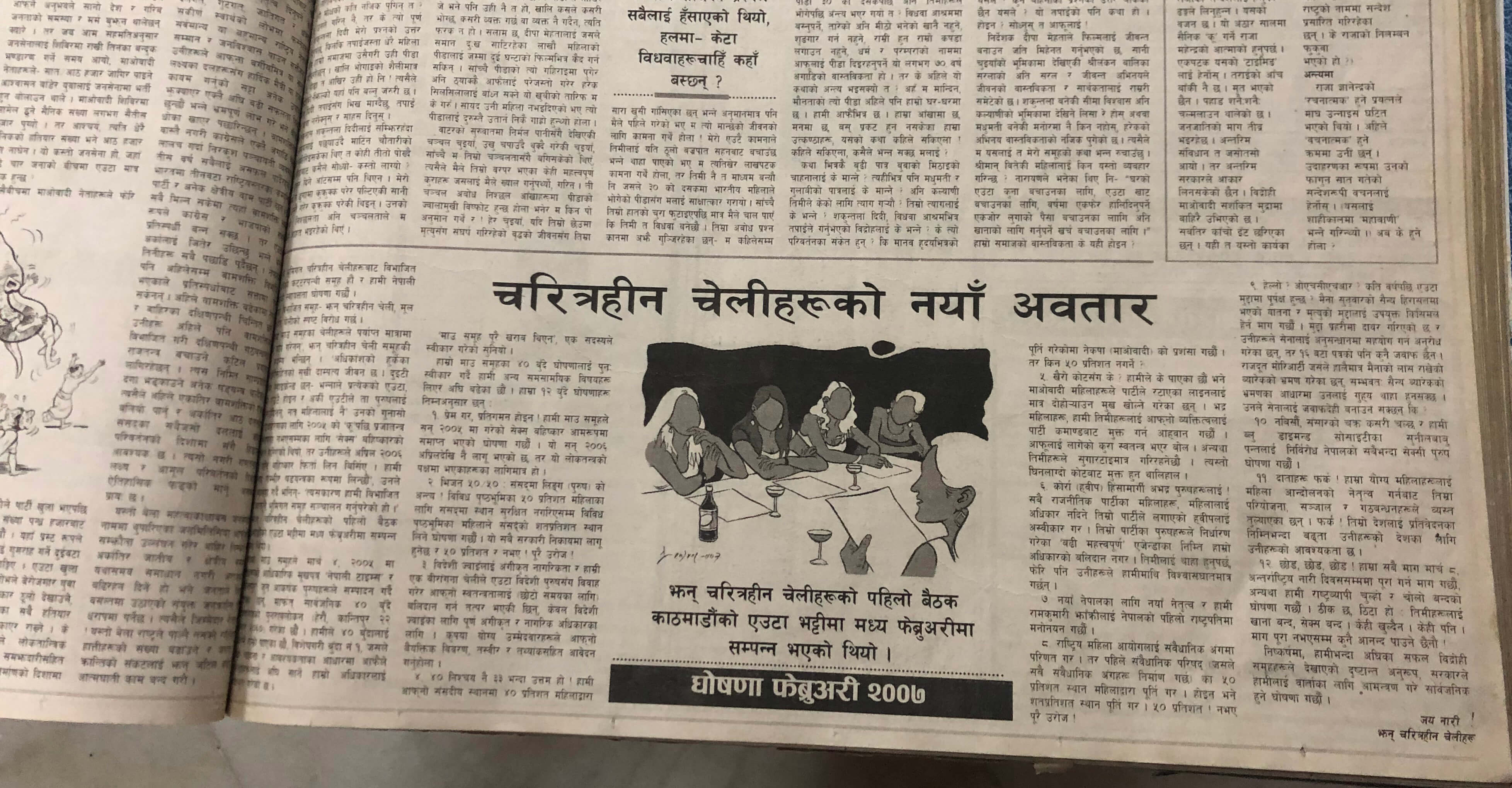
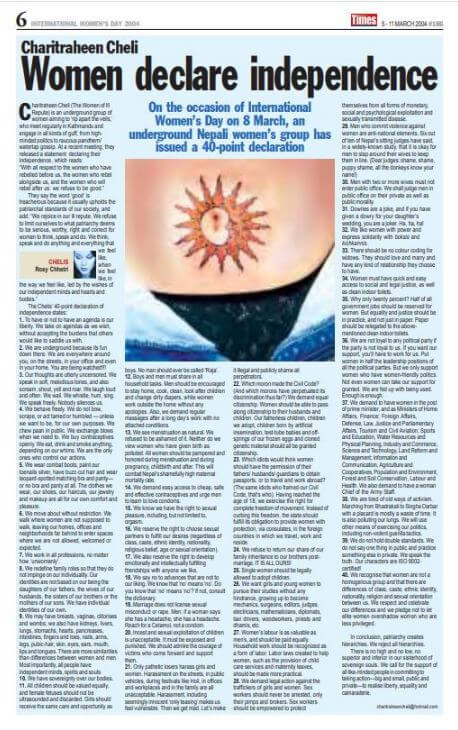
On 5 March 2004, a clandestine feminist movement emerged in Kathmandu, and in a 40-point declaration to coincide with International Women’s Day, denounced Nepal’s patriarchal order.
They called themselves the Charitraheen Cheli (Women of Ill Repute) and their manifesto was a ‘declaration of independence’, denouncing dowry, gender-based violence and discrimination.
Point number 9 read: ‘We may have breasts, vaginas, clitorises and wombs; we also have kidneys, livers, lungs, stomachs, hearts, pancreases, intestines, fingers and toes, nails, arms, legs, pubic-hair, skin, eyes, ears, mouth, lips and tongues. All people have independent minds, spirits and souls.’
Long before the Women’s March and 15 years ahead of the international #MeToo Movement, Charitraheen Cheli in Nepal laid the groundwork for activism on issues that are just as relevant today as the country records daily cases of rape, killings and sexual assaults, with the state still treating its women as second class citizens.

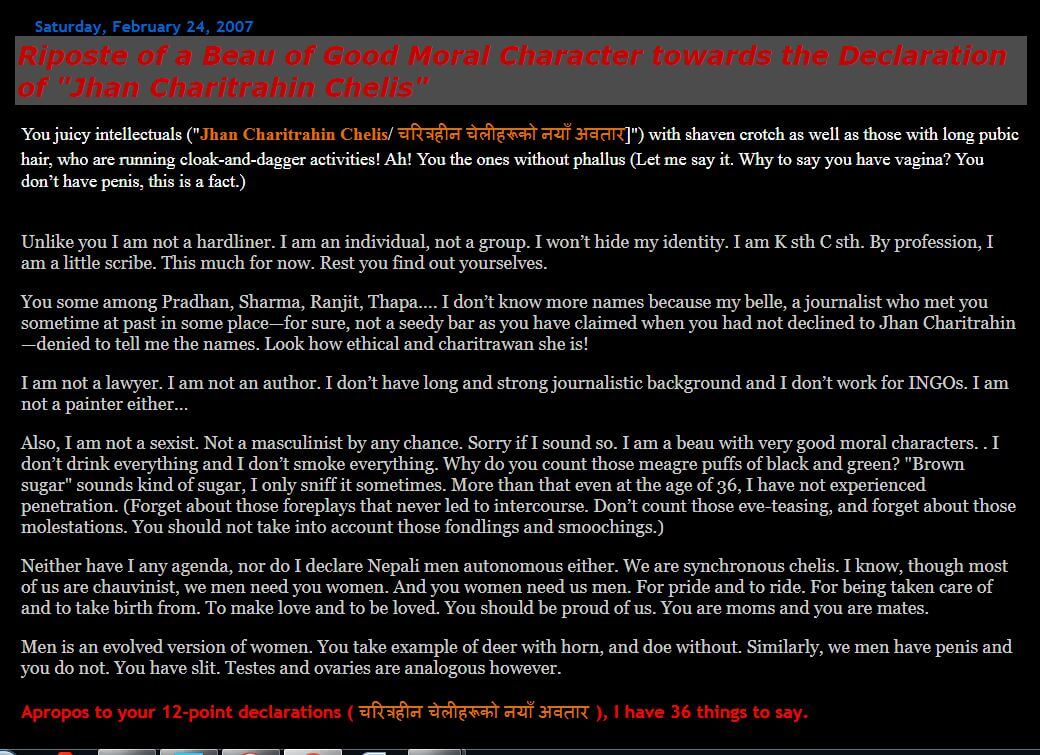
The declaration and subsequent contributions in newspapers created ripples and rumours, and the group were eventually criticised for abandoning the cause, as its anonymous members drifted and their movement fizzled out.
Another point in the declaration read: ‘Which idiot would think women should have the permission of their fathers/ husbands/guardians to obtain passports, or to travel and work abroad? (The same idiots who framed our Civil Code, that's who). Having reached the age of 18, we exercise the right for complete freedom of movement. Instead of curbing this freedom, the state should fulfill its obligation to provide women with protection, via consulates, in the foreign countries in which we travel, work and reside.’
Seventeen years later, a government department last month tried to restrict the movement of women by requiring all females under 40 to have a written consent from a male family member and a ward official before travelling abroad.
‘Enough is enough,’ wrote the team in a phrase that has since been used in the Rage Against Rape rallies in Kathmandu. The group added that since marching from Bhadrakali to Singha Darbar with a placard is mostly a waste of time and bad for the lungs, it was resorting to ‘non-violent guerilla tactics’.
The 40-point declaration was also published in Nepali in Kantipur and gave way to speculation about the identity of its members. Guesswork bracketed them as ‘educated, English-speaking, foreign-bred, elite women from Kathmandu’.