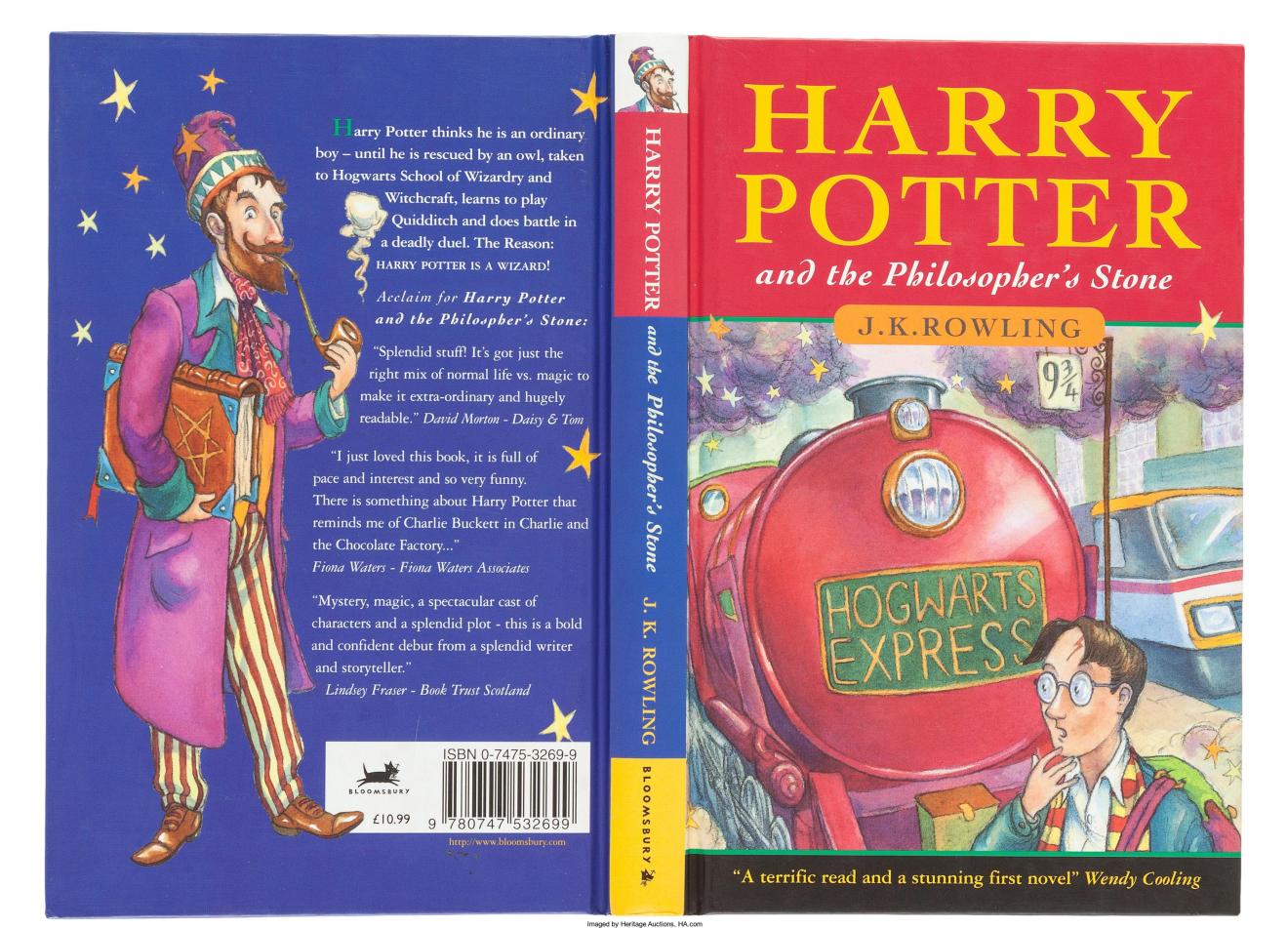
With 1,084,170 words, 198 chapters, seven books, one play and a billion-dollar franchise, the Harry Potter series revived the reading habit of millennials everywhere. Twenty-five years after the first book came out, it is still the bestselling book series in history, translated into 80 languages – including Nepali.
Few know that in 2008 Sunbird Publishing House in Kathmandu secured the copyright from J K Rowling to officially translate Philosopher’s Stone into Nepali. This was part of Sunbird’s aim to publish more books in Nepali for rural children at a time when the Maoist insurgency had destroyed schools, disrupting education.
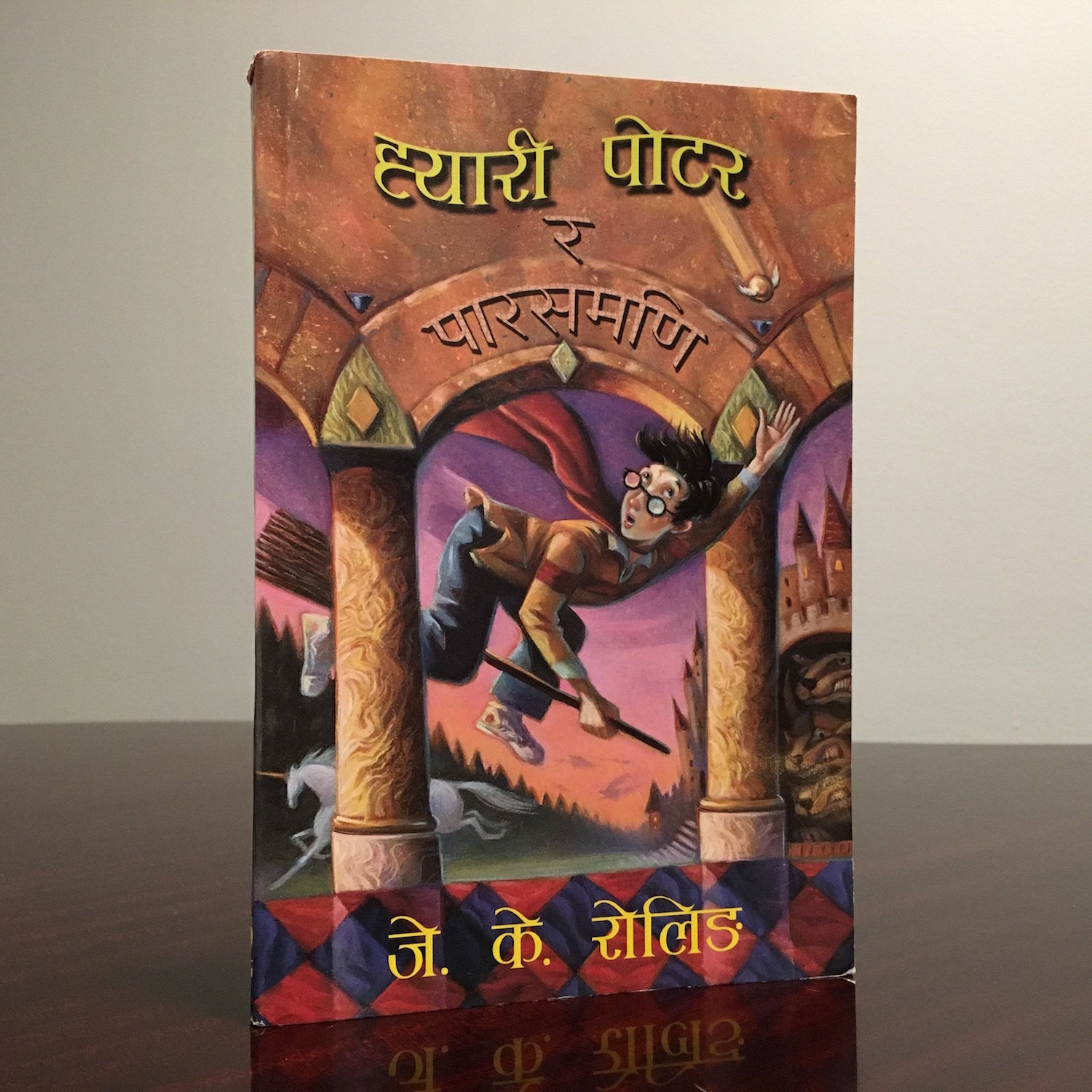
The book was released as ह्यारी पोटर र पारसमणि (Harry Potter ra Parasmani) translated by Shlesha Thapaliya and Bijaya Adhikari, and edited by Kedar Sharma.
Having grown up reading Harry Potter books, Thapaliya remembers being thrilled when Helen Sherpa of Sunbird reached out to ask if she would be interested in translating it.
“Helen asked if I could translate the first chapter as a sample, and they were happy with my work,” she recalls. It took Thapaliya a year to complete the draft, during which time Bijaya Adhikari also joined.
Adhikari first read the books in 1998 when Chamber of Secrets had just come out, and only the British Council Library had copies. He was also familiar with Nepali Unicode, which came in handy during the translation process.
It was also the time of loadshedding in Nepal. “I used to sit with the book and translate by the candlelight,” Adhikari remembers.
Power cuts were only part of the challenge. The real Forbidden Forest, so to speak, was to correctly translate many specific terminologies, such as muggles or quidditch.
“We weren’t sure at first how Nepali children reading it, especially in the rural areas, without exposure to the British context would relate to the story,” says Thapaliya.
Spells, Adhikari adds, posed a particular challenge. Rowling uses a modified version of Latin to create incantations in the original series, often a play on their desired effect: levicorpus, for example, to hoist the victim by their ankles, has roots in levare ‘to lift’ and corpus ‘body’.
The same reasoning and effects were difficult to contextualise for Nepali audience. Even the words ‘witch’ and ‘wizard’ had to be reconsidered, as बोक्सी (boksi) and बोक्सा (boksa), which carry a negative connotation in Nepali society. So, the translators used जादूगर्नी (jadugarni) and जादूगर (jadugar) which more closely mean 'magician'.
Proper names had diphthongs with no Nepali equivalent (for instance the vowel sound in ‘Harry’ – not quite the strong ह्या, nor the long हा. Food items were uniquely European, as were the festivals and holidays.
“We decided that we couldn’t obviously change the context of the book by Nepalifying everything,” Thapaliya says, “as reading is supposed to strike one’s imagination and teach new things.”
So, instead of a literal, direct translation, Adhikari came up with the formula to rather try and translate the meaning and the feelings. The editing process was equally rigorous, as he sat with his cousin, Aditi Adhikari, and her father Kedar Sharma to go through the text from cover to cover.
“As the cultures of Nepal and the UK do not align exactly, we would often end up adding two or three words to explain the terms that were confusing or unfamiliar,” he says, “We were constantly asking ourselves if the translation was making sense to the children in Ilam or Rukum who are not familiar with western folklore.”