
Alton C Byers is a mountain geographer, conservationist and researcher on Himalayan glaciers with the Institute for Arctic and Alpine Research at the University of Colorado, Boulder. Sophia Kalantzakos of New York University's Geopolitics and Ecology of Himalayan Waters Initiative spoke to him about this week’s Himalayan flood disaster.
Sophia Kalantzakos: You've been warning about this kind of catastrophic flood for years. What exactly happened on the China-Nepal border on 26 August?
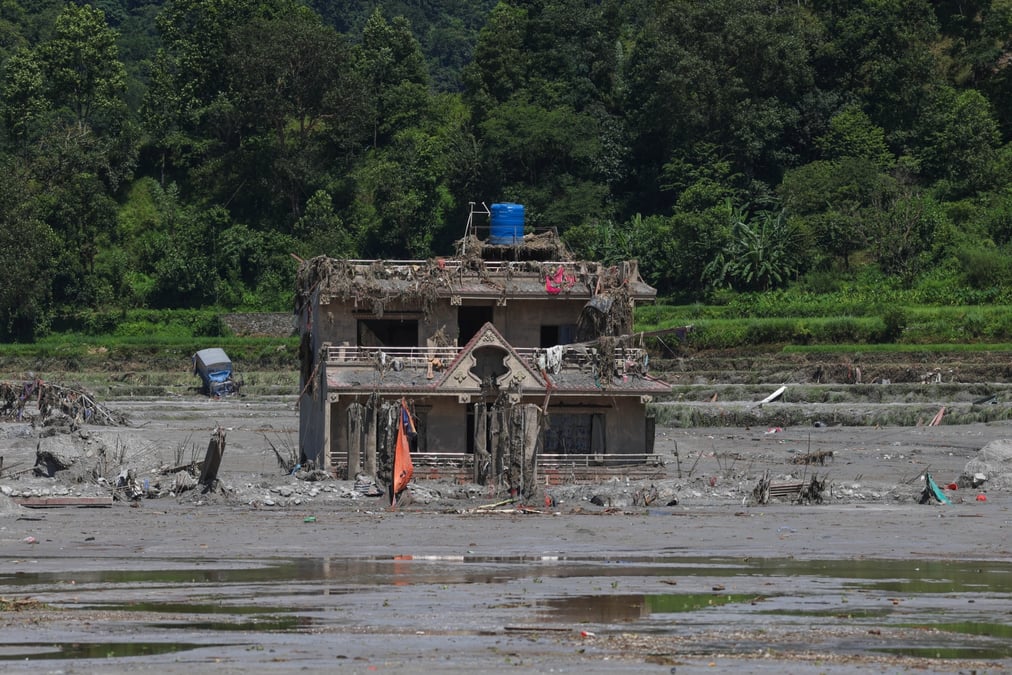
Alton Byers: We're getting more and more insights. What we can say for sure is that this is different from your classic glacial lake outburst flood. What we had was a massive breakage of ice and rock from high on Langtang Lirung on the Nepal side of the border with Tibet. It plummeted down and, in effect, was the catalyst for a series of cascading events. I think that the breakage was related to changes in permafrost, which has become vulnerable to warming trends. Permafrost was the cryosphere glue that held these mountains together for millennia, and we're seeing more massive breakages of snow and ice and rock as well. I've seen rock faces the size of the Empire State Building calve off.
As it falls, friction at that velocity melts the ice. It hits the ground below. Hurricane-force winds level trees. All this then went into the Bhote Kosi, blocked the river and then you got this horrendous release of millions of cubic meters of water.
I've been monitoring such events since at least 2012, and the Seti Flood in the Pokhara region had almost the exact same sequence of events, and there have been a dozen others since then.
There was no warning, was it something that could have been predicted for this particular area?
Yeah, it happens very quickly, just a matter of hours or less from the initial breakage to the creation of what they call a hyper-concentrated slurry flood. Imagine liquid concrete flowing down the river, carrying boulders the size of houses. You can't really predict these, but you can identify areas of risk from remote sensing, you can see mountains that have similar overhanging ice, and you can make the logical assumption that they would be more prone to breakage than others.
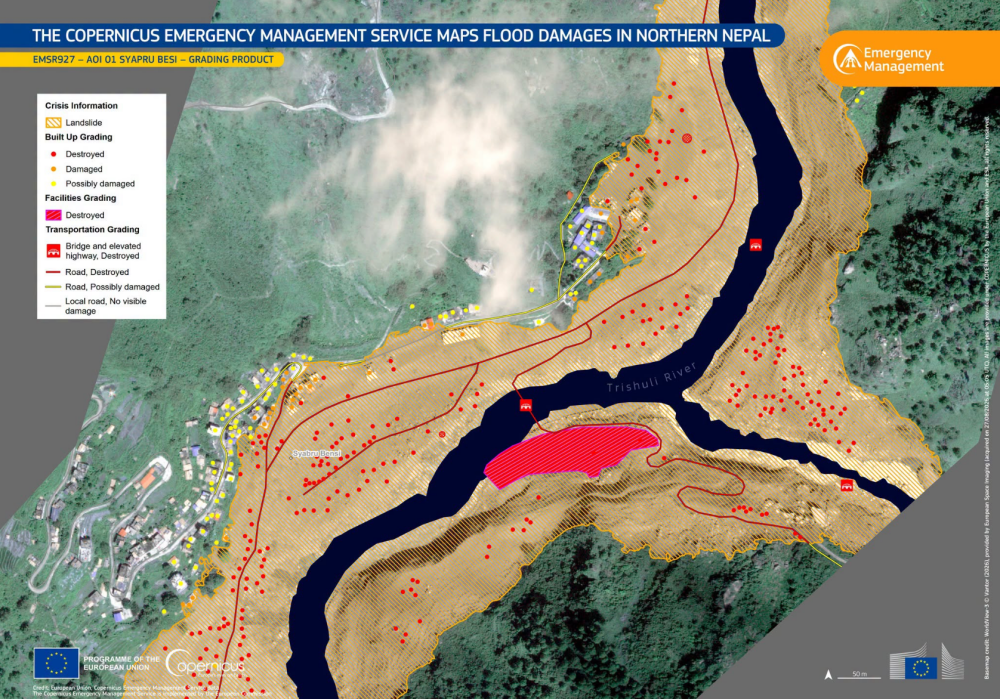
But really, the critical point, and that I'm starting to hear more and more on this in the Nepal press, is that there are settlements along floodplains. A tremendous surge in unregulated, unplanned urbanisation, with much of the building along the rivers where it really shouldn't be. If you look at aerial photos from 50 years ago, you'll see that the villages in the area were up high. Only farms may have been down by the river because that's where a lot of fertile soil is. So this is unfortunately a consequence of building in the wrong places.
Why was there so much debris, rubble, and boulders coming down the mountain?
It's rugged to begin with, it's vertical, it's an extremely dynamic environment. As mountains build, they also erode, and erosion takes the form of everything from soil loss to avalanches, to debris flows, to landslides, with a lot of stored material from past floods. So, when you get a new one, the new flood picks up this older material in addition to everything that it's bringing down.
These are terrifying events. I've interviewed people who say they sound like someone moaning in agony. It sloshes back and forth along the river, and can go up to 100 metres when it comes around the corner. And the smell is like gunpowder, probably because rocks are hitting each other and sparking. The footage from this flood is the most horrific I have ever seen. This was by far the largest.
How should the media frame this story? Is this related to climate change?
That is the number one question. And they want to know what kind of flood it was, they want to know how it happened. It's a pretty complex process, and it's something that we really haven't been that aware of. Changes in the permafrost are relatively new to most scientists. I do have colleagues who have been studying it for 20 or 30 years like Wilfried Haberle of the University of Bern. He and I wrote a piece for the Nepali Times a year ago on what the paper called the ‘not-so-permanent permafrost’. In other words, it's changing too. The main triggering events of this cascading process are almost identical to previous floods that I've studied. We will not know the causes for days or weeks or months, because it takes time. For now, we're directing our energy to rescue. That's where they should be.
When the rescue operations are over, then we'll have time to do the satellite and helicopter reconnaissance to gain another level of insight. But to me the most important thing is then getting the scientists on the ground, where you start to really peel the layers of the onion back and figure out what happened, often because local people who know the area can show you things that the satellites and helicopters can't pick up. There are yak herders up there, they can tell us what happened: that a third of that mountain broke off and fell down, causing the flood.
They know the terrain and what it looks like.
Exactly, they know the terrain. It's a process, so we're not really going to know for a long time. A number of my colleagues are being very cautious, and they're saying that they can't say definitively that it's related to climate change, and I respect that fully. But I'm also…willing to take an additional step and say, based on my experience and previous floods, it is related to changes in permafrost, and that is directly related to warming trends that we've experienced.
What could Nepal have done better? This also affected China, what could be a future joint plan since the Himalaya is interconnected and there are glacial lakes everywhere now?
I think you've hit the nail on the head. There are hundreds, thousands of glacial lakes in Tibet, some of them prone to catastrophic flooding, in which case, and this has happened before, the flood originates in Tibet, but the damage is done in Nepal. So, the need to increase communication between Nepal and China has been a discussion that's been going on for years, and I think they're making progress. Glacial lakes, you can see, you can install an early warning system, you can set up mechanisms. But you couldn't have predicted this type of catastrophic event. We have to identify high-risk areas and start from there.
Soon, the media spotlight is going to turn to something else. There's going to be some other catastrophe somewhere. How do we stay on message? How do we stay focused?
We have a very good start — Nepal has developed an excellent cadre of scientists, world-class glaciologists, as well as organisations like the Department of Hydrology and Meteorology, ICIMOD, and Kathmandu University. They're on the leading edge of research, and the Chinese, too.
If you look at the peer-reviewed papers being produced about glaciers and glacier hazards, China is in the lead, as is Nepal. So we've got a foundation of support now that we didn't have 15 years ago. The government is new, they're being tested, they're young, they're out there now showing what they can do in terms of rescue and relief. I think after that, you're going to see more attention turned to zoning and discouraging building in places prone to floods. The challenge is changing human awareness and human behaviour, and it can be done. Like we are doing with the Kangchenjunga Conservation Area Management Council on developing a glacier Hazard Management and Community Preparedness Plan.
The geopolitical climate is very contentious at the moment. It feels as if we're distracted from fixing the climate problem.
I think that the Europeans, the Canadians, the Chinese, the Nepalis, and the rest of the world are moving ahead. We may have some challenges now in the US in terms of funding and the political agenda, for sure. USAID was a major donor for some of our earlier work in Nepal and Peru on glaciers. Everybody's had their grants taken away, meanwhile, we continue this very, very important work.
A disaster like this in Nepal is going to happen again and again. I don't want to end with a message of doom and gloom, because we are resilient. We can adapt. I think we just need to pay a little more attention to using good science, just like you alluded to a moment ago. We need good science, we need to share the results with local people, we need good practical preparedness plans, and smart building and construction—not building in areas that are guaranteed to flood.
It looks pretty bad right now. It was horrific what happened, but we have a way forward that can help mitigate all these adverse impacts.
Watch the full video here.
If you are looking to support communities affected by the flood in Nepal, donate to the Prime Minister's Disaster Relief Fund here. Additional information here.