Gone are the days where a television set was a hefty cathode ray tube apparatus in the living room hooked up to an antenna on the roof: a sign of prosperity, a cherished investment to outlast youngsters watching cartoons.
TVs today are thinner, sleeker, bigger, and smarter. And although Nepalis are buying more of them, their screen time is also being increasingly shared with mobile phones.
“A decade ago our best sellers were 24 or 32-inch TVs, but there was a drastic change around the 2018 Football World Cup,” recalls Alok K Gupta, General Manager at Samsung Electronics in Nepal. “Nepalis are buying more 43 or 55-inch models right now.”
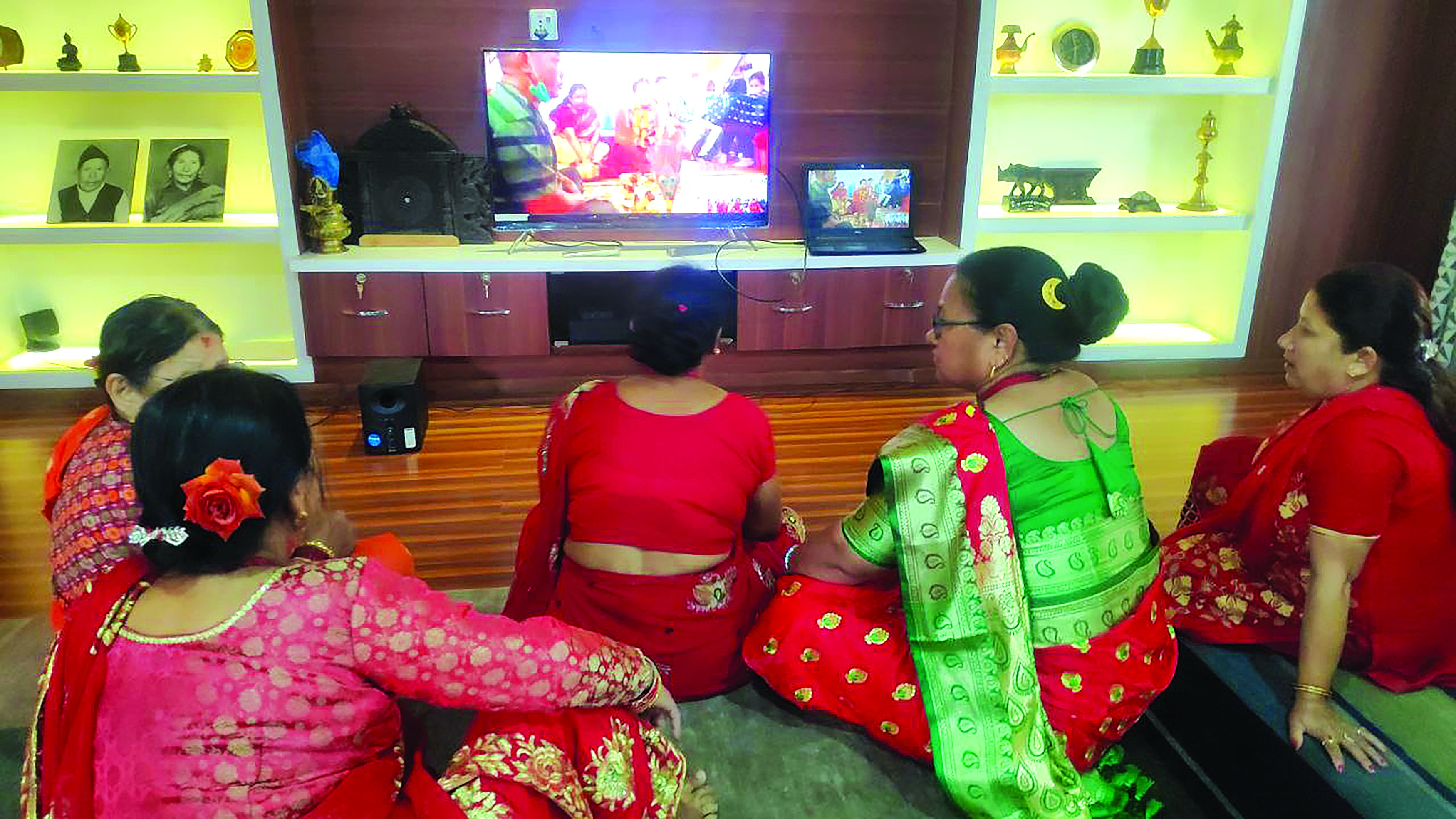
Gupta notes that big sporting events like the World Cup, the recent T20 World Cup and the Euros, cause up to 30% spikes in TV sales in Nepal. There is also a surge in demand during the festive season like the upcoming Dasain, with sales almost doubling because of salary bonuses.
New TVs do not just have larger, sharper screens but also have more intelligent software, and can connect to the internet making it possible to watch streaming videos on YouTube or Netflix.
With more than 3 million Nepalis working overseas, and sending money home, there is more exposure to bigger television sets, and an increased ability to afford them. Returning Nepalis are also bringing TVs back with them, a trend that might increase after the current budget removed duty on tellys regardless of screen size.
“People are now more savvy about the tech they buy,” explains Gupta. “They want new things faster. In the past, people bought a TV to last a generation, but now much of our sales are people looking to replace or upgrade their sets.”
But are buyers doing their homework, or are TV companies getting better at advertising? From consumer habits it looks like middle class Nepalis are buying a new set just to shift the TV they already have into the bedroom.
Consumer electronics is also about planned obsolescence, with companies intentionally making products with short life cycles that need software upgrades, or that are superseded by sets that have better picture quality and other features.
Samsung’s CE-Biz first tapped into the replacement market by building arkostore.com for customers who were curious about how much money they could get back for returning their current set. CE also runs its own financing on all Samsung devices, allowing monthly payment at 0% interest.
Samsung has a killswitch that will turn off a customer’s TV or smartphone if they fail to make their instalment payment, although the company has not put a similar feature (out of mercy?) on its washing machines or fridges.
The popularity of home theatres with wide flat screens indicates that Nepalis who can afford it are tired of watching videos on tiny mobile screens.
Content is king
With TV sets now capable of streaming, and the spread of broadband internet, Nepalis are watching more international programs on their tellies than domestically-produced fare.