Nepal’s diverse climate and topography favors a maximum number of species in such a small area, but this biodiversity is threatened by a climate induced water crisis. For a country that occupies only 0.1% of the total land area on the planet, Nepal is home to 3.2% of the world’s flora and 1.1% of its fauna.
Its 31 national parks, six conservation areas and nature reserves extend from the Tarai plains to the high Himalaya, covering nearly a quarter of the Nepal’s area. But there is growing concern about water sources inside national parks going dry because of the impact of the climate crisis. Pumping water also needs energy, which can be expensive.
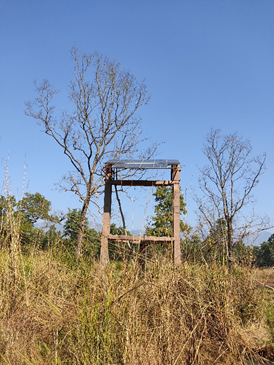
This is why a pilot project in Nepal has found it useful to use solar energy to pump up groundwater to fill perennial watering holes that have gone dry.
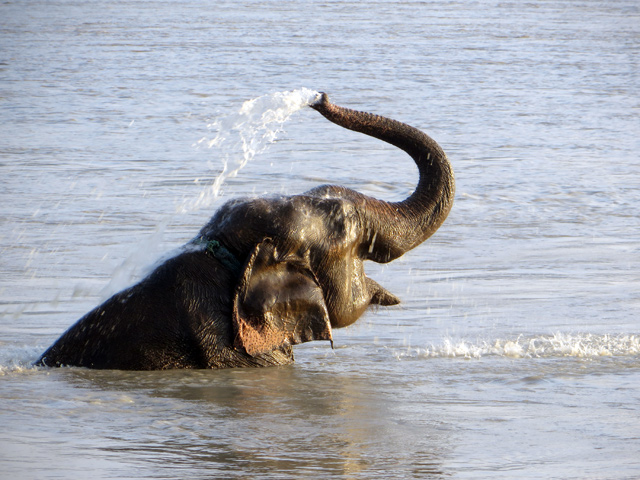
Wild elephants require about up to 100 litres daily, and the bigger animals can drink up to 212 litres of water in less than five minutes. A tiger needs 70 litres per day, depending on the season. Tigers also need water courses to cool off during the summer months. The rhinoceros is highly dependent on water and will drink up to 72 litres per day.
With Nepal’s conservation success story, national parks are getting crowded with predators and prey, increasing competition along oxbow lakes, lakes and ponds. Weather extremes due to the climate crisis has also made water availability more acute.
Unpredictable precipitation patterns have resulted in a shortage of water in national parks, which have resulted in unprecedented wildfires. The decline in water courses has also led to a drop in birdlife, including stopovers by migratory birds.
Now, Bardia National Park in the western plains is experimenting with pilot solar water pumps to keep watering holes filled up so that wildlife have a place to wallow and drink. The Park has been seeing a drop in prey density mainly due to a water shortage, and this is forcing tigers, rhinos and wild elephants in the park to venture out.
The diversion of the Karnali River for quarrying upstream from the Park has also meant that a channel of the river that used to feed into the Park has less water in it, leading to a drop in ground water which means ponds and lakes have gone dry.