
Nepal’s rulers have been suffering from an affliction called Serial Coalition Syndrome. Symptoms include: inability to see beyond personal greed and ambition, amnesia about the national interest, serious addiction to personal power, OCD about money, and wanton political promiscuity.
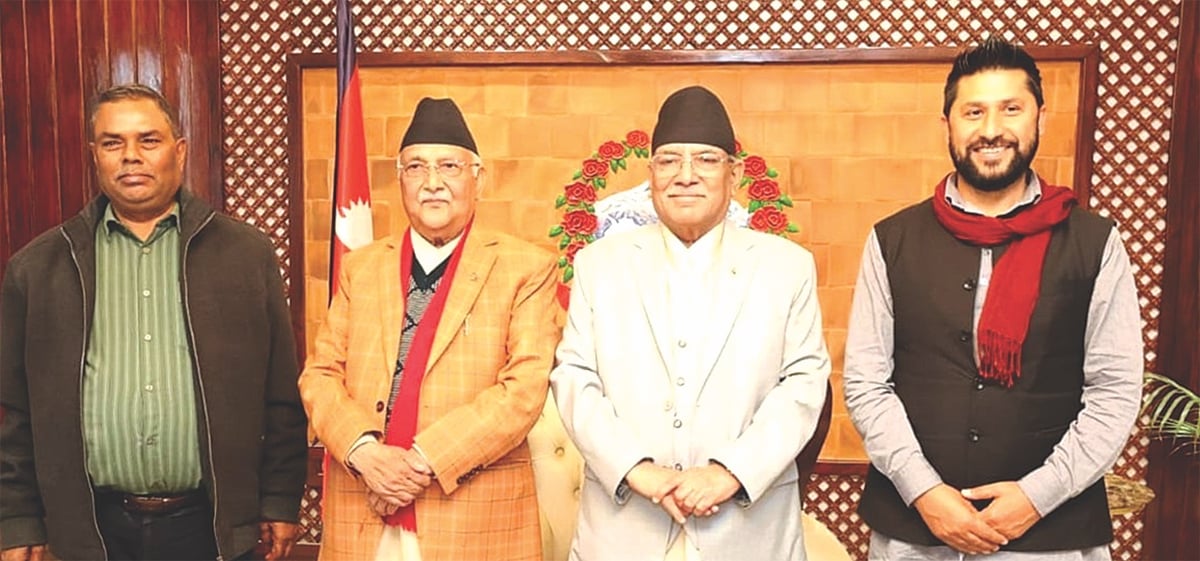
Prime Minister Pushpa Kamal Dahal once again pulled the rug from under his main coalition partner to go off with a former ally whom he has ditched twice before. With this, Nepal has had eight governments in seven years.
The Maoists and the UML had an electoral alliance ahead of the 2017 election, after which they merged their parties. Then they divorced, and now are once more joined in holy matrimony. The country, meanwhile, is back to square one, not that it was faring all that well anyway.
The Nepali Congress (NC), its patriarch and five-time prime minister Sher Bahadur Deuba got blindsided once more by Dahal’s checkmate, just as he had been twice before by King Gyanendra.
Read also: Catapulting to Singha Darbar, Kunda Dixit
Dahal and Oli now have a new deal of two years each as premier before the 2027 elections. In all likelihood, there will be another coalition shakeup when it is time for Dahal to hand over power to Oli. But this coalition has just 138 votes in Parliament, only enough to win a confidence vote and may not last that long.
However, the crux of the matter is that these coalition reshuffles are of no real concern or significance to ordinary Nepalis, and adds to public disillusionment with the mainstream parties. The RPP and independent mayor Balen Shah have been saying, “Didn’t we tell you there is no hope from these clowns?”
Even the RSP has squandered much of its goodwill because of its leader Rabi Lamichhane's impatience to be Home Minister again so he can launder his tainted image. Dol Prasad Acharya has also been reinstated as Labour Minister despite allegations of conflict of interest over his involvement in a migrant recruiting agency. The only saving grace for the RSP is that MIT-graduate Sumana Shrestha is now Education Minister.
Nepalis will have to continue trying to survive on the brink. Inequity in healthcare will persist, thousands of young Nepalis will migrate overseas every day, only to be fleeced by recruiters and state agencies.