
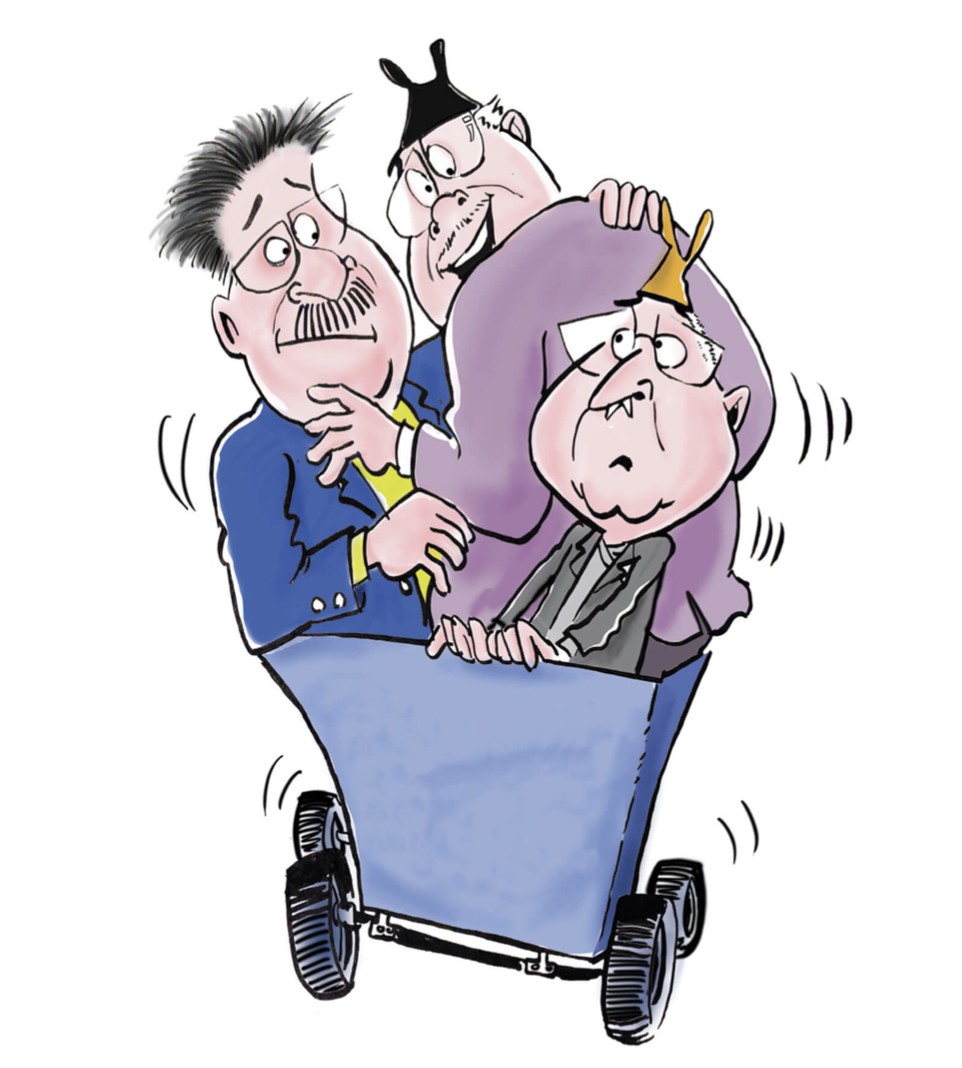
The back-stabbing in Nepali politics is now going into hyper timelapse. It is getting difficult to figure out exactly who is doing whom in.
Nevertheless, it does look like reports of Prime Minister K P Oli’s imminent political demise were greatly exaggerated. We ourselves have written numerous editorials in the past six months either predicting the prime minister’s ouster, or advised him to step down for governance failure, and mishandling the COVID-19 crisis.
But the wily Oli has outfoxed his rivals yet again. Even his enemies hand it to him: this is one crafty fellow. He was outnumbered in the party Secretariat, outgunned in the Standing Committee, his Cabinet was mutinous, his hold on the Nepal Communist Party seemed tenuous, and he was playing brinkmanship with India. But not only has he held on, he seems to have turned things 180 degrees in his favour.
The history of the power struggle (some say ego clash) between Prime Minister Oli and his NCP co-chair Pushpa Kamal Dahal goes back to their ‘gentlemen agreement’ to take turns at prime ministership. But Oli dragged his feet, and when Dahal confronted him last year, Oli said OK-OK, I’ll make you executive head of the party if I get to stay on as PM. Dahal agreed, but Oli double crossed him.
In April, Dahal stepped up pressure again and Oli was isolated. At which point, he got saved unexpectedly by India unilaterally opening a road in Lipu Lekh through Nepali territory. Oli grabbed the chance to play the nationalism card.
This bought him some time, but Dahal turned on the heat again in the Standing Committee this month. Once more, Oli fell back on anti-Indian rhetoric: accusing the embassy spooks of trying to oust him and then declaring that Lord Ram was a Nepali.
This time, the India card did not work. What was more effective was Oli’s threat to split the party and revive the old UML. This alarmed the Chinese, whose ambassador to Nepal Hou Yanqi openly lobbied to prevent a party split. Her message from the highest level of the Chinese Communist Party to comrades in Nepal was: stay united.
This message resonated with the mid and lower rank and file of the NCP, who then upped their pressure on the two leaders to sort out their ego differences and not hold the party and country hostage anymore.