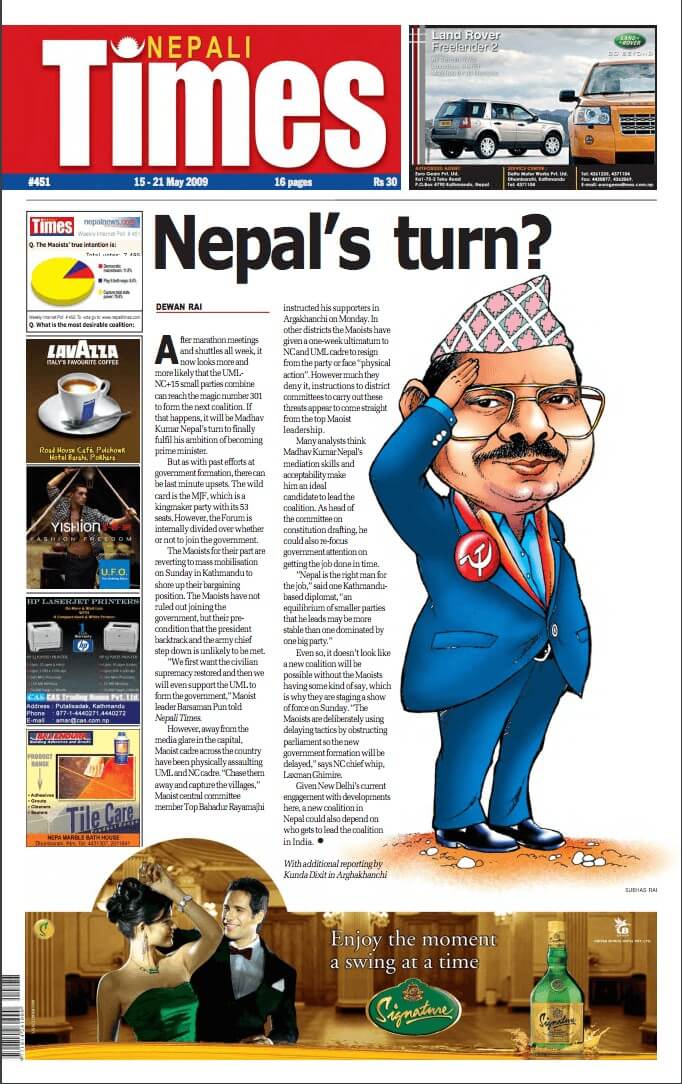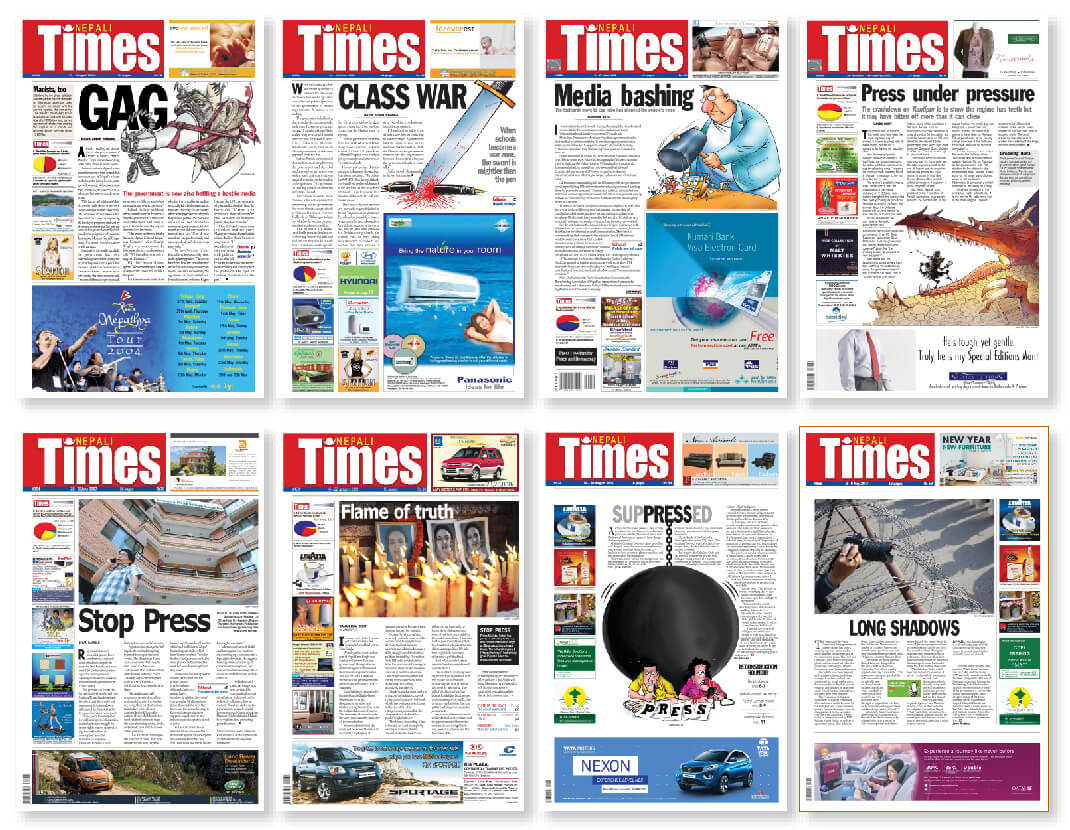
Whether Nepal was ruled by a monarchy-military dictatorship, an elected coalition or a communist regime, its leaders have often tried and ultimately failed to suppress the press.
After the royal-military coup of 1 February 2005, the Royal Nepal Army invaded newsrooms. At Nepali Times, two soldiers in military fatigues peered at the monitor, forcing the designer to expunge columns and cartoons. Kathmandu-based papers, including this one, went to press with white holes — so readers got the message that the edition had been censored. We wrote metaphorical editorials comparing democracy to trees, and played cat-and-mouse with the authorities.
Radio stations were told to broadcast only music, no news or current affairs. Some news readers got so fed up they started singing the news, broadcasting bulletins in duets. In the districts, radio stations were closed down, journalists jailed, some tortured and forced into solitary confinement for a year.
After the ceasefire and the 2008 elections, in which the Maoist party won a landslide, many breathed a sigh of relief. The war was over, and it looked like our freedoms had been restored. We were mistaken. The ruling Communists retaliated against critical content in the media throughout 2008-9 by burning newspaper distribution vans, instigating militant unions or vandalising and assaulting journalists in their newsrooms.
Ever since the united Nepal Communist Party came to power, it has been taking incremental steps to gag the media. Not with a sudden, swift crackdown but softly, in instalments. Like frogs in a pot of water above a fire, we are not supposed to notice that the water is starting to boil until it is too late. Just a short recap:
- In August 2018, Nepal’s new Penal Code criminalised photography (Section 295), slapped on heavy fines and jail terms for recording conversations (Section 293) and announced strict punishment for sending, receiving or using online data (Section 298). It banned ridiculing of government officials by Photoshop-ing their images.
- A bill in Parliament sought to prohibit journalists from publishing personal information of public officials, ostensibly to protect their privacy.
- Editors were summoned to the Press Council for intimidating interrogations.
- Three journalists in the English language service of the state news agency RSS are being investigated for putting out a story that the Dalai Lama was out of hospital in New Delhi. Their crime: transmitting the item while President Bidya Devi Bhandari was on a visit to Beijing.
- Last week, the Ministry of Communication and Information Technology slipped a draconian Media Council Bill into Parliament with excessive secrecy. It stipulates hefty fines on journalists.
Taken together, this is a creeping coup. Nepal seems to be following the roadmap of elected despots worldwide who are cracking down on the free press. Our leaders appear to have got hold of the manual from the one-party states they have been visiting of late.