What makes Nepal scenic is also what makes it seismic. The country is located in one of the most vulnerable regions of the world for earthquakes, and our ancestors were used to them happening regularly. They knew that as they rebuilt after one earthquake, they had to prepare for the next one.
A scientific paper published in Nature Communications this month gives us a sobering reminder of this danger. Even as we catch up with reconstruction and rehabilitation after 2015, we have to scale up to the whole country our preparedness for the Next Big One.
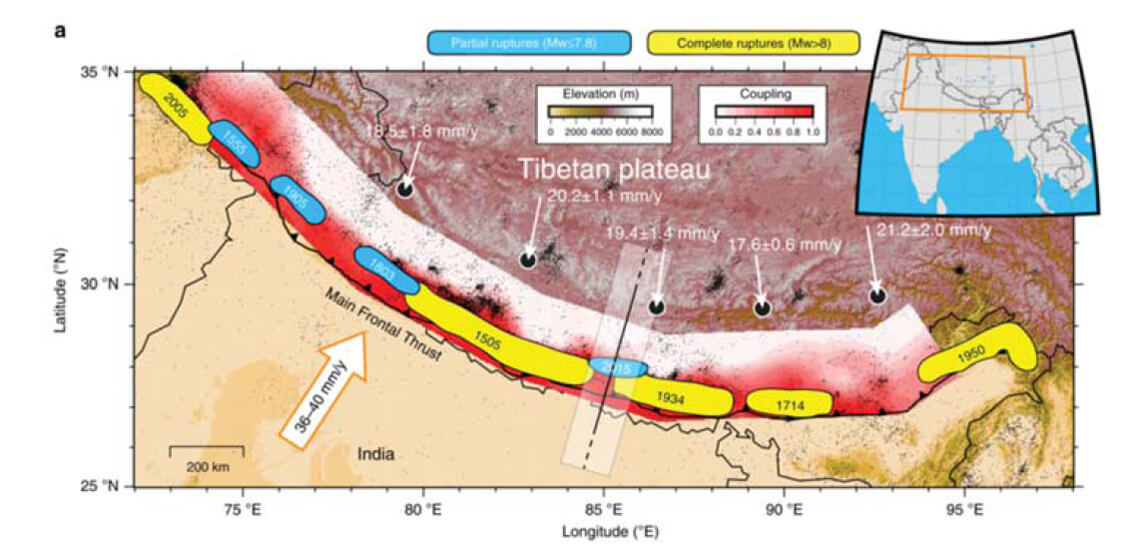
Himalayan earthquakes fall into two main types. There are moderate intensity quakes like the ones in 2015 and 2008 which are accompanied by a lot of shaking, but do not deform the surface. Then there are gigantic upheavals like the 8.3 magnitude 1934 quake epicentred in eastern Nepal which destroyed much of Kathmandu, and the 8.7 magnitude Assam earthquake in 1950, described as the greatest earthquake to hit the Himalaya in recorded history. Megaquakes like these uplift the surface and are what formed the Himalaya.
Seismologists studying data from the 2015 event have concluded that the Gorkha Earthquake ruptured eastwards, and stopped underground somewhere south of Kathmandu Valley, and instead of releasing the stores stress, increased tectonic tension underneath Central Nepal. They say moderate quakes like 2015 can actually trigger future megaquakes as the rock layers release accumulated stress along faults.
These urgent warnings came as Nepal marked the anniversary of the 1934 megaquake last week as National Earthquake Safety Day.
Himalayan seismologist Roger Bilham says the 2015 earthquake was not the Big One which scientists had feared. In fact, it is still collecting energy beneath us and it could be let off in the near future just as the 1833 earthquake in Kathmandu was followed by another one 30 years later. The second quake this time could cause more damage because its epicentre may be directly beneath Kathmandu Valley.
Added to the unfinished business of 2015, there is also the danger posed by the seismic gap in western Nepal which has not seen a megaquake since 1505. The western half of the country was not affected by 2015, and is at double risk because of the long seismic gap and relatively low awareness there about earthquake safety.
The focus on rebuilding in 14 districts of central Nepal hit by the 2015 earthquake should not stop us from getting western Nepal prepared for the Big One. Indeed, the whole of Nepal, northern India and the region should brace itself because a megaquake of 8.5 magnitude in western Nepal would cause widespread death and devastation across northern South Asia, which is the world’s most densely-populated region. Seismologists warn it could possibly be the worst disaster in human history in terms of loss of life.