
Nepal’s economy has hit the iceberg, but you wouldn’t know it from the politicians fighting it out on the deck.
A serial prime minister cannot form a functioning coalition government even after 6 weeks of assuming office, his coalition partners are too faction-ridden to be a countervailing force, and the main opposition has just split.
All this is nothing new, of course. It has been the way things have been ever since the 1990 changes when democracy was supposed to unleash prosperity. Three decades of political infighting, neglect, conflict, a rent-seeking state and governance failure have left the economy in tatters. And now we have the pandemic to contend with.
If the political battles being played out in the parlours of power were inter-generational or about ideology, something good might have come of it. But such personality driven one-upmanship means that the current crop of ageing politicos has neither the time nor competence to deal with the emergency at hand.
The malaise runs deep. Despite gains in literacy, the poor quality of education drives young Nepalis to seek salaried jobs. The yield from agriculture is so low it does not make sense to farm. Government investment and market support for agriculture are ineffective. Every year, 700,000 youth join the labour market but there are jobs in Nepal for only 15% of them. The rest seek their fortunes abroad by selling ancestral property, fallow farms, lower food production, increasing poverty, and completing the vicious cycle.
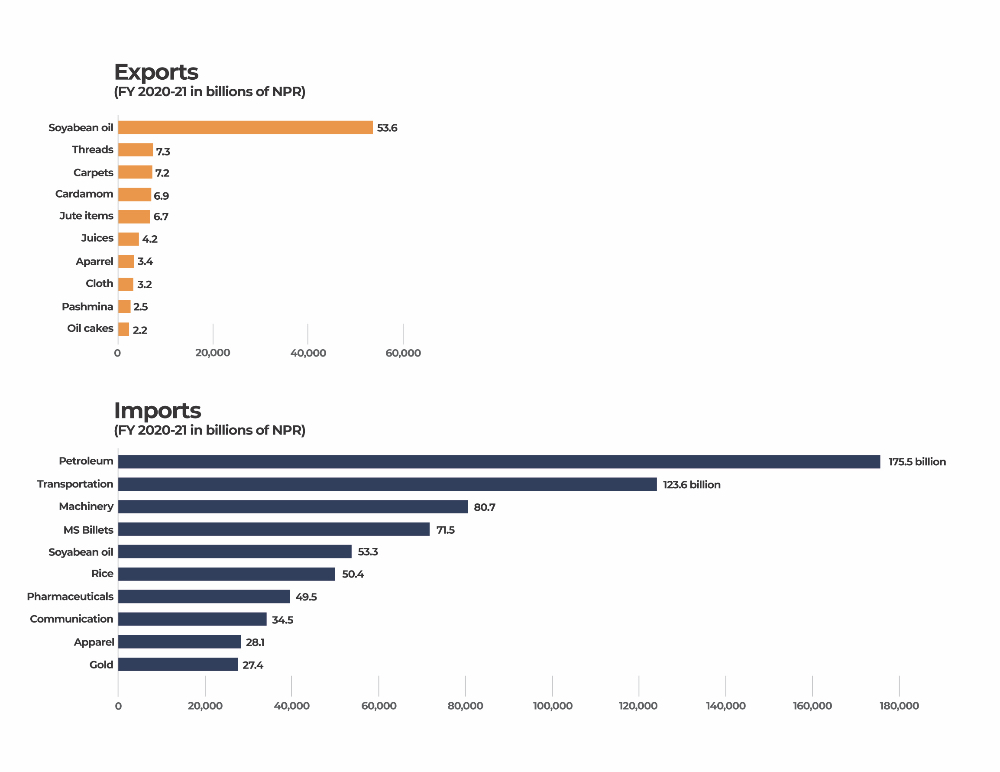
Nepal’s trade deficit has averaged $10 billion a year for the last three years. It only went down in 2020-21 because lockdowns reduced fuel imports. Newly released Nepal Rastra Bank trade figures show that the country is, to put it bluntly, bankrupt. The only reason we have not gone completely belly-up is because of remittances, which pumped $8 billion into the economy this year.
Nepal’s biggest import item by far is petroleum and in the past fiscal year it hit Rs175 billion — compared to Rs90 billion the country earned from all other exports combined.