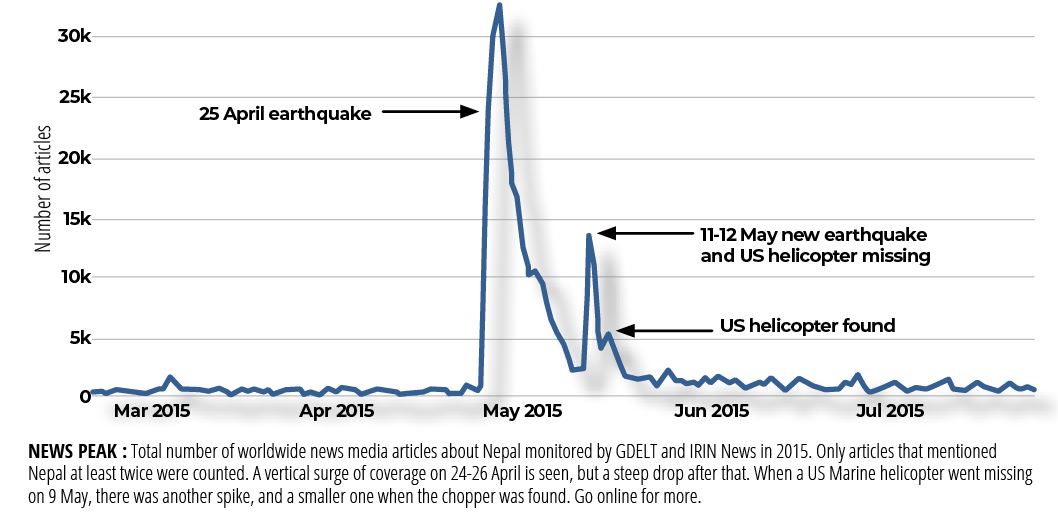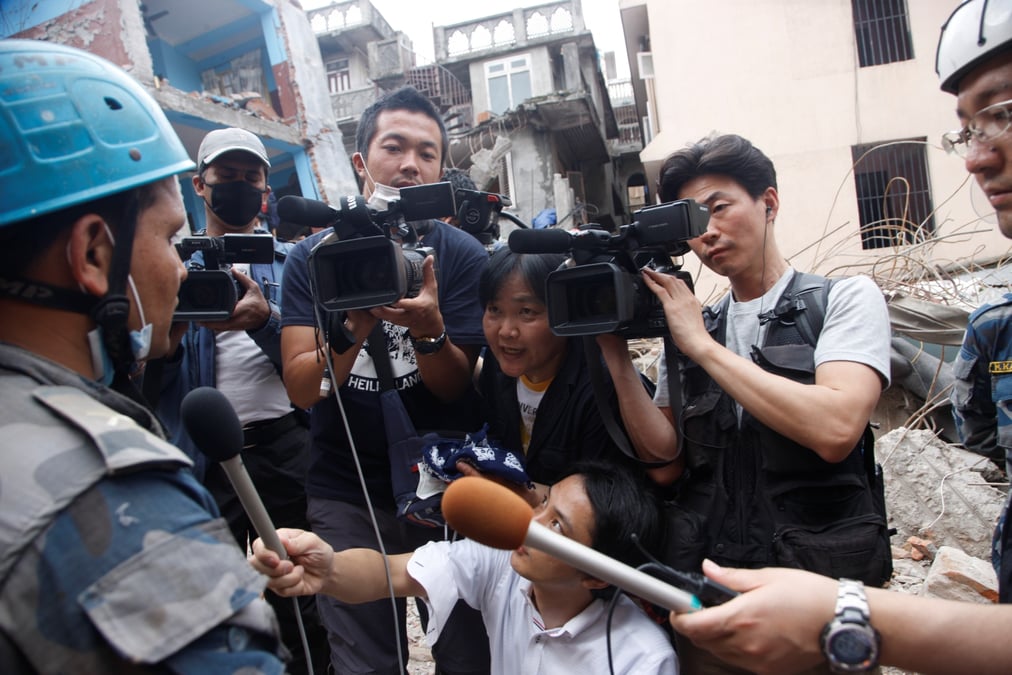
It is perhaps only when they become a part of the story they are reporting that journalists realise just what a narrow segment of reality they depict in the coverage of a crisis.
This is especially true when foreign correspondents report on a disaster like the earthquake that hit Nepal on 25 April 2015.
For the first seven days, as videos and photographs of a devastated city were broadcast around the world on TV and the internet, my family got frantic calls from friends and relatives. They seemed surprised that we were still alive, that our house was intact, we had food and water, or that they could even make that phone call.
Like everyone else, they had seen images of Kathmandu Valley’s historic monuments reduced to rubble, piles of bricks where people’s homes used to be, and photographs taken from rescue helicopters of destroyed villages clinging precariously to steep mountainsides. These apocalyptic scenes had convinced them that nothing was left.
Yet 80% of the houses in Kathmandu Valley were intact. Even in the historic heart of the city, the main temples and palaces were still there. The only thing different in most neighbourhoods after the earthquake was that there weren’t the usual traffic jams.
In fact the first foreign correspondents to parachute in the next morning were surprised on the drive into the city that they didn’t spot a single ruined building. Had they flown into the wrong hotspot by mistake?
Many of us in the media are accused of distortion by being selective in what we choose to report. Some foreign correspondents are careful not to fall into that trap -- trying instead to break away from stereotypical coverage and catch a deeper understanding of what is really happening beneath the surface, or away from the spotlight. Still, there is a formula for news and it’s hard to file a story that doesn’t fit it.
Which is why after every disaster it is, quite literally, the same old story.
The international media arrives in herds and hunts in packs. Everything has to conform to a preordained script: you parachute in and immediately find good visuals of ‘utter devastation’; recruit an English-speaking local who does not need subtitling; trail the rescue teams with sniffer dogs you flew in with.
Then it’s back to the hotel bar to swap stories of derring-do, before calling the desk to plan tomorrow’s story of slow government response, and the day after tomorrow’s account of yet another survivor pulled out alive. After that, get a ride in a rescue helicopter for the out-of-town visual of utter devastation in a remote mountain village.