What has helped save the endangered snow leopard thus far is that it lives in the world’s most inhospitable mountain terrain. But this is changing as new roads improve access, making the elusive cats more vulnerable to those who mean it harm.
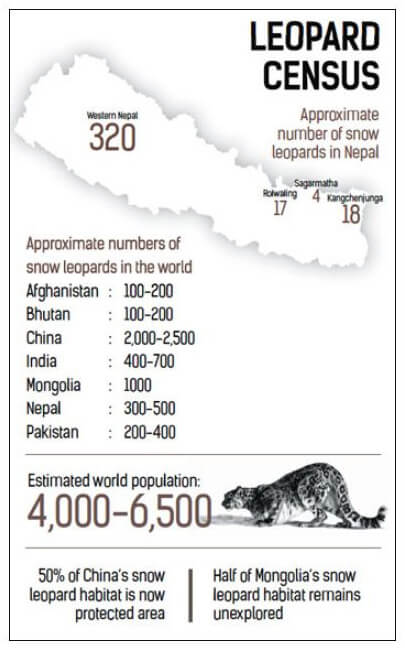
Research into the behaviour and ecosystem of snow leopards is therefore an important part of protecting them, and a new international survey has shown that Nepal leads other snow leopard range states in studying and conserving the threatened species.
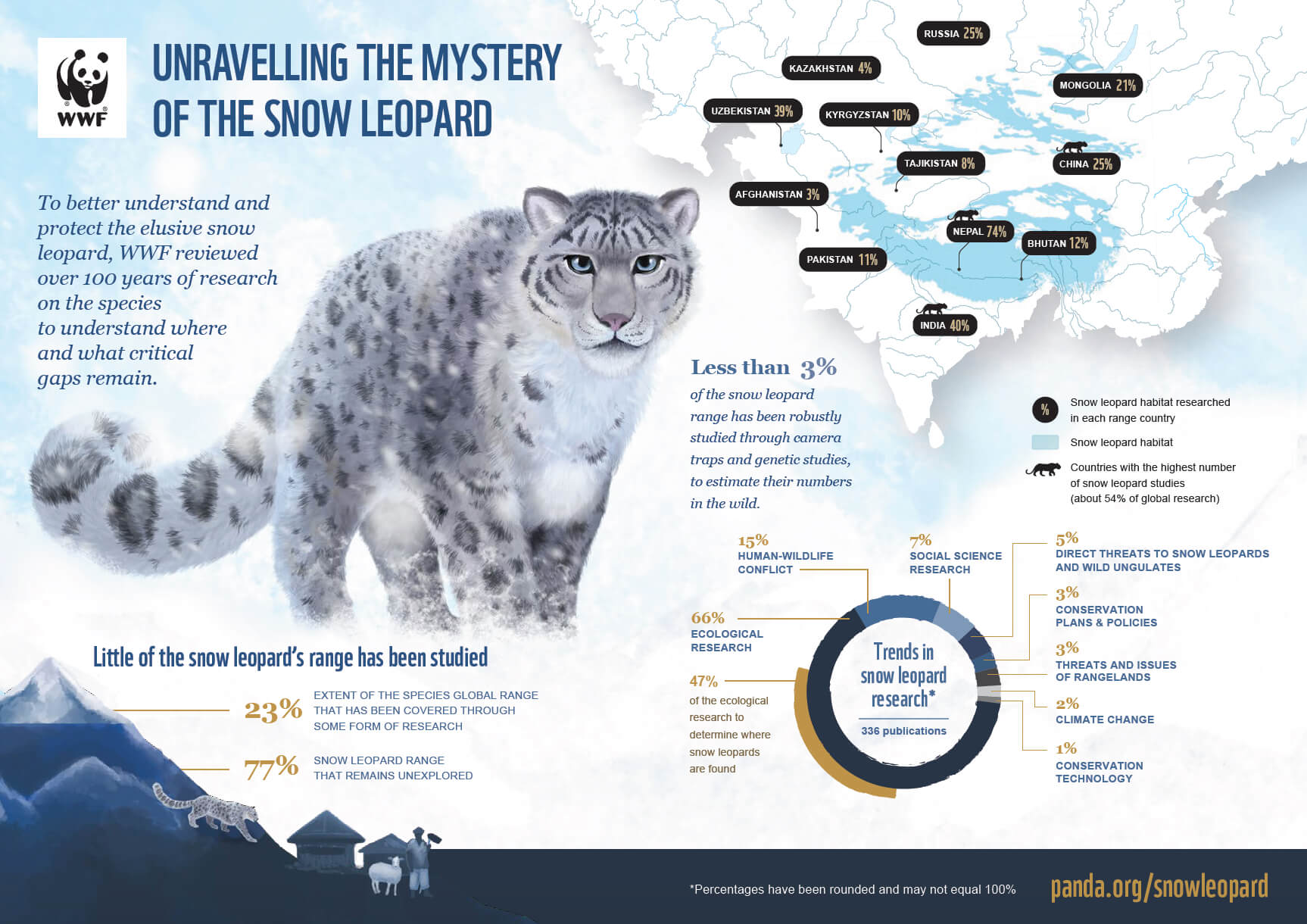
The World Wildlife Fund (WWF) study, Over 100 Years of Snow Leopard Research, shows that 74% of the snow leopard habitat in northern Nepal has been the subject of research into the species.
Most of the snow leopard’s vast 1.7 million sq km range in remote mountains spanning 12 countries in central Asia has never been researched to study its ecosystem. Nepal’s neighbours India and China have only 40% and 25% of their snow leopard habitat explored.
“The snow leopard lives in rugged terrain, so research poses significant logistical challenges. Most of the habitat is still unexplored and we don’t have a full picture of the status of this magnificent big cat,” says Rishi Kumar Sharma, WWF Global Snow Leopard Leader, who is the lead author of the report.
Of the 23% of the area studied, only 3% of the snow leopard range has been more closely examined through camera traps and genetic tools to estimate their number in the wild, the WWF survey shows.
This, coupled with the absence of long-term monitoring programs makes it difficult to evaluate the impact of measures taken to protect the species, as well as track emerging new threats to the snow leopard. Sharma's report examines the current state of knowledge by including peer-reviewed published papers on the species and its habitat.
The countries with the most snow leopard research are Nepal, India, China, Mongolia and Pakistan, in that order. The studies mostly focus on ecological research, human-wildlife conflict and socio-ecological dimensions of the snow leopard range.
However, since so little of the snow leopard’s ecosystem has been researched, the survey concludes that there are critical knowledge gaps that could be hampering more effective conservation measures.
“Snow leopards are not just the emblems of Asia’s high mountains but are also critical to sustaining the landscapes they live in, which support water sources for over 2 billion people,” says Margaret Kinnaird of Lead Wildlife Practice at WWF International.
She adds: “This report will be a guide for the conservation community to diversify and prioritise areas of research to preserve sufficient and suitable habitat for snow leopards and to ensure water security for the vast human populations downstream.”
Indeed, protecting the snow leopard habitat also means protecting the environment of the Himalaya, Tibetan Plateau, Karakoram and Pamir that are together called the ‘Water Tower of Asia’ because 1.2 billion people downstream depend on the rivers that originate there.