
Next week marks one year since Nepal was completely shut down to stop the spread of Covid-19. On 24 March 2020, after only the second infection was detected in a traveller from Europe, the country ground to a halt.
The first lockdown lasted till 21 July, and although the number of positive cases had exceeded 18,000 by then and there had been 40 fatalities, travel restrictions were eased. The pandemic was raging in India, and the virus spread mainly through returning workers from the Tarai cities to the mountain districts, and then through community dissemination.
After that, there was another lockdown but it was lifted just before the festival season, leading to a sharp spike in cases and fatalities in October. The daily caseload peaked at 5,700, and the deaths every day hit a high of 40-45 in November. (see figures)
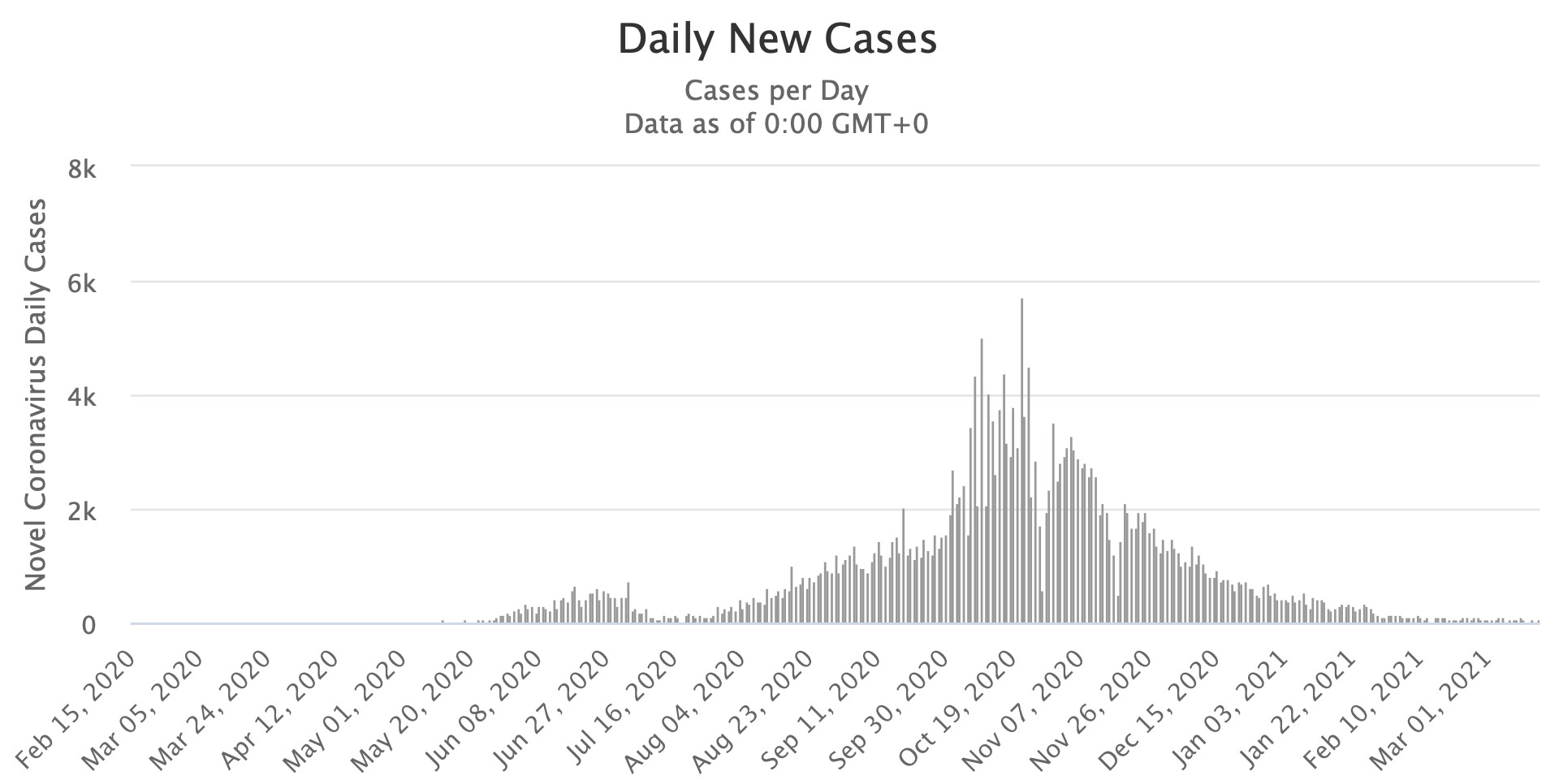
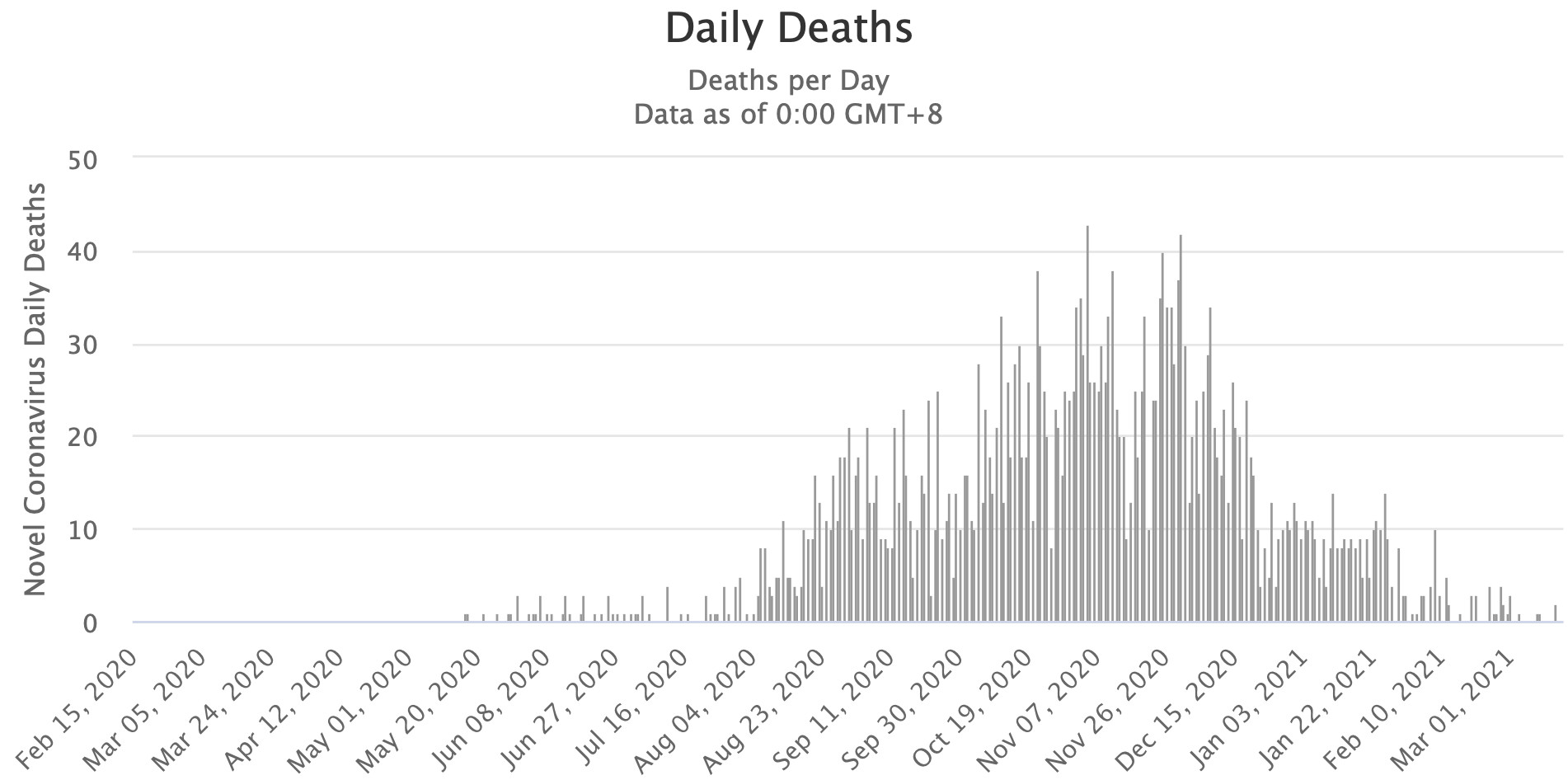
Thereafter, the the positivity rate, patients in ICU, as well as the total daily fatalities declined steadily. Out of the 3,311 PCR tests done in a 24-hour period on 14-15 March, there were only 79 positives. There have been many days this month with no Covid-19 deaths reported. The number of active cases nationwide is now below 900.
Looking around Kathmandu Valley today, and even more so in the outlying districts, it seems as if Nepalis think the pandemic is over. It could be due to desperation of people to return to their normal livelihoods, the prospect of vaccines, and news of the decline in infections. Nepalis are letting their guard down.
We should not. The aggressive resurgence of the coronavirus in parts of India in the past two weeks should be a warning that we are not out of the woods yet. India recorded nearly 27,000 new cases on Monday, the highest single-day spike since December. Daily deaths have also climbed steadily and are back to a daily average of 115.
Most of the daily cases in India’s second wave have been in the western state of Maharastra, especially parts of Mumbai and cities like Nagpur where there are now lockdowns.
In December, public health experts were puzzled by the sharp decline in caseloads in India and Nepal and were trying find an explanation for it. The two countries were bucking the global trend, and despite crowded living conditions, poor surveillance and a return to normal life, the daily cases and deaths kept going down.
Epidemiologists zeroed in on the first signs of ‘herd immunity’ — the virus was not spreading as fast because a sizeable percentage of the population already carried antibodies from previous exposure to the virus. Because the virus spread so rapidly and rampantly across India in mid-2020, it seemed to have burned itself out.