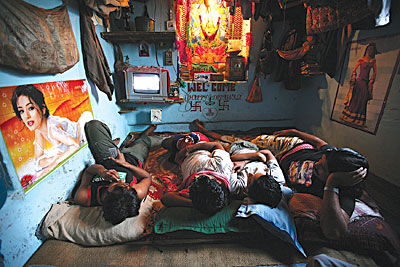
Even before the current coronavirus scare, Nepal’s overcrowded prisons were hotbeds for infectious diseases like tuberculosis, typhoid and influenza. But public health experts fear that the ease of spread of COVID-19 through breathing and touch could make Nepal’s jails incubators for the virus.
There have been many studies of crowded living conditions, hygiene and violence in Nepal’s prisons, and a coronavirus outbreak there could affect the health of detainees, security staff and through them spread to the general population.
Prisons can be incubators for COVID-19, Nepali Times
“Our prison infrastructure is not properly managed, as a result inmates have to be kept in crammed up places,” admits Sharmila Kumari Sharma, Senior Auxiliary Health Worker at Dilli Bazar prison. “We have regular awareness programs on washing hands and maintaining physical separation, but implementation is difficult. It is so crowded here that even maintaining 1.5m distance is not possible.”
The World Health Organization (WHO) has published guidelines for preventing and managing the cases of COVID-19 in prisons and detention centres. According to the latest report of the Department of Prison Management (DOPM), there are 24,512 prisoners in Nepal’s jails -- 1,528 of them women, 1,281 foreigners and 91 are dependents. There are 8 juvenile correction centers in Nepal with 847 boys and 23 girls.
Charles Shobraj out of lockup during lockdown?, Deepak Kharel
“Given that COVID-19 thrives on social contact, having crowded jails with people coming in and out is likely to promote transmission into jails, transmission within jails and 'spillover' of infections out of the jails into the community,” says Columbia University epidemiology professor Barun Mathema in an email interview with Nepali Times this week. Even within jails and detention centers it is important to identify the medically vulnerable people, those with chronic conditions like HIV/AIDS respiratory illnesses and cancer. Individuals with these co-morbid conditions may be predisposed to poor COVID-19 clinical outcomes.
Studies have shown that reducing the number of inmates would lessen the pressure on prisons. Releasing medically vulnerable, nonviolent offenders and people towards the end of their sentence could free up some space in the prisons, and would help in general mitigation goal of slowing the spread of the disease if there is an outbreak. In addition, use of bail, speedy trials, early release and community service could aid in resolving the issue of overcrowding in the prisons and unsanitary conditions – problem that predate who COVID-19.