Villages along the proposed alignment of Nepal’s ambitious east-west train project are excited about the connectivity and development it will bring. But here in Hariban village there is only apprehension.
While elsewhere, there are environmental concerns about the train track slicing through national parks and protected forests, here along the densely populated Tarai plains there is worry about losing farmlands.
“This project will cost me a big chunk of my land,” says Dinesh Mahato, who farms a small plot in the Ghurkauli village near the East-West Highway. “Why should I agree to give it all away when I will only be compensated partially?”
Hari Narayan Mahato echoes his brother’s anger. “The map shows that I have to give up nearly 700 sq m of land, but I know the area is going to be three times bigger once construction begins,” he says. “It’s just not worth it.”
There is also opposition in the Dhanpati locality, and 10 households from these two villages have refused to accept the government’s compensation rate for land which they say is much less than market value.
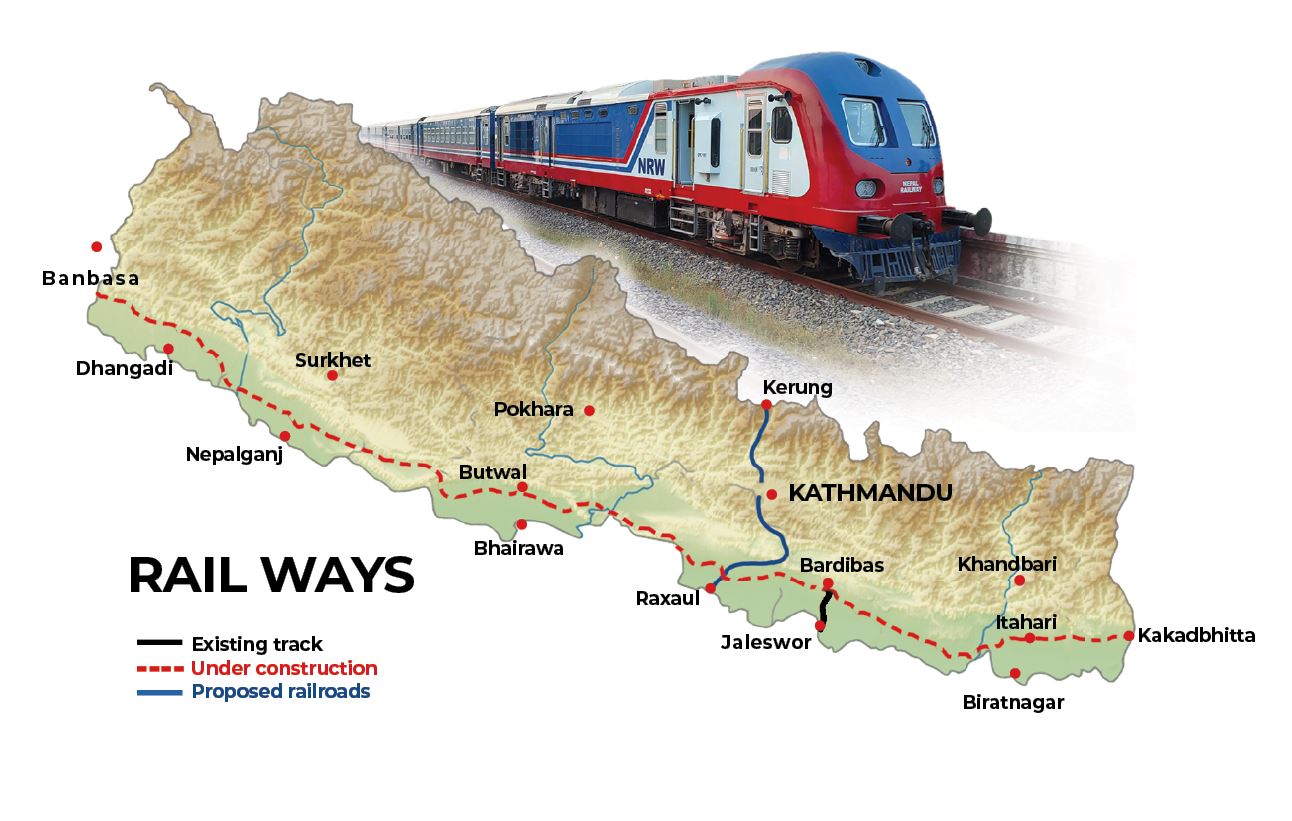
The East-West Electric Railway project will ultimately be Nepal’s transportation artery stretching from the eastern border with India in Jhapa to Kanchanpur, connecting 24 districts. It will intersect with the proposed Birganj-Kathmandu railway at a junction in Sarlahi district.
When completed, Nepal’s 950km long ‘gateway to prosperity’ as it has been dubbed, will have 123 stations, 10 tunnels, 334 bridges, a dam, and a 132kV transmission line to supply electricity to the locomotives.
The project will require the acquisition of about 4,520 hectares of land, including 518 plots belonging to 4,000 households. Some of this will be along corridors through Chitwan, Bardia, Banke and Sukla Phanta National Parks and other nature reserves.
Controversy about land acquisition and compensation as well as environmental impact have stalled the project since 2010. “The biggest issue has been compensation for land,” admits Kamal Kumar Shah of the Department of Railways.
Read also: India-China rail race, Shristi Karki
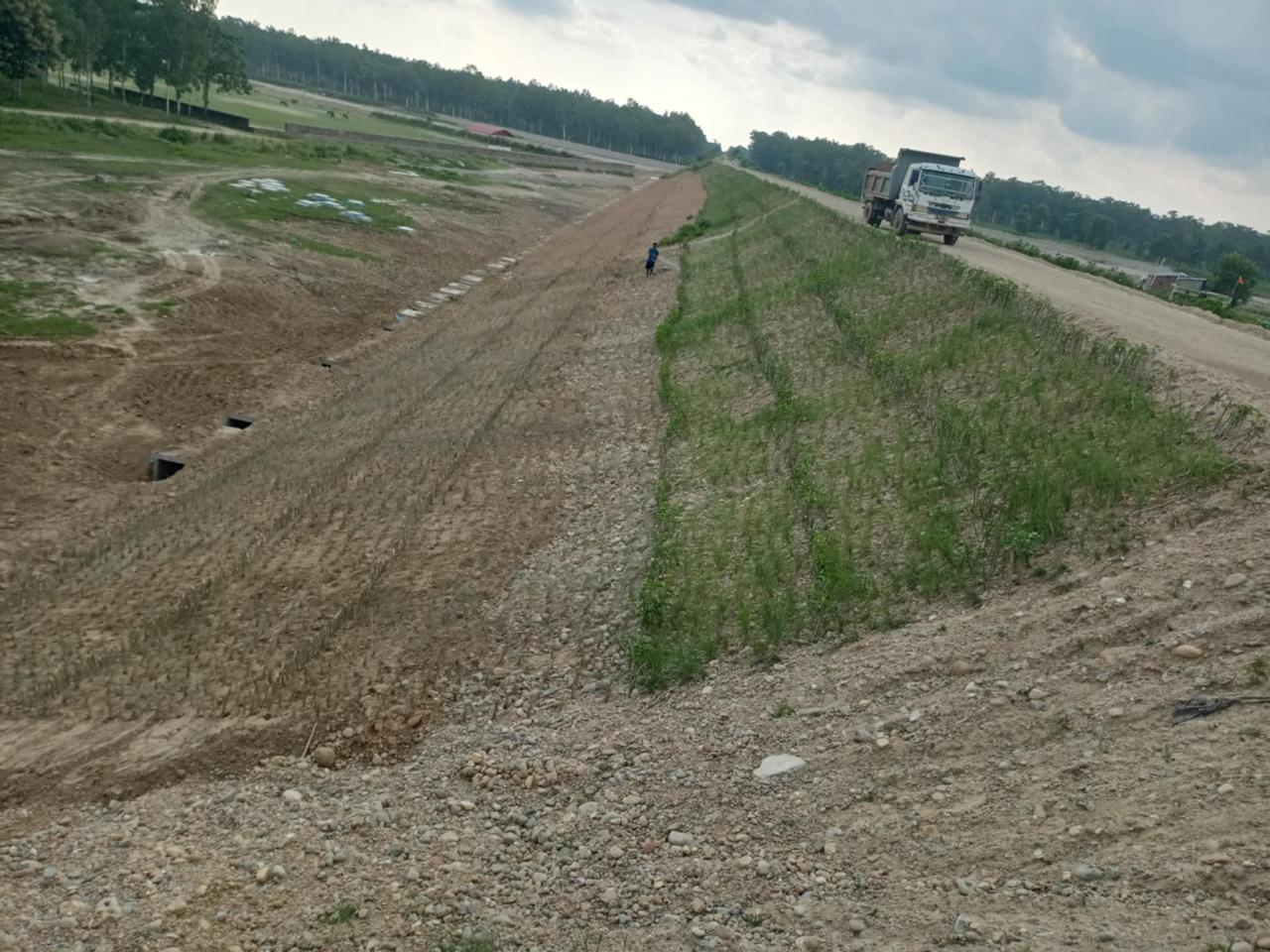
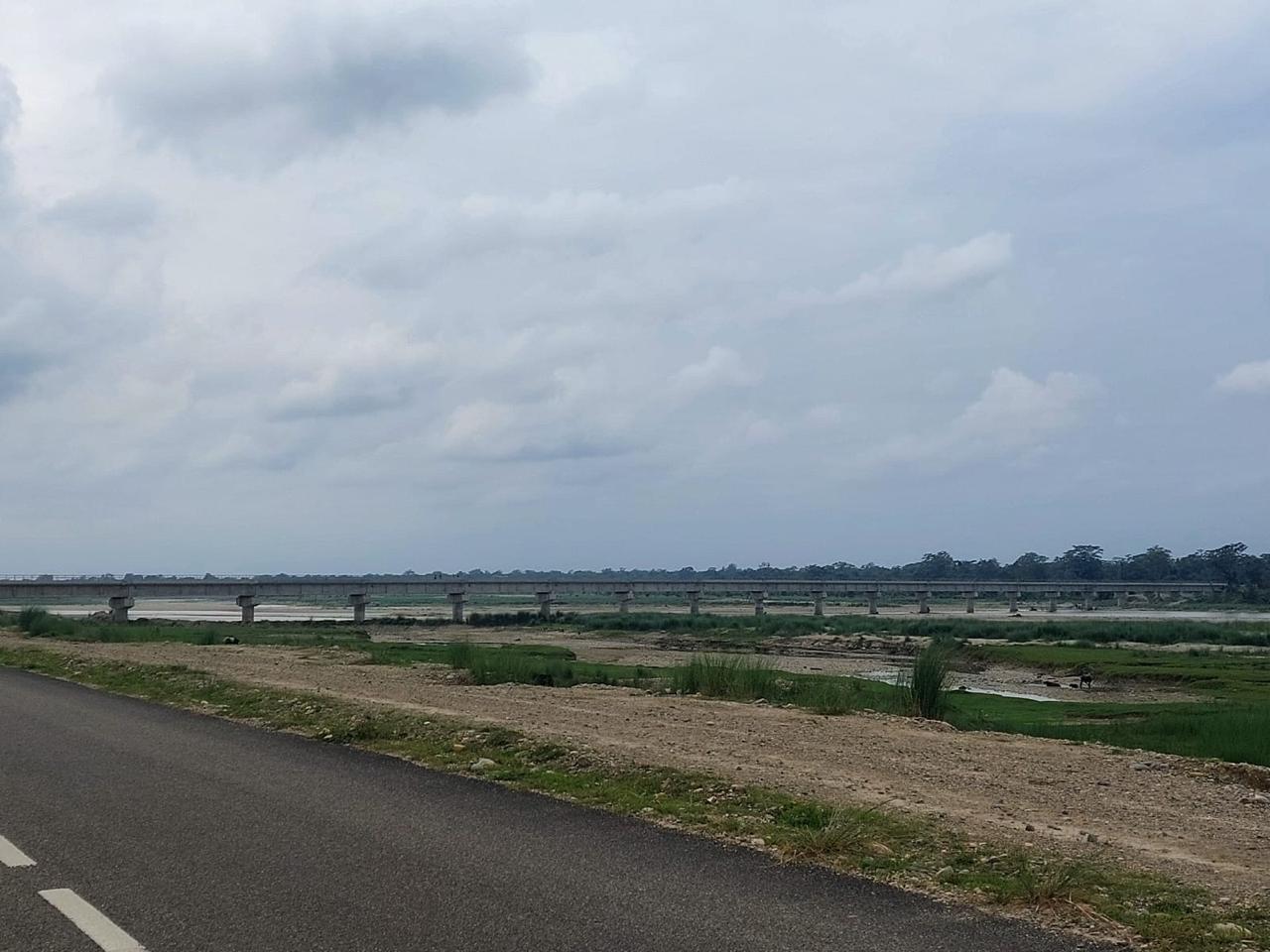
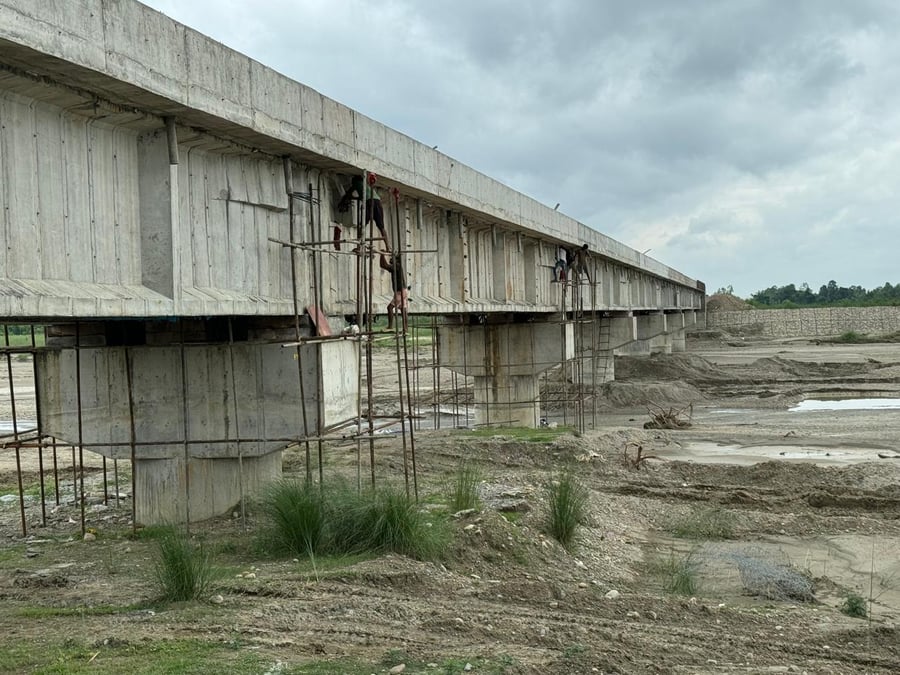
This means less than half of the work along the 70km Bardibas-Nijgad segment has been completed and 16 bridges built, and this is the first section of the railway where construction started 15 years ago.
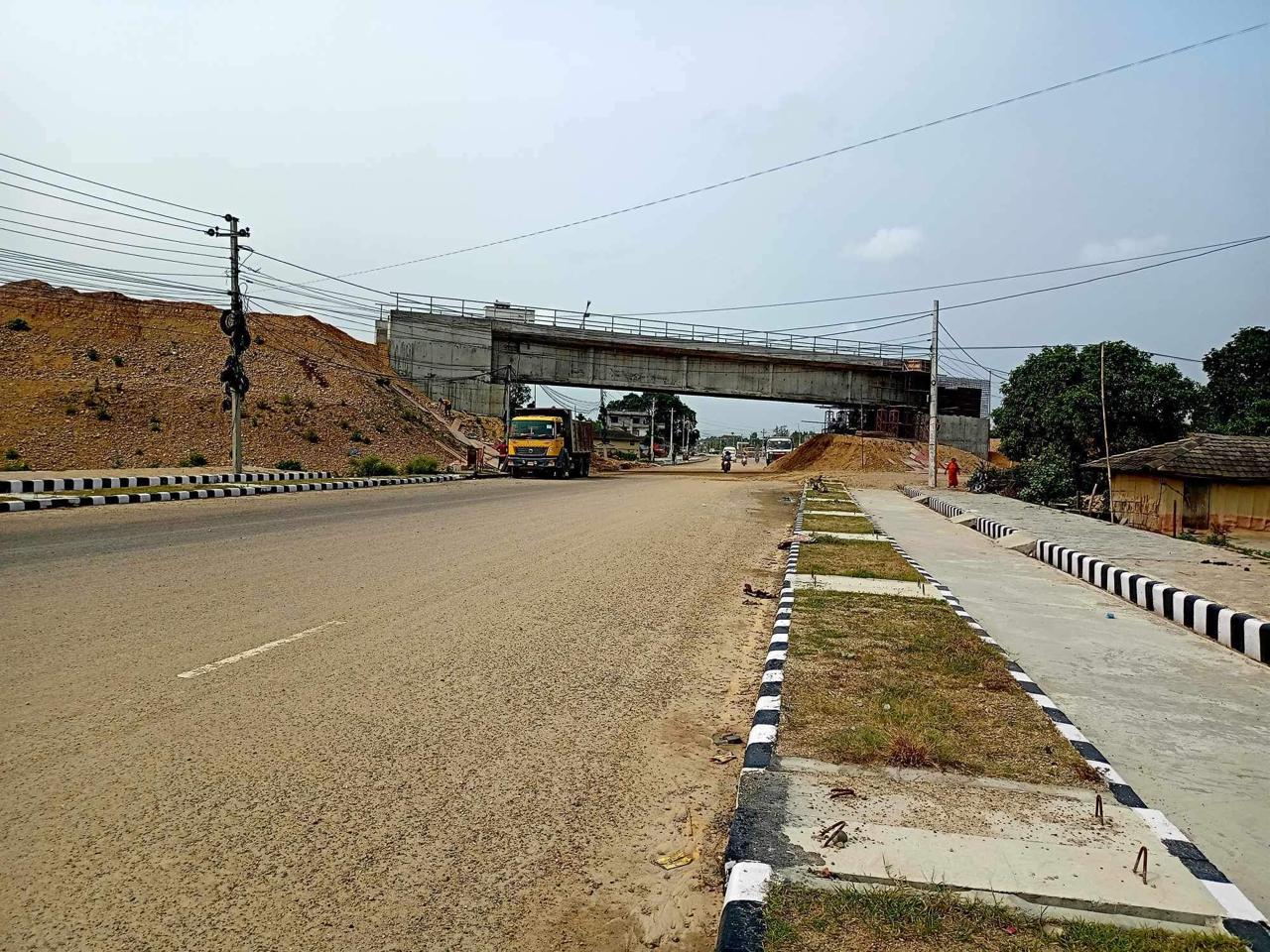
Says Senior Division Engineer Kiran Karki: “It is difficult to work here, people have built houses in public land, knowing that the railway is coming. How do we ask them to leave?”
Part of the delay is also due to lack of budget, and this has increased the initial estimate of the total cost because of the increase in land value. The government has nationalised over 190 hectares for the Kakadbhitta-Inaruwa section of the railway in the eastern Tarai for which it will have to distribute Rs24.41 billion in compensation. But the budget allocated for that is only Rs1.5 billion.
This means farmers have lost their land, but have not yet been compensated. The East-West Railway line was initially estimated to cost around Rs1 billion per km, but this has increased to Rs1.5 billion per km. Just the first Bardibas-Nijgad section will need an additional Rs50 billion to complete.
The estimate for the entire project was estimated at Rs955 billion, but a revised budget has already surpassed Rs1.5 trillion. A major bridge across the Kosi north of the barrage on the Indian border is expected to cost more than Rs410 billion. The Detailed Project Report (DPR) has been revised to build an elevated line over towns in the Butwal section, for example, to avoid paying exorbitant compensation.
Read also: Nepal Railways Janakpur test drive
“This project works on multi-year contracts, which have been difficult to award due to a lack of budget,” says Shah. “So the date of completion of the project depends on money being forthcoming.”
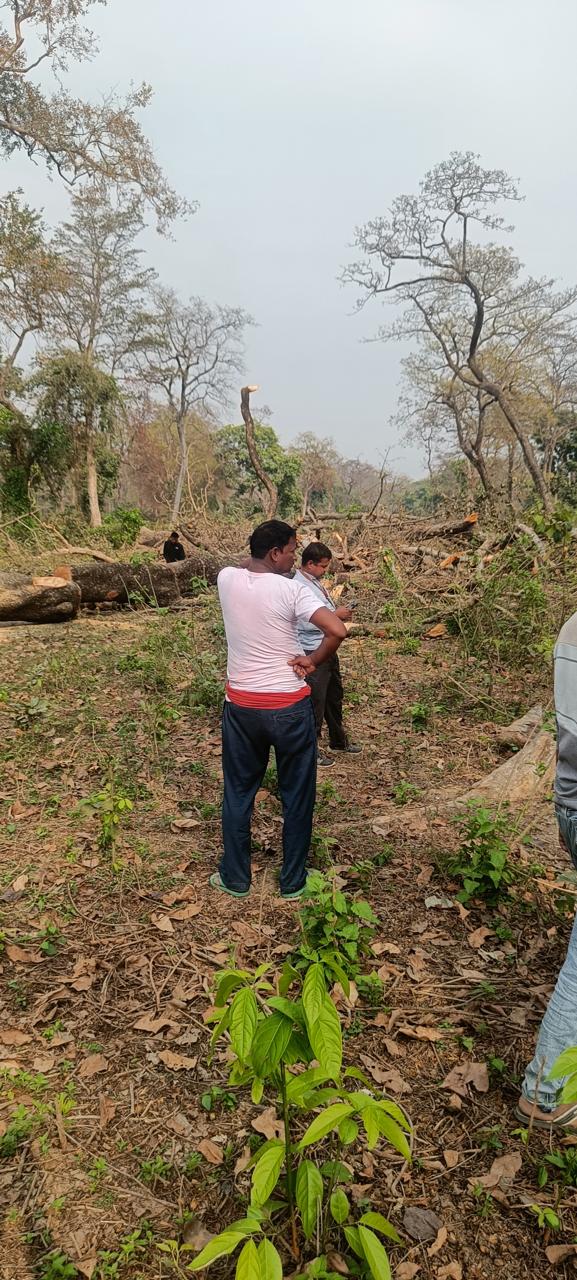
Meanwhile, activists have raised concern over the project’s environmental cost. The Railway Department has prepared DPRs for four sections of the railway, but Environmental Impact Assessments (EIA) have not been carried out.
In Chitwan, the proposed route was realigned to avoid Chitwan National Park following a Supreme Court stay order. However, Chitwan residents have now formed a Railway Victims’ Struggle Committee, saying that the new route would cut through their densely populated communities.
“We only found that our land would be part of the railway line when the people from the Railway Department came here last year,” says Hari Thapaliya of Bharatpur Municipality. “The decision to reroute the track was made overnight without any consultation with us.”