
Himal Khabarpatrika 22-28 April
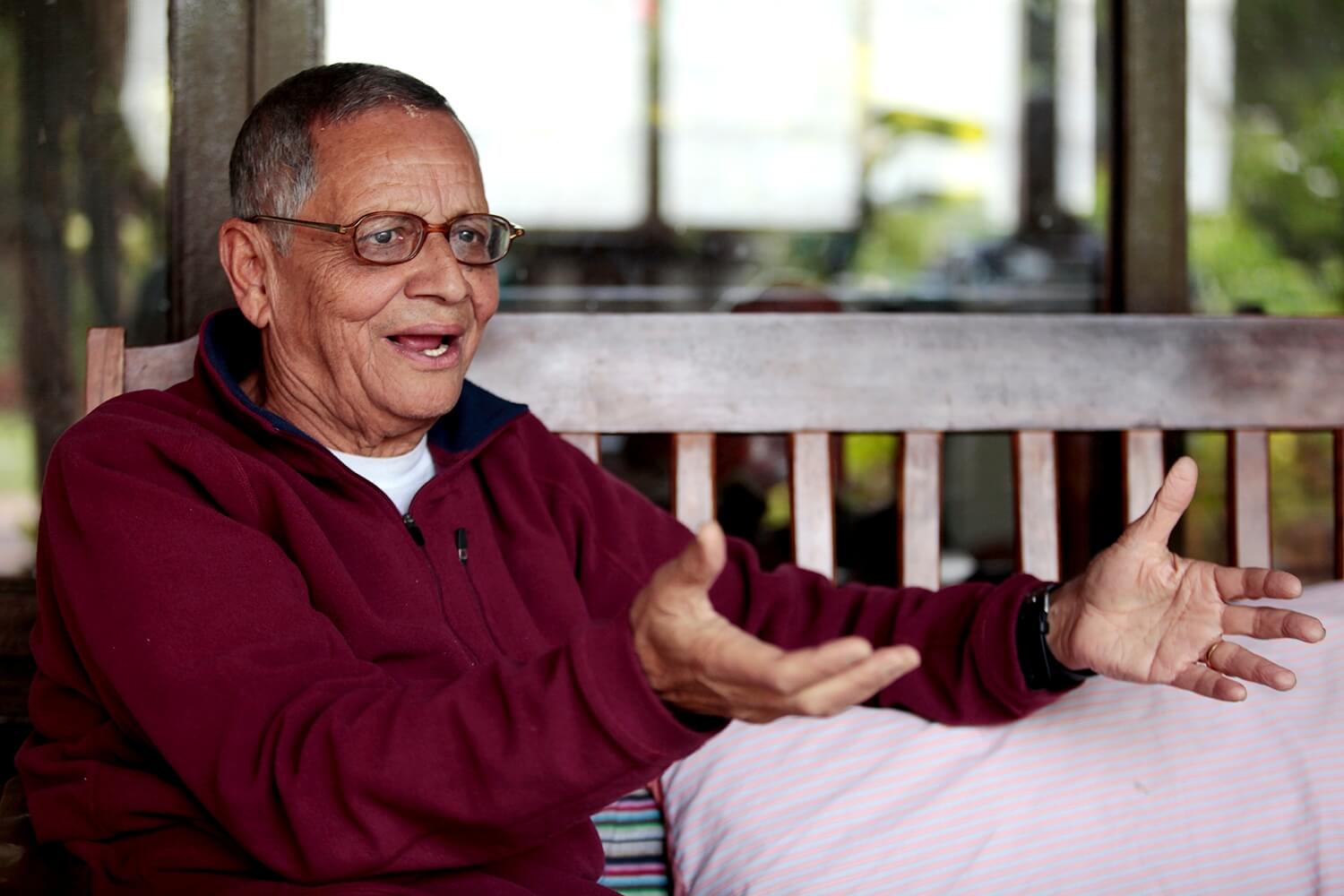
Interview with civil society leader Devendra Raj Pandey on the 12th anniversary of the Democratic Movement in 2006.
Himal Khabarpatrika: This week marks the triumph of the 2006 Democratic Movement. How do you recall those heady days?
Devendra Raj Pandey: After 1990, people were growing frustrated with political parties and the Maoist insurgency was escalating. Yet, civil society was passive. The royal coup in 2005 gave us new energy, and we announced a civil movement for peace and democracy.
Why was civil society passive?
This is what happens when you have the desired political system, but the leaders do not deliver. Democracy was already restored in 1990, so we did not have to fight for it. We were disillusioned with elected leaders, but we could not ask them to step aside and let us govern the country.
Why has civil society failed to create the kind of political order it envisioned?
You can change the regime, but not the attitude of political leaders. After 1990 and 2006, our leaders considered money instead of people as their source of power. The general people or civil society were responsible because they stand united to overthrow authoritarian regimes, but are divided when political parties come to power. They never question the party they belong to.
How has Nepal’s political course been after 2006?
Nepal was run by political cartels until recently, with a syndicate of top leaders taking all important decisions. And they were doing it not to serve the country but to cling on to power. The transition to federalism was long and bumpy, but we did not have the luxury to undo everything and start afresh. Even after three tiers of elections under the new Constitution, Madhesi, Janajati, women and Dalits have political grievances. But there is a sense of political stability, and I am hoping for new power dynamics within existing political parties and the emergence of a new political culture.
Are you suspicious of the communist government?
There is speculation that the communist government will curtail civil rights and impose authoritarianism. I do not think so. We cannot regress. Democracies are under attack, and populist ultra-rightists are emerging around the globe. Our democracy is in much better shape. The only problem is that our leaders never seem to retire or improve. A politician returns to power after 12 years, but his style and attitude does not change. It looks like I am pointing to NC President Deuba, but this is true right across the political spectrum.