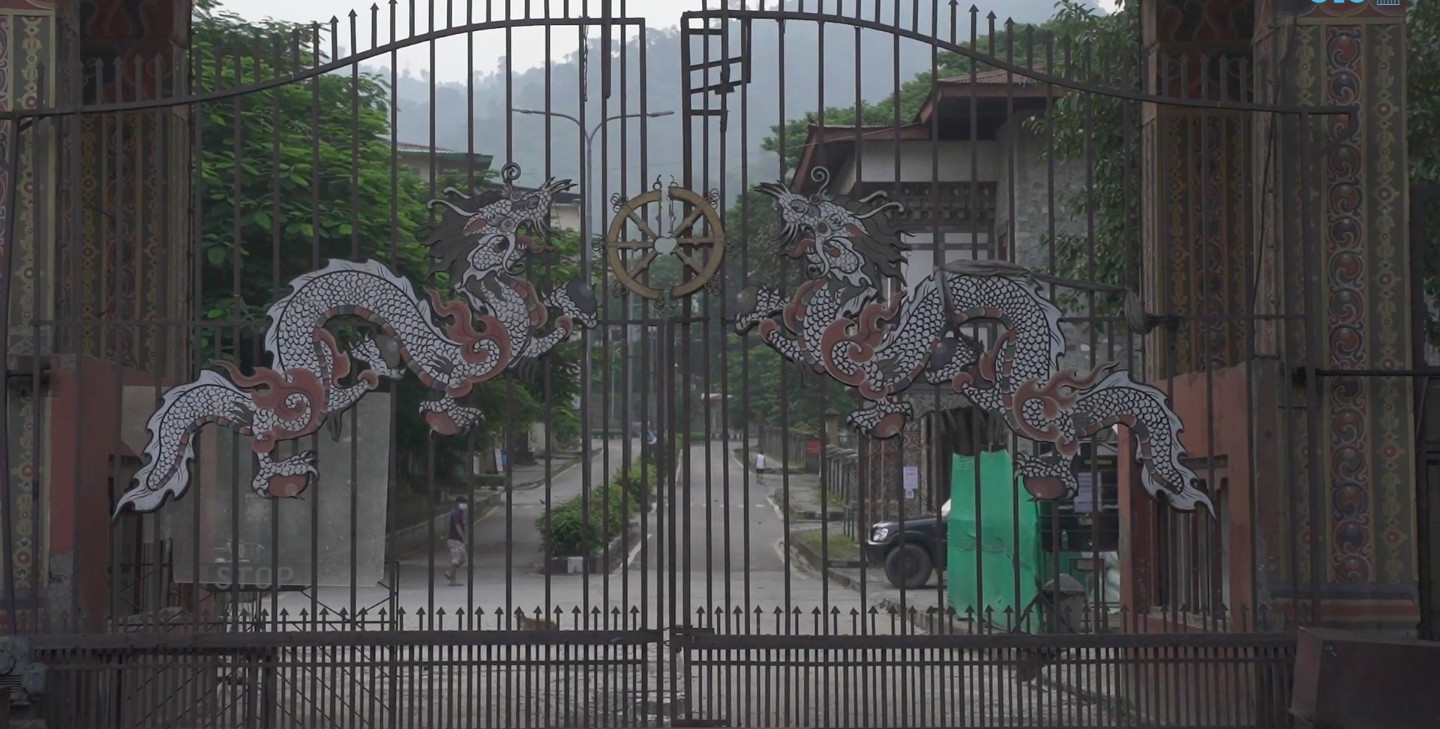
This Nepali Times Weekend Longread contains interviews with Bhutan’s refugees and their families in a camp in eastern Nepal by Devendra Bhattarai for the Centre for Investigative Journalism. They are citizens forcibly evicted by Bhutan in 1990-92, and were arrested by the Bhutanese authorities when they went back to see relatives left behind. Most spent decades at the Chemgang Prison near Thimphu, and there are many others still incarcerated there.
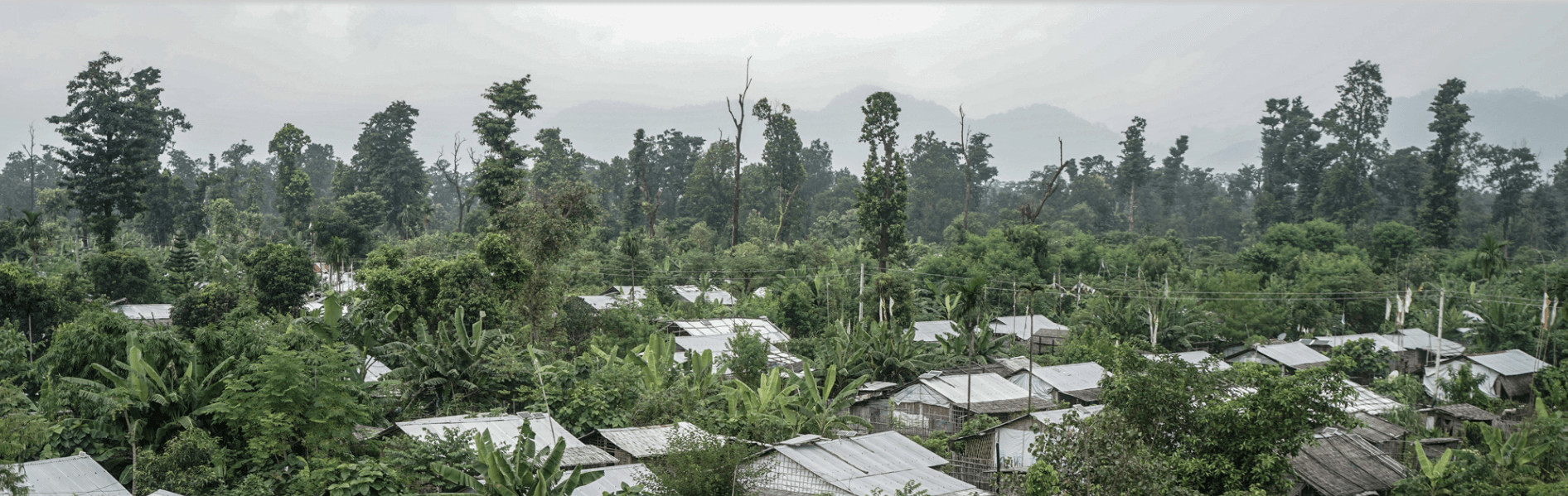
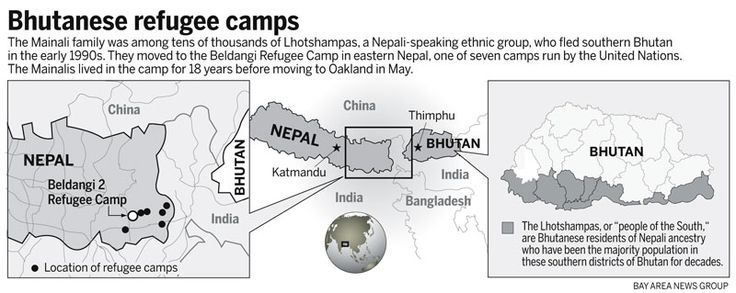
It is only 200km from Beldangi in Nepal to Bhutan’s Phuncholing border with India. Another 150km up the mountains is Thimphu’s Chemgang prison.
Relatives of Bhutan’s political prisoners from Beldangi refugee camp in Nepal have been allowed to meet them in jail at the behest of the ICRC (International Committee of the Red Cross). But these visits have been cancelled for the past two years because of the pandemic.
Some 100,000 people of Bhutan – one-sixth of its original population – were evicted by the Druk regime in 1990-92, transported across India, and dumped in eastern Nepal. Here, their population grew to 120,000 over nearly two decades until most of them were resettled in the United States, but also in the Netherlands, Norway, Australia, New Zealand and other western countries.
Read also: Bhutan's refugees between hope and despair, Tek Nath Rizal
Some 7,000 Bhutan refugees remain in the refugee camps in Nepal, some because they want to ultimately return to their homeland, others because they do not have proper documentation, and those who were not in the camps when a refugee census was being taken.
Some of the refugees are here after spending a decade or more at the Chemgang Prison. Many parents still have their sons in jail in Bhutan.
The ICRC has not been allowed to visit the prison 7km from Thimpu for the past 10 years, and a dozen other jails in Bhutan with political prisoners.
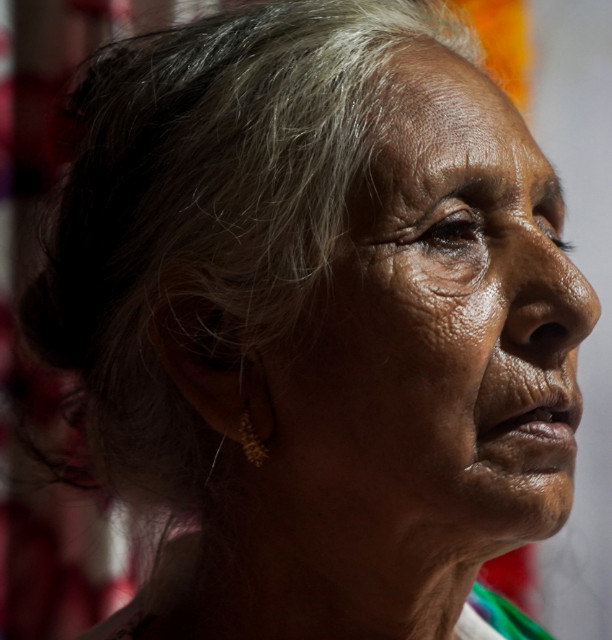
Dambar Kumari Adhikari
Dambar Kumari was retracing a route she took 30 years ago when she was forced to leave her home and farm in southern Bhutan. The authorities will not let her enter Bhutan, but she is here at the India-Bhutan border, peering into her homeland where her son Omnath Adhikari was imprisoned 14 years ago.
“Only by standing at Phuncholing gate do I feel like I am near to my son,” says Dambar Kumari, who has been waiting 14 years for her son to be freed.
Dambar Kumari was born in Dagana of Bhutan and was forced out in April 1992, riding on the back of an Indian truck with her two children, Omnath aged six at the time, and two-year-old daughter Dhanmaya.
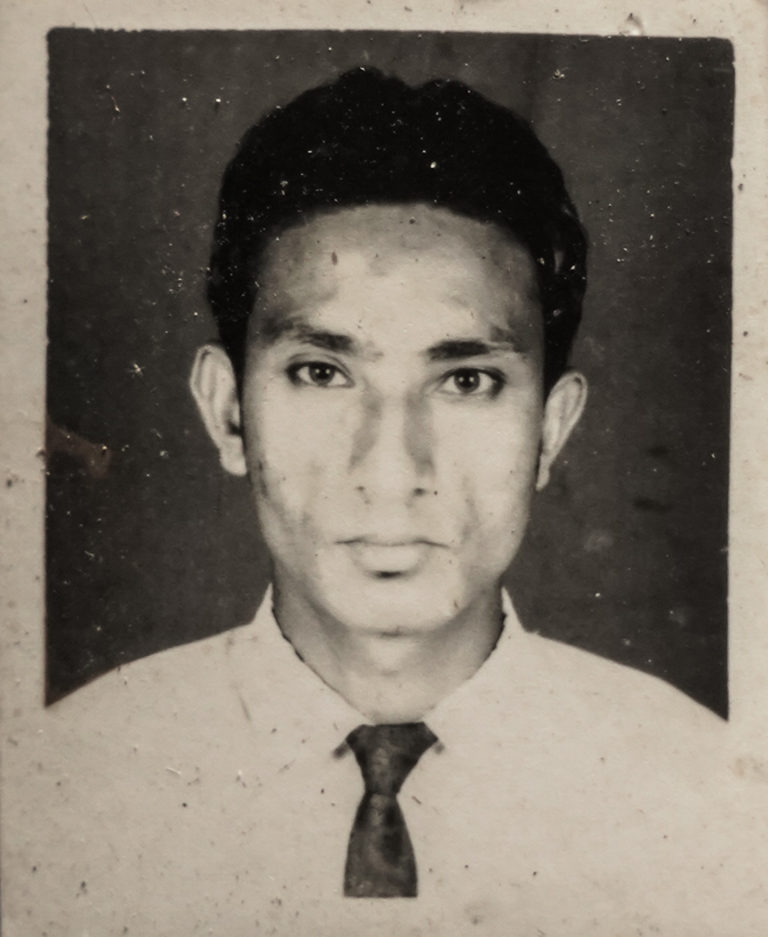
In 2008, Omnath was among 11 refugees who travelled to Bhutan to meet relatives before they were due for third-country resettlement. All were detained at then Samrup Dzongkar border in Bhutan.
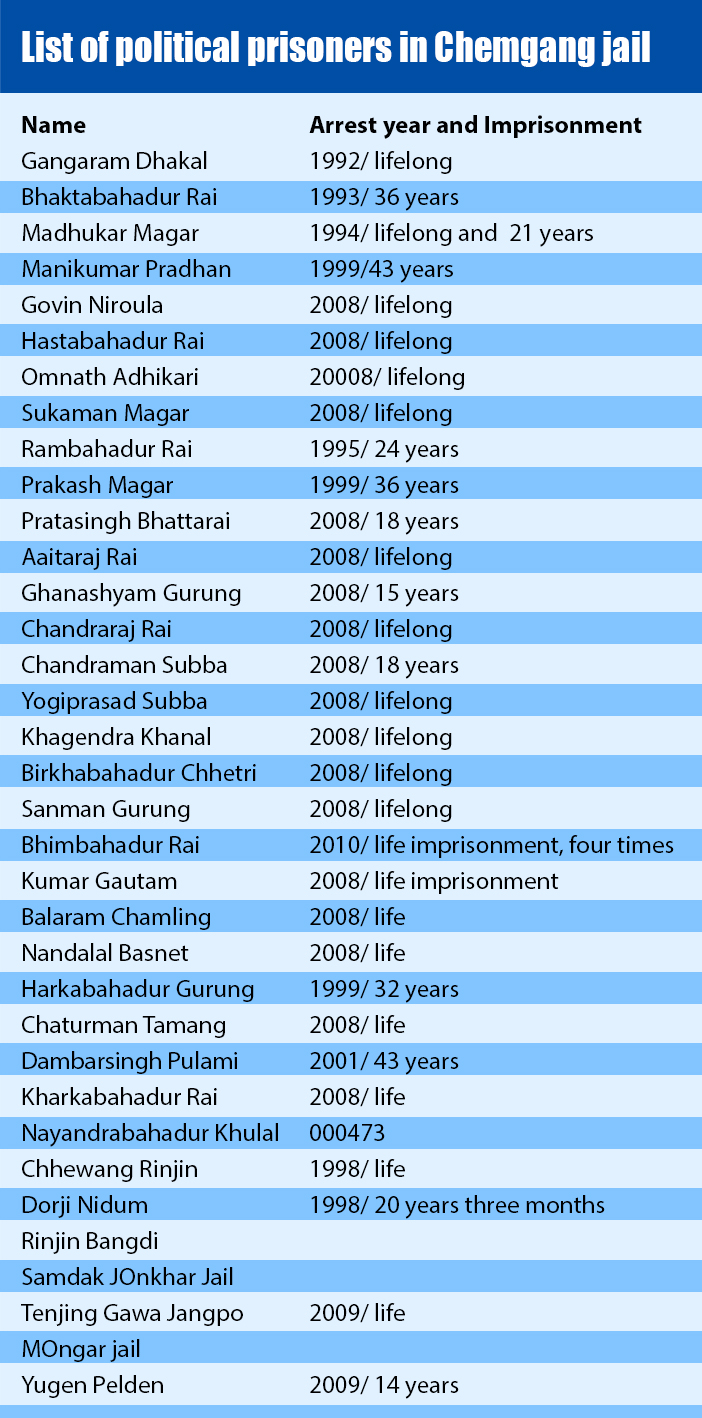
They are serving life terms in Chemgang Prison, charged with ‘treason and political terrorism’. The others who were with Omnath are: Birkha Bahadur Chhetri, Hasta Bahadur Rai, Sanman Gurung, Chaturman Tamang, Nanda Lal Basnet, Govinda Niraula, Aaitaraj Rai, Khagendra Khanal, Sukaman Magar and Kumar Gautam.
Dambar Kumari has been allowed to visit her son, but has not seen him for two years because of the pandemic. In the past when she visited him, the other prisoners swarmed around her to hear news of their families in refugee camps in Nepal, or relatives resettled abroad.
Says Dambar Kumari, “I am Dambar Kumari Ama to them, I am not just my son’s mother, I am mother to all of them. If I live long enough I will see my son some day. I will wait until I cannot wait anymore.”
Kalawati Magar
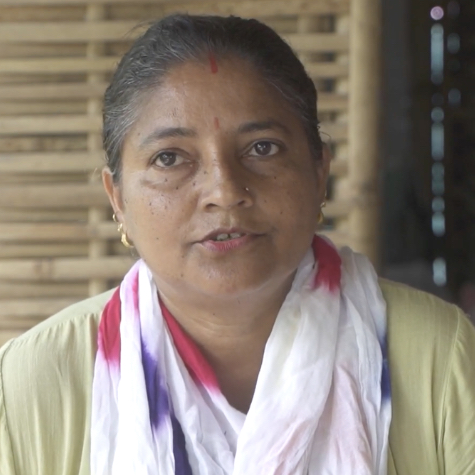
Like Omnath, Kalawati Magar’s son also travelled to Bhutan in 2008, and has been incarcerated at Chemgang ever since. Kalawati, 57, has been living in Beldangi Refugee Camp for the past three decades, after being evicted from her village of Sarbang of Bhutan in 1992.
“I see my son in my dreams, his wife and daughters have already moved to the US but we are still waiting for him. We are afraid if we will die without ever meeting our son again,” says Kalawati, wiping a tear with the hem of her dress.
Teknath Rizal
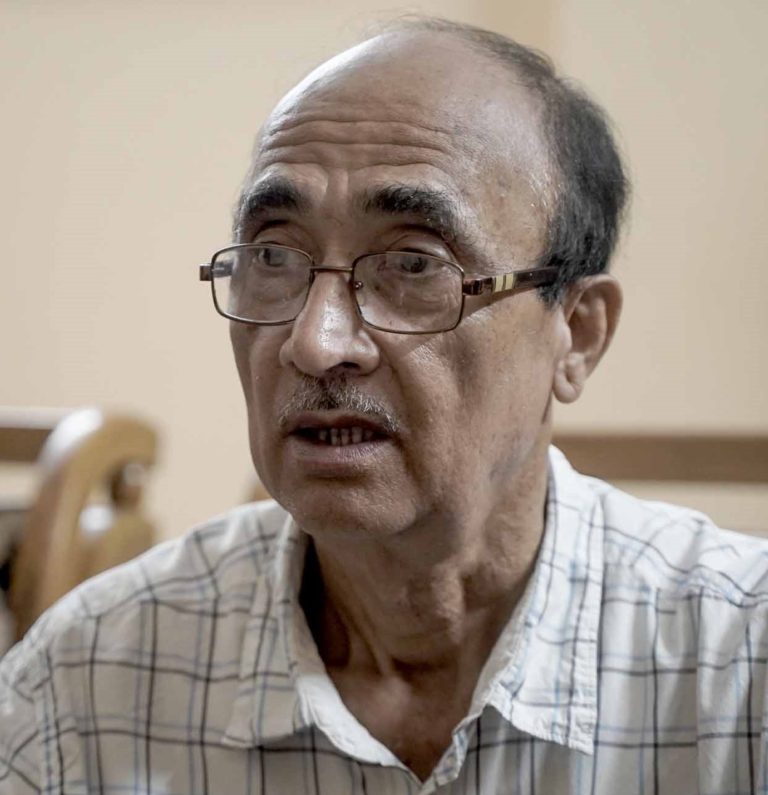
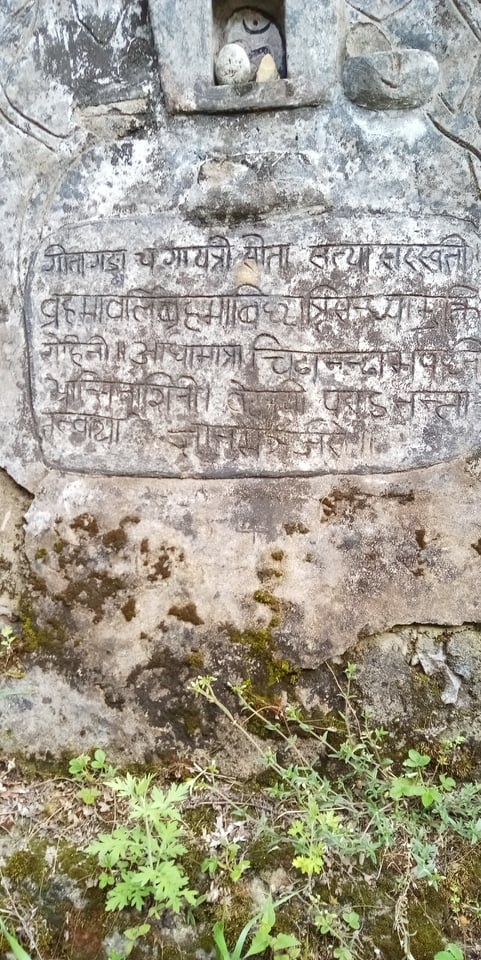
A former prisoner in Chemgang who was released two years ago has come to meet Teknath Rizal, a Bhutanese human rights activist and politician, in Kathmandu. He shows him photographs of his prison cell in Chemgang, and on one of them Rizal sees a Hindu mantra etched into a cement wall.
Rijal is moved to tears. Those mantras on the wall were written 25 years ago when he was imprisoned and tortured in Chemgang for ten years. The Bhutanese inmate he met had been in the same jail cell.
“When we were in prison, we got news of deaths in our families and also of other Bhutanese who were beaten or killed,” Rizal recalls. “We wrote those mantras to pay tributes to them.”
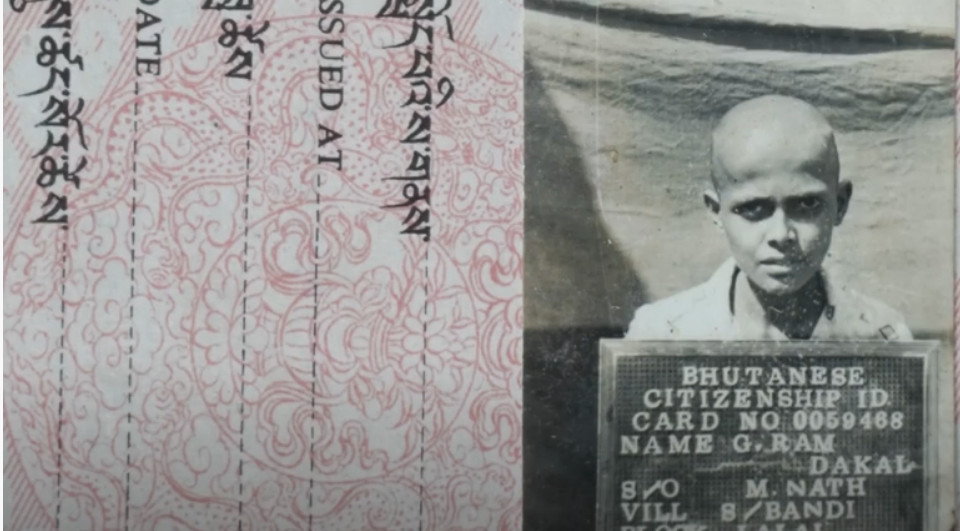
Rizal remembers the names of his fellow-inmates: Gangaram Dhakal, Ram Bahadur Rai, Bhakta Bahadur Rai, Harka Bahadur Gurung, Prakash Magar, Chhewang Rinjin, and others. Some of them are still in Chemgang, while Rizal was released in 1999 after he was named Amnesty International’s Prisoner of Conscience.
But while western governments took in many of the refugees after they spent two decades in camps in Nepal, they have forgotten about the political prisoners in Bhutan’s jails.
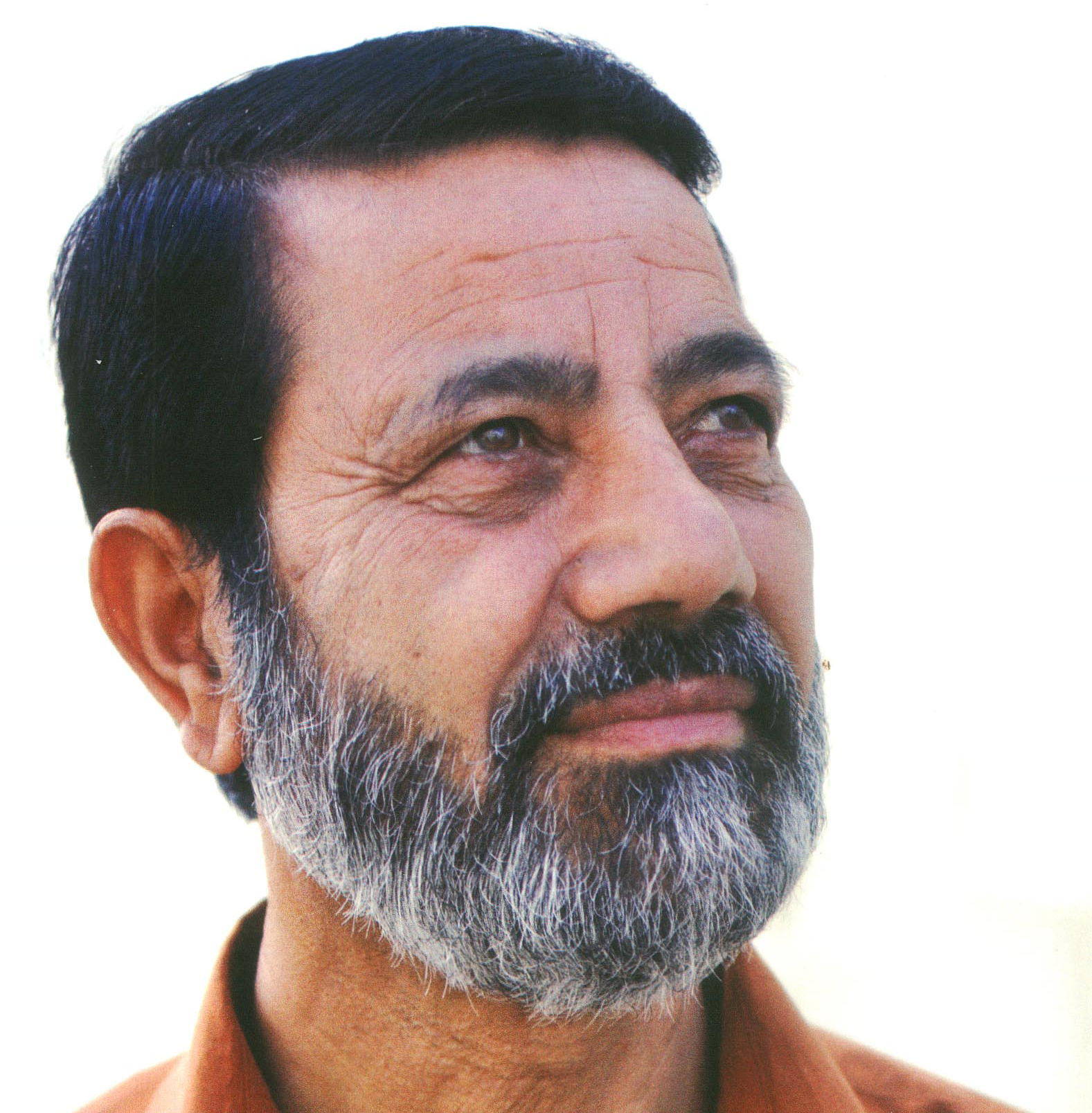
When Bhakta Bahadur Rai, who was in jail in Chemgang with Teknath Rijal, was arrested in 1993 the state-owned Kuensel newspaper in Thimphu reported on it with a news item titled ‘Police Arrests Wanted Terrorist’, accusing him of being involved in theft and rape.
Ironically, the same edition of the newspaper carries a news piece titled ‘Home Minister Hopeful about Nepal Negotiations’ about Lyonpo Dago Tshering, leading a three-member delegation to Kathmandu to ‘discuss plans to identify people living at camps in Nepal’s eastern plains’.
Man Bahadur Khaling Rai
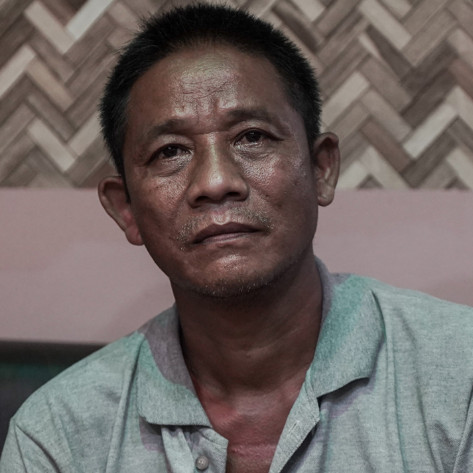
When Man Bahadur Khaling Rai, 60, of Samchi in Bhutan, arrived at a refugee camp in Damak in Nepal four years ago after spending over 21 years in Chemgang Prison, he found that his mother, wife, children and younger brother had all been relocated to the United States, and his sister was in The Netherlands.
But Man Bahadur could not be registered as a refugee because the application process had been discontinued. He could not be repatriated either to join his family, since the relocation process had ended. He now sits forlorn in Beldangi Camp 3 Sector A-1, 43.
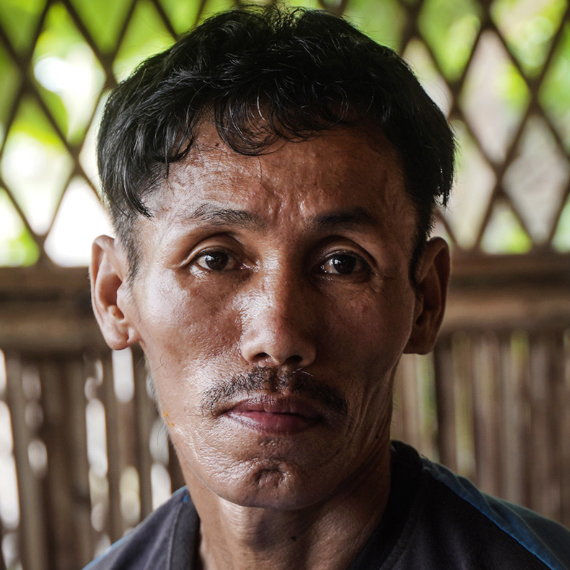
“It is like being in prison all over again,” he tells us. “I only have an ICRC document to prove my detention in Chemjang jail, nothing else.”
After his family’s eviction in 1991, Man Bahadur had re-entered Bhutan clandestinely six years later to meet relatives he had left behind. He was detained on charges that he had ‘engaged in political activities in the past’.
Tek Bahadur Magar
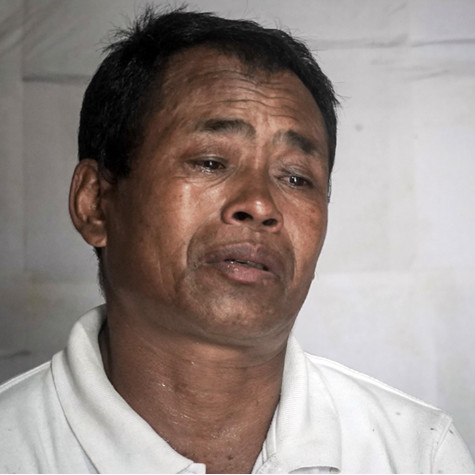
Tek Bahadur Magar, 50, looks lost at hut number D-4527 at Beldangi 2 refugee camp in Jhapa. Like Man Bahadur Rai, he was released from Chemgang Prison in 2016 after 24 years. He had also returned to Bhutan to meet an aunt whom the family had left behind, only to be arrested.
He was only 20 then. His mother was allowed to visit him once at Chemgang. After his release, he returned to Beldangi to find that his entire family had been resettled in the United States.
“I am sad and alone. I have no reason to continue living,” says Tek Bahadur. “I don’t know how I spent those 24 lost years in jail. It is a blur.”
Tek Bahadur’s fellow inmates, including Madhukar, Maniraj, Ram Bahadur, and Omnath are still in Chemgang Prison with 25 other Lhotsampa (Nepali-speaking people of Bhutan).
Like the others, Tek Bahadur says he was mistreated and chained to a heavy iron shackle in the beginning, but these were removed after a visit by ICRC inspectors.
Dil Kumar Rai
Dil Kumar Rai, from Samchi in Bhutan, arrived in eastern Nepal in late 1990 in the early days of the Bhutan regime’s ‘ethnic cleansing’ of its Nepali-speaking citizens. Along with his father Jahar Singh and mother Saruma, he was interred at Beldangi Refugee Camp. In 1996, he sneaked back to Bhutan to meet relatives when he was arrested from Sibsu, and charged with being an ‘extremist-terrorist’.
He ended up spending more than 20 years in Chemgang, and even has a tag: ICRC Prisoner Number 253. He was only released in 2017.
“When I got back to Beldangi, there was nobody left in the camp whom I could call my own,” recalls Dil Kumar, now 57. “I am here all alone with nothing but a refugee certificate.”
Dil Kumar is now a pastor at the camp church, and says ICRC representatives had assured him and fellow inmates in prison in Chemgang that they would be reunited with their families once they got out. “Where can I go now to complain?” he asks.
Mangal Dhoj Subba
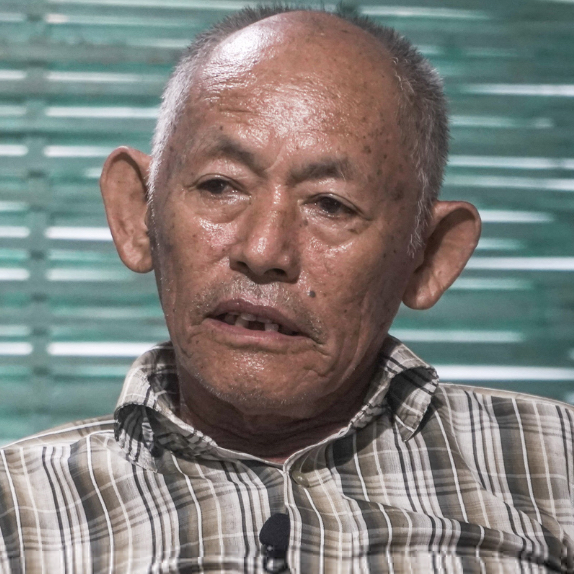
Mangal Dhoj Subba is now 74, and is a native of Dagana in Bhutan. He was detained from Mirchula in 1990, together with his three sons for engaging in ‘party activities’. Mangal Dhoj’s eldest son Dhanaraj was released within 10 months, and he himself after 8 years. His other sons were also granted amnesty.
His sons and their families have now been resettled abroad, but Mangal Dhoj is among 7,000 who are staying on at camp hoping one day to return. “I want to go back to my home in Dagana before I die,” he says.
Shanti Ram Acharya
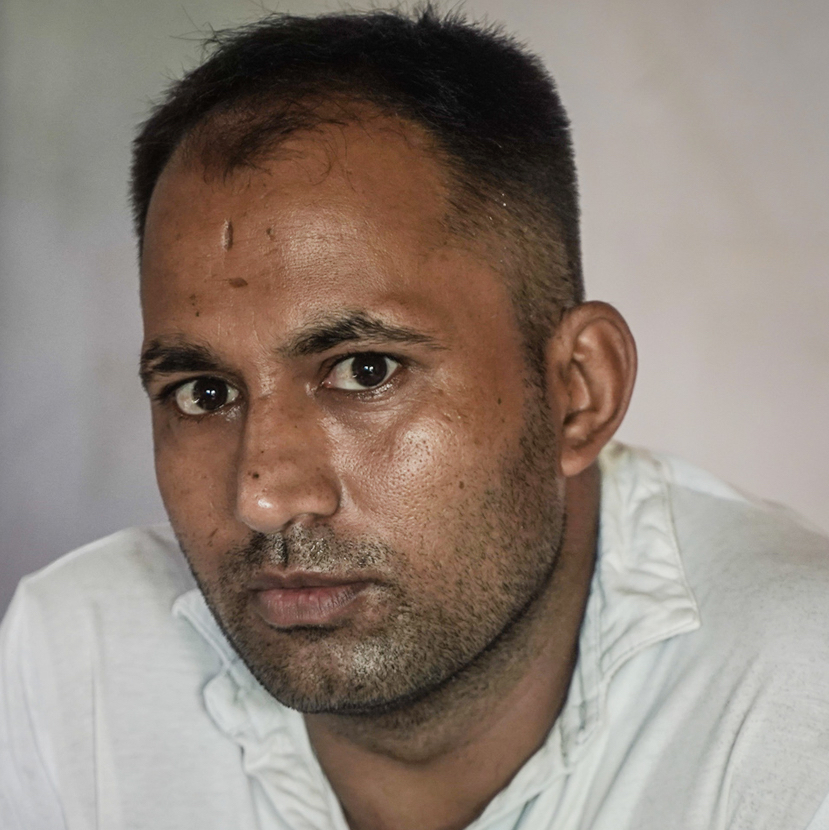
Also from Dagana is Shanti Ram Acharya, who was forced out of Bhutan with his family in 1992, leaving some relatives behind. He went back to meet them in 2007 when he was arrested. When he came to Beldangi in 2014, he found his own family had already been resettled abroad.
“I weep when I think of my family, my past and my future, this is a dead end,” he says.
ICRC representatives met Shanti Ram four times in Chemgang, and they assured him that he would be reunited with his family. Like the others, Shanti Ram now feels that was an empty promise.
“I asked the ICRC here about it, and their reply is that it is not in their control,” Shanti Ram tells us. “Then why did they take our relatives abroad? Why are we left stranded here?”
Nara Bahadur Magar
Another victim of Bhutan’s ethnic cleansing was Nara Bahadur Magar and his family, who were forced to flee their homeland in 1991 with parents, brother and sister-in-law, wife and children. His brother Madhukar had returned to Bhutan in 1994 to see if the family betel nut farm was still intact. He was arrested, and is still in jail in Chemgang.