Nepal's prolonged political deadlock has not just affected the country’s response to Covid-19, it has also delayed the implementation of an American-aided project to upgrade Nepal’s electricity transmission grid.
The controversial Millennium Challenge Corporation (MCC) project is the biggest single bilateral grant for a specific project in Nepal by a foreign country, but has become the focus of an intense power struggle rival parties, and is tangled in regional and global geopolitics.
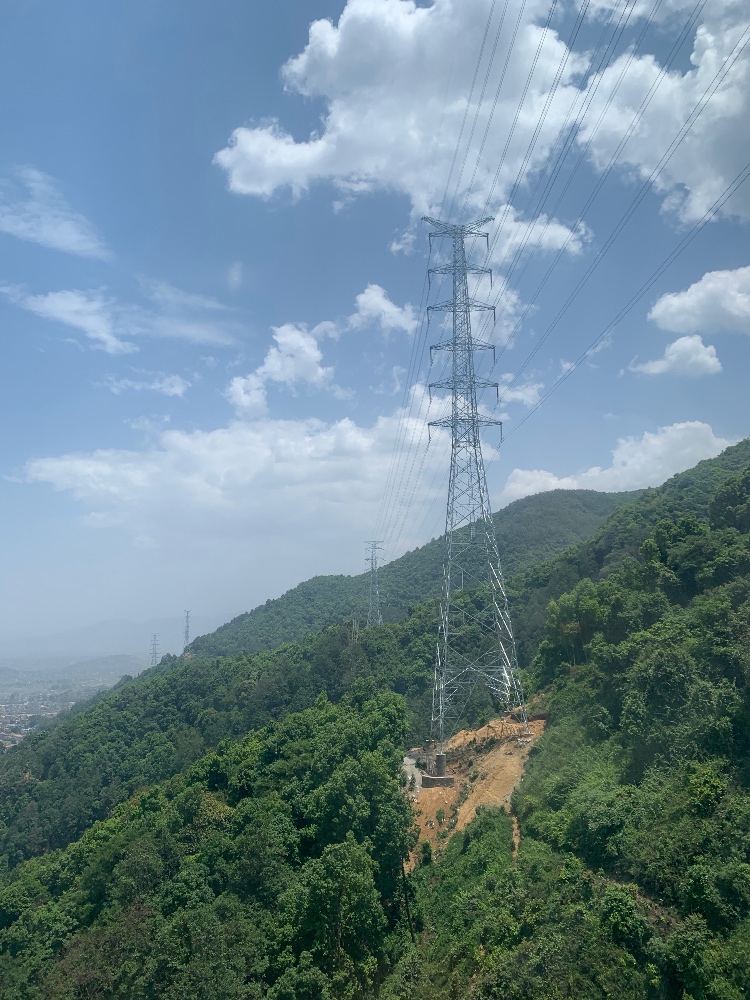
A big part of the $500 million MCC grant is ear-marked for the Kathmandu-Hetauda-Butwal 400KVa transmission line which will eventually evacuate electricity generated from existing and new hydropower plants on the Budi Gandaki, Trisuli, Kali Gandaki, Marsyangdi, Kosi, and Tamakosi corridors, and link it to Gorakhpur in India. A smaller component of the project will upgrade arterial highways. The Nepal government is putting up another $130 million as a counterpart fund.
However, critics in Nepal see the MCC as America’s strategic counter to China’s Belt Road Initiative. The comment by US Under Secretary of State David J Ranz in 2019 that the MCC was indeed a part of the US Indo-Pacific Strategyadded fuel to the fire.
Sandwiched between India and China, Nepal was already in a strategic tight spot, but a recent flare-up in Sino-Indian tension and US-China rivalry have caught Nepal in the crossfire. In addition, opponents of Prime Minister K P Oli have weaponised the MCC and used the project to weaken his position.
But Nepal’s energy planners say that even if the MCC is delayed or cancelled, the country will have to find alternatives to build the transmission lines.
“We cannot afford this uncertainty we must have a Plan B in place, otherwise we will face a huge problem. There will be all this electricity being generated in the next few years, but no way to take it to consumers,” says Hitendra Dev Shakya, who heads the Nepal Electricity Authority (NEA). “We have to build the transmission lines with or without American aid.”
The reason behind the transmission line being prioritised is to send the electricity produced from throughout Nepal, and any future monsoon surplus can then be exported to India and the same lines can be used to import power in winter if required.
New projects with a generation capacity of 330MW are under construction on the Bhote Kosi in Rasuwa and Nuwakot. A further 500MW will be generated from other hydropower schemes whose construction was delayed due to the pandemic.
New 220KVa transmission lines are ready to bring that electricity to Kathmandu Valley, but they only have the capacity to carry the new load from projects now under construction. But the NEA has already made Power Purchase Agreements (PPA) to buy about 6,000MW of electricity from private operators, and the distribution of that power will depend on the MCC-funded distribution system. The NEA says it urgently needs another transmission link to bring power from plants on the Tama Kosi to Kathmandu and to eastern Nepal via Hetauda.

The MCC was set up in 2004 by the US Congress during the George W Bush presidency to help developing nations reduce poverty through financial aid. Since then, as Sino-US tensions grew it has taken on a strategic dimension as the two powers compete for global connectivity. The $500 million MCC grant to Nepal was sanctioned in 2017 to improve Nepal’s energy and road infrastructure.
Nepal was suffering 18 hours of power cuts a day when the agreement was signed, and after much deliberation, Nepal’s planners, politicians and bureaucrats decided that transmission lines were the most urgently needed since powerplants were already under construction. The generated electricity need to be taken to load centres, this would increase the renewable component of Nepal’s energy mix by replacing imported petroleum, and finally, to export any surplus to India.
Meanwhile, the Millennium Challenge Authority Nepal (MCA-Nepal) has been set up and the office has already finalised the design of the 315km transmission line of 400KVa capacity with three new sub-stations. But the delay in Parliament’s ratification of the project means it cannot issue tender bids, and this will put 2,600MW of electricity at risk of being wasted in eh coming two years.
Khadga Bahadur Bista, the CEO of MCA-Nepal estimates about it takes up to five months to select a contractor even if the project is ratified by Parliament, and after that, it will take another nine months to start construction.
“We are all set to kick start this project and are ready to call for international tender bids, but due to it still pending in the Parliament we have not been able to make progress,” Bista told Nepali Times.
Just Do It
The NEA says that Nepal is now generating 1,400MW of electricity, and this is set to more than triple in the next three years to 5,000MW, with the largest hydropower project so far in Nepal, the 456MW Upper Tama Kosi coming on stream in July, if it is not delayed again by the lockdown.
Other hydroelectricity projects totalling 2,500MW are planned are in the financial negotiations stage, they are set to come into operation by 2026.
But the more urgent need is power transmission to accommodate the new projects in the next three years as Nepal struggles to keep up with demand. The current peak demand is 1,150MW, which drops to 700MW at night. Generation capacity also fluctuates during the monsoon and dry season between surplus and scarcity because most of the hydro projects are of the run-of-river type without large reservoirs.
To avoid electricity from going to waste during the monsoon, Nepal can export the surplus power to India, and import in winter. The agreements are in place with India to facilitate power trade, but current transmission lines cannot bear future load. The MCC-funded transmission lines are also required for domestic distribution and grid management.
The present Dhalkebar-Muzaffarpur crossborder transmission line connects India and Nepal but can only handle 1,000MW each way, but practically it can only bear 800MW. This means by late next year, Nepal’s new surplus monsoon electricity is sure to go waste.