
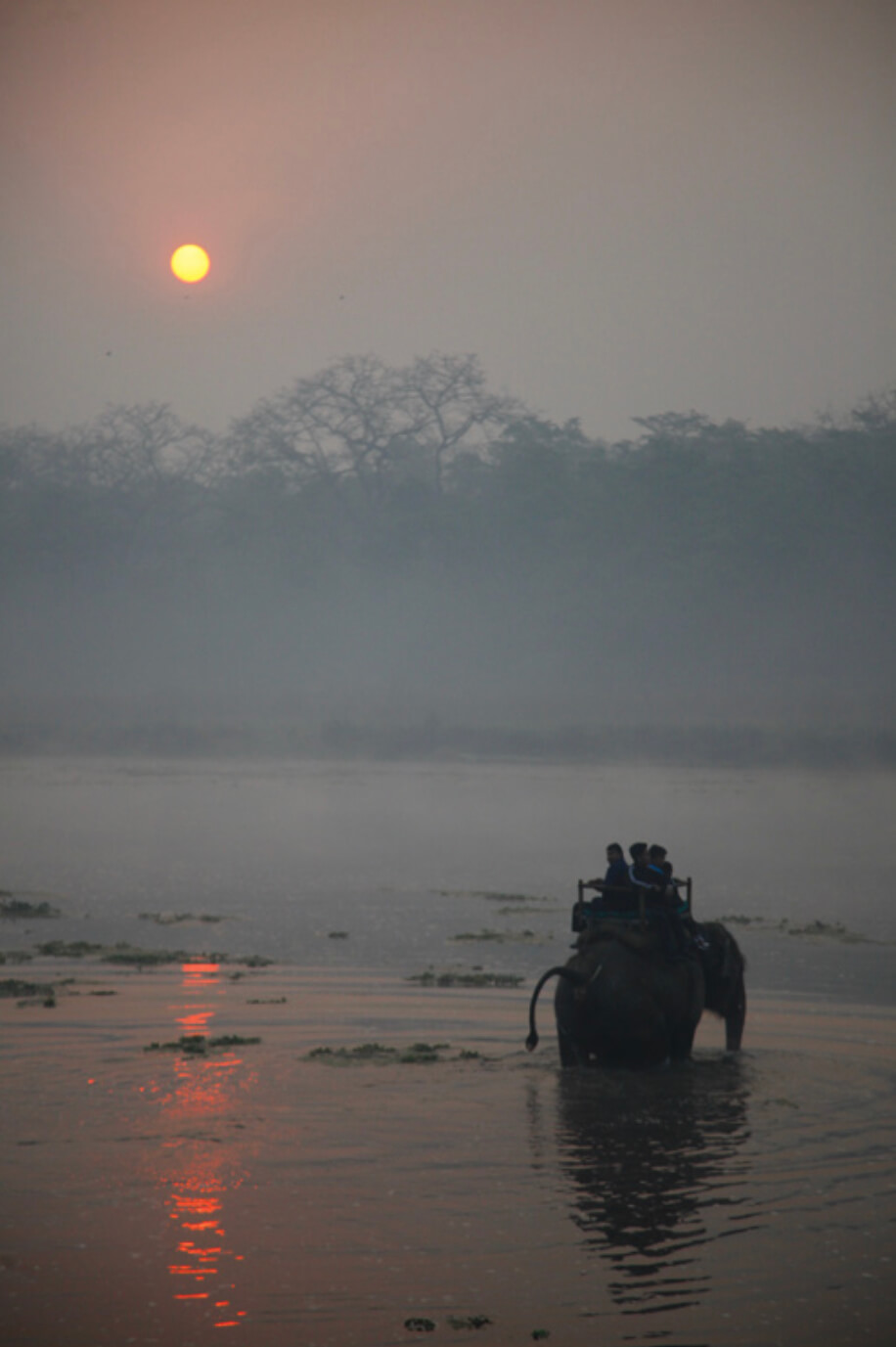
Lisa Choegyal’s column ‘The Elephant Dilemma’, 4 October 2020 elicited many comments from readers, some of which are excerpted here:
- As a group of animal welfare organisations we have to disagree with Lisa Choegyal’s stand on elephant safaris.
Just because elephants are part of Nepal’s heritage does not mean traditions should not change. Many outdated practices have been abandoned, including widow sacrifice and child labour, because they were against the ethics of the time. In any case, even if elephant tourism stopped today, elephants would remain an integral part of Nepal’s heritage.
Just because elephants in Nepal are not used in ‘alien’ environments such as beaches and temples, does not mean that Chitwan’s tourist safaris are ‘natural’. Most elephants live in ‘unnatural’ shelters, usually a simple structure of zinc sheet with 4 poles. They are tied 24/7 unless taken for a ride. With a lack of fresh greens, their diet is ‘unnatural’. Even the carrying of four tourists and a mahout is ‘unnatural’: even though elephants look invincible, science says that their skeleton is not designed to carry great weight on top of their spines.
Just because of a concern for loss of tourism, elephant riding and bathing does not need to be continued. The quick growth of non-contact tourism projects across the world shows there is great potential. Nepal introduced many humane alternatives for safaris (by canoe, car or on foot) and a pioneer company has already unchained its elephants. There is a growing market for a more ethical kind of tourism that involves elephants, be it in sanctuaries, elephant walking or viewing, kuchi and paper making, etc.
We feel there is enough evidence to show that elephant safaris generally are a cruel business. We have shown that over 80% of elephants live under ‘unsuitable conditions’. This is in line with World Animal Protection’s more recent findings that claim that more than three-quarter of captive elephants are kept in ‘severely-cruel conditions’.
Other groups have used video evidence to show present training techniques certainly do not ‘mostly employ kindness and positive reinforcement’. Instead sharp objects, fire, fireworks and noise continue to be used to break in young elephants. Even the presumption that Nepal’s safari elephants are no longer taken from the wild cannot be confirmed. The origins of elephants brought in from India are largely unknown as there is no proper documentation and no government control.
Ms Choegyal argues that people like us ‘are shamelessly manipulating this emotion to convince the world that it is cruel to keep elephants in captivity’. This kind of languages creates an unnecessary and unbeneficial divide. We certainly do not try to manipulate anyone. We use evidence to show the realities of elephant tourism and to propose change.
We also introduce feasible alternatives and are ready to support such initiatives. At present we need all parties to save Nepal’s precious wildlife and the country’s tourism industry. The sooner we join hands, the better.
Animal Nepal
Animal Rights Club
Association Moey - Helping Captive Elephants
Elephant Aid International
Help Animals India
Nepal Elephant Walk Sanctuary
People's Alliance for Nature Nepal
Stand Up 4 Elephants
- Domesticated elephants play a major role in providing employment and economic opportunities to the local people through tourism, and in also provide invaluable help to conservationists in researching and protecting Nepal’s wild places.
Hemanta Mishra