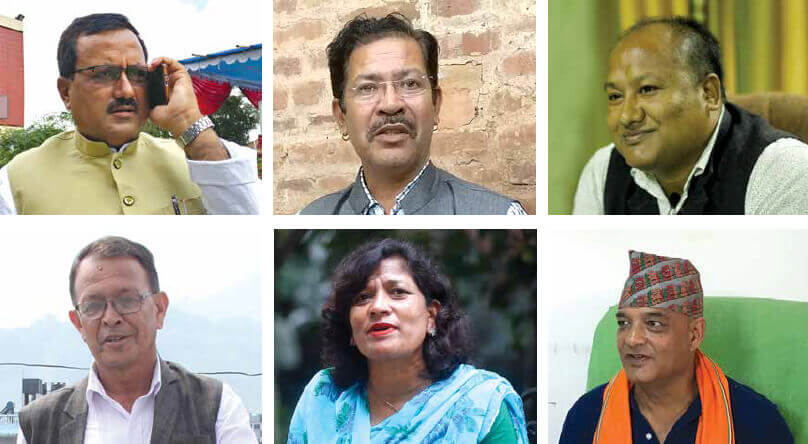
It has been one year since Nepal wrapped up all three rounds of local elections. There was great hope that devolution would take governance to the grassroots, improve service delivery, and dilute Singha Darbar’s monopoly on power.
It did not even take a year for the euphoria to evaporate. There is growing disenchantment with village chiefs, mayors and provincial governments.
In some municipalities and villages, people have hit the streets to protest against huge increases in local taxes and the awarding of contracts to construction companies owned by elected officials. Others have been too slow to get things done, and there is growing impatience with elected local leaders.
Krishna Prasad Sapkota, a former DDC Chair and a vocal advocate of decentralisation, admits that most mayors and village chiefs have not lived up to the people’s expectations. But he says it is not entirely their fault.
“There is a mismatch between the capacity of local governments and the people’s expectations,” Sapkota told Nepali Times. “People have had to wait a long time for local governments but the mayors and village chiefs lack capacity and resources to fulfil their own promises.”
Local governments enjoy 22 exclusive rights under the new Constitution, but Kathmandu still delays and obstructs disbursements. Education and Land Revenue offices are still controlled by the Centre.
Worse, the federal government is planning to bring local offices under its jurisdiction, stripping local governments of their constitutional rights to manage forest, education, health and agriculture sectors. Last week, the sixth national convention of the Municipalities Association of Nepal (MuAN) slammed the Centre for trampling on their rights.