
Every crisis is also a chance to improve. The global pandemic wrecked Nepal’s economy in 2020, and its impact will be felt on tourist arrivals for at least the next two years. But it also provides us the opportunity to re-invent the existing model of tourism.
This important sector of the economy could do with a major overhaul. The process should have started during the Covid-induced collapse of tourism, as the hotels, airlines, agencies were just trying to survive, with little indication of how long the crisis would last.
It now looks like global tourism will be affected right through the 2020s. Which is why Nepal’s tourism entrepreneurs and planners need to think about riding out the next two or three years, and plan for a revival.
The direction we have to take is clear: the benefits from climbing, hiking, wildlife, culture tourism must be more equitably distributed and conducted sustainably. Nepal’s new tourism model has to be high yield, the focus must be on maximum employment generation so people are not forced to migrate, while we also promote self-reliance in agricultural and other items that can be produced locally.
Spreading the benefits of tourism also means ensuring that visitor spending is maximised in the regions where it can make the most difference in uplifting socio-economic wellbeing. The existing model diverts most of the money visitors spend on their Nepal package to tourism wholesalers in Europe and other source countries, or agency middlemen in Kathmandu.
Nepal’s tourism has been sustained thus far by crumbs that find their way to rural areas. Which is why despite increasing trekking numbers, with some notable exceptions, there has not been significant impact on reducing out-migration from rural areas. In some cases, tourism has even driven up prices, making basic items unaffordable to locals.
Tourism netted Nepal $700 million in 2019, making up 8% equivalent of the country’s GDP. There were over 1 million Nepalis employed directly in the hospitality industry, trekking and mountaineering, with many more benefiting indirectly from arrivals.
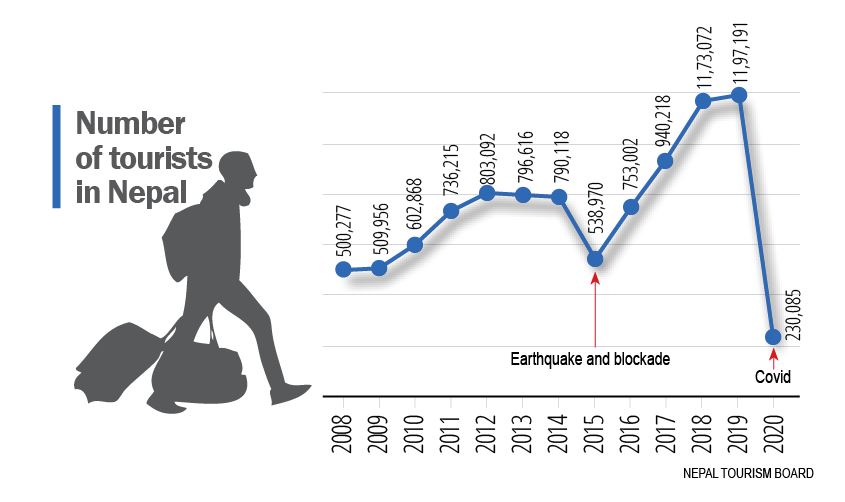
But never has Nepal’s tourism sector suffered as badly as during this pandemic. Only 230,000 tourists came to Nepal in 2020— lower than during the worst years of the conflict, and less than during the Earthquake-Blockade of 2015. (See chart)