Rudyard Kipling's 1893 short story ‘The Bridge Builders’ surprised me. It is not about how noble British men brought ‘civilisation’ and ‘progress’ to India, as many Kipling stories are.
Instead, probing humanity's relations with environmental forces, it highlights nature's relentless power, in this case, the unpredictability of Himalayan rivers hurtling into the plains. It celebrates not heroic, manly confidence but humility, even doubt. British technological tools seem no match for unruly nature.
As a reporter in India in the 1880s, Kipling had watched as British engineers built bold bridges over north Indian rivers. In ‘The Bridge Builders’, storm flooding along the Ganges threatens to sweep away one of these nearly finished bridges.
The British chief engineer and his skilful Indian assistant can do little but watch and wait, passing a long night worrying that years of work will vanish in but a few hours. ‘There was nothing to do,’ Kipling says, ‘except to sit still.’
‘The river will do what the river will do.’
In the end, the bridge holds. It survives the river's onslaught, but barely. Readers will not find their confidence in human ingenuity bolstered. Up against the force of Himalayan rivers, humanity's constructions seem fragile and fleeting. ‘What man,’ Kipling asks, ‘knew Mother Gunga's arithmetic?’
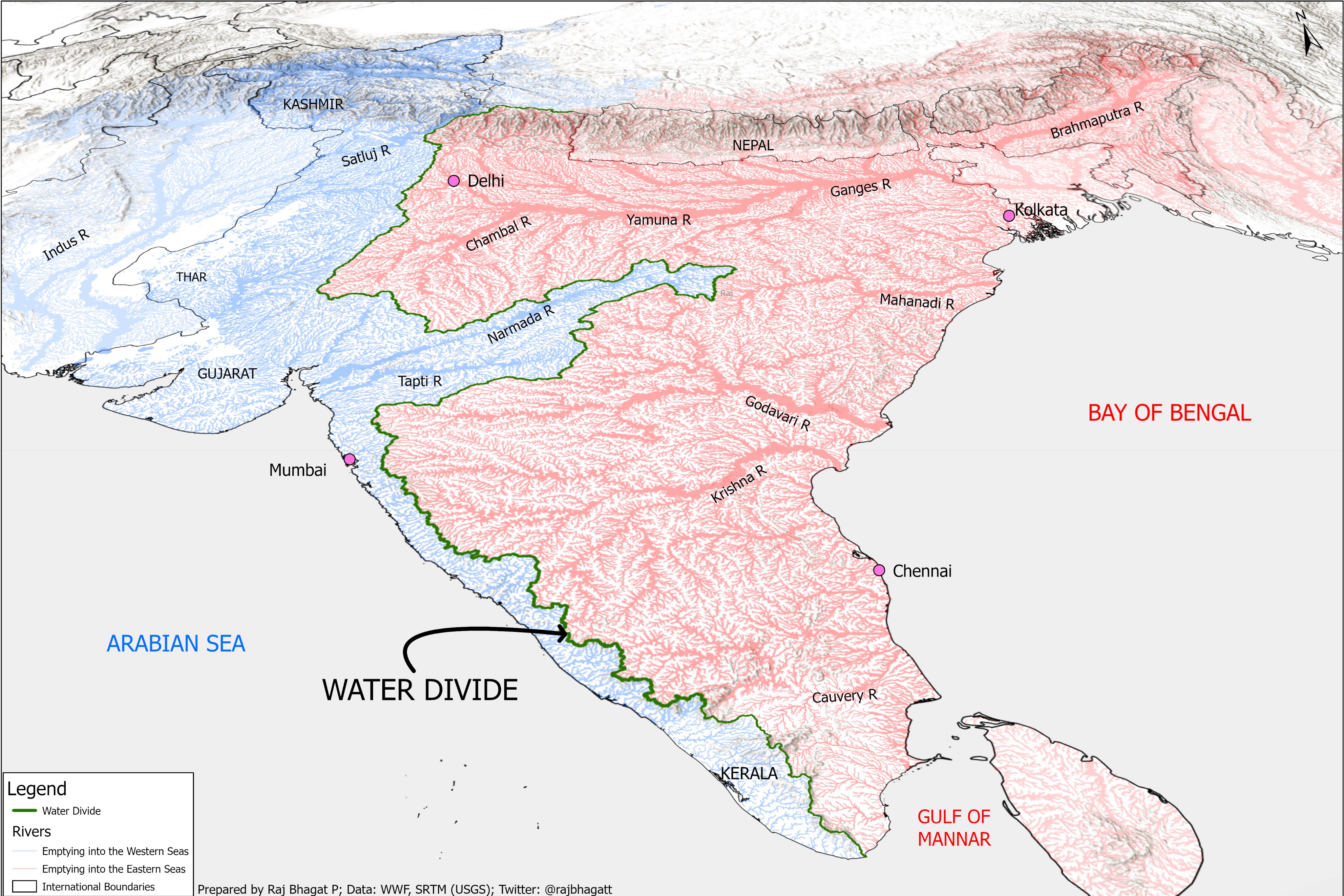
More than 130 years later, we are still placing big bets on technology's ability to tame Himalayan rivers. Roads and bridges now crisscross the world's highest mountains. Roughly 400 large dams are planned along steep Himalayan rivers, particularly in Nepal and Sikkim.
If they all get built, the region will house more dams per river kilometre than any other place on the planet -- one dam every 32 km. All these dams in a physical and socio-political landscape as complex and uncertain as any on the planet.
One might reasonably wonder, how well do we today understand ‘Mother Gunga's arithmetic?
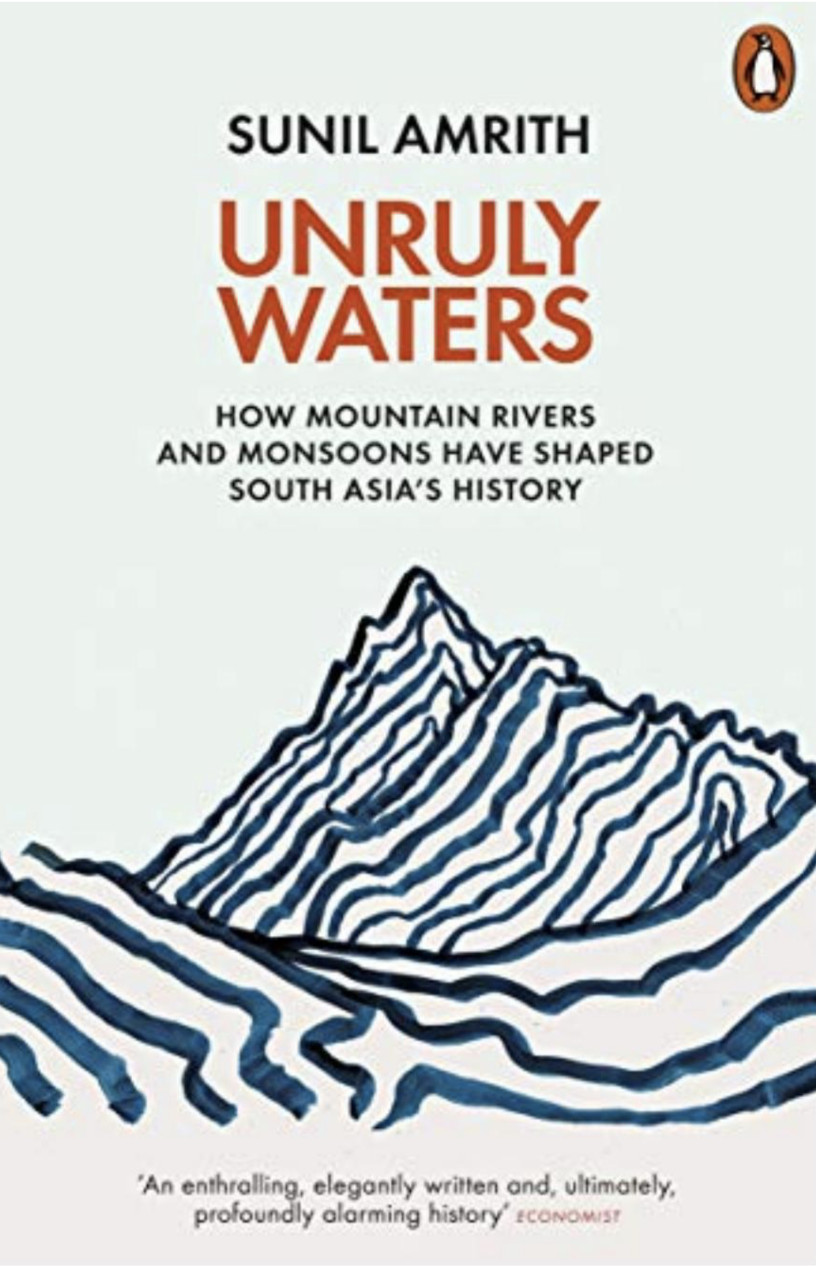
In his important 2018 book, Unruly Waters: How Mountain Rivers and Monsoons Have Shaped South Asia's History, Harvard historian Sunil Amrith wonders the same thing. For answers, he takes us on an ‘aha’-filled journey back into South Asia's geographic and hydrological past to assess earlier attempts to control the region's tricky rivers and powerful monsoons.
He wants us to see not only how India's capricious and ‘unruly’ rivers and monsoons have shaped its history, but also how scientists, engineers, builders, politicians (British and Indian alike) have sought to manage them.
To understand what lies ahead, Amrith suggests, we must look behind. ‘We live with the unintended consequences of earlier generations' dreams and fears of water,’ he says.
Unruly Waters is a tour through those fears and dreams. With fluid and often lyrical prose, it describes and dissects India's waterways and weather but also follows the water to where much of it flows from, the great mountains in the north. It contains much to contemplate for those of us who call the Himalaya home.
Unruly Waters differs from most South Asian histories. Amrith's focus is not Clive, Curzon, or Mountbatten, nor Gandhi, Nehru, and Jinnah. He spotlights the Ganges and the Godavari, the Indus and the Brahmaputra, focusing primarily on meteorology and monsoons, not policies and politics. Nature is the main actor here. It drives the action.
And if not, it lurks behind the scenes, waiting to jump out at any instant, to surprise everyone, to remind us it will not be ignored. The result is a refreshing and insightful historical interpretation.
But even as Amrith highlights the natural side of human history, he also stresses the human aspect of nature: how humans have thought about and even transformed the Subcontinent's monsoon and rivers. Indeed, so much human history is wrapped into Amrith's "natural" actors that, by the end of the story, it is hard to tell humanity and nature apart.
In other words, to fully understand history's shifting river currents, we need to understand its shifting intellectual currents, mostly science and sociology, but also, inevitably, political currents as well.
Thus, even if Unruly Waters does not start out as a story about nations and nationalisms, it ends up being one, though one refracted through water. In the end, nature and nationalism shape each other; we can't understand one without the other.
Perhaps nowhere is this lesson more important than in the Himalaya.
Controlling water and space
Amrith's story starts with the summer monsoon. South Asia, like much of the rest of Asia, has both way too much and too little water at just the right moment, and all the wrong times.
China next door is home to 1.4 billion people, about 20% of the global population, but has 7% of the world's freshwater. India has 1.35 billion people, 17% of humanity, but only 4% of the water. Worse, much of this water in India is spread unequally through the country and unevenly through the year. Much of South Asia is arid.
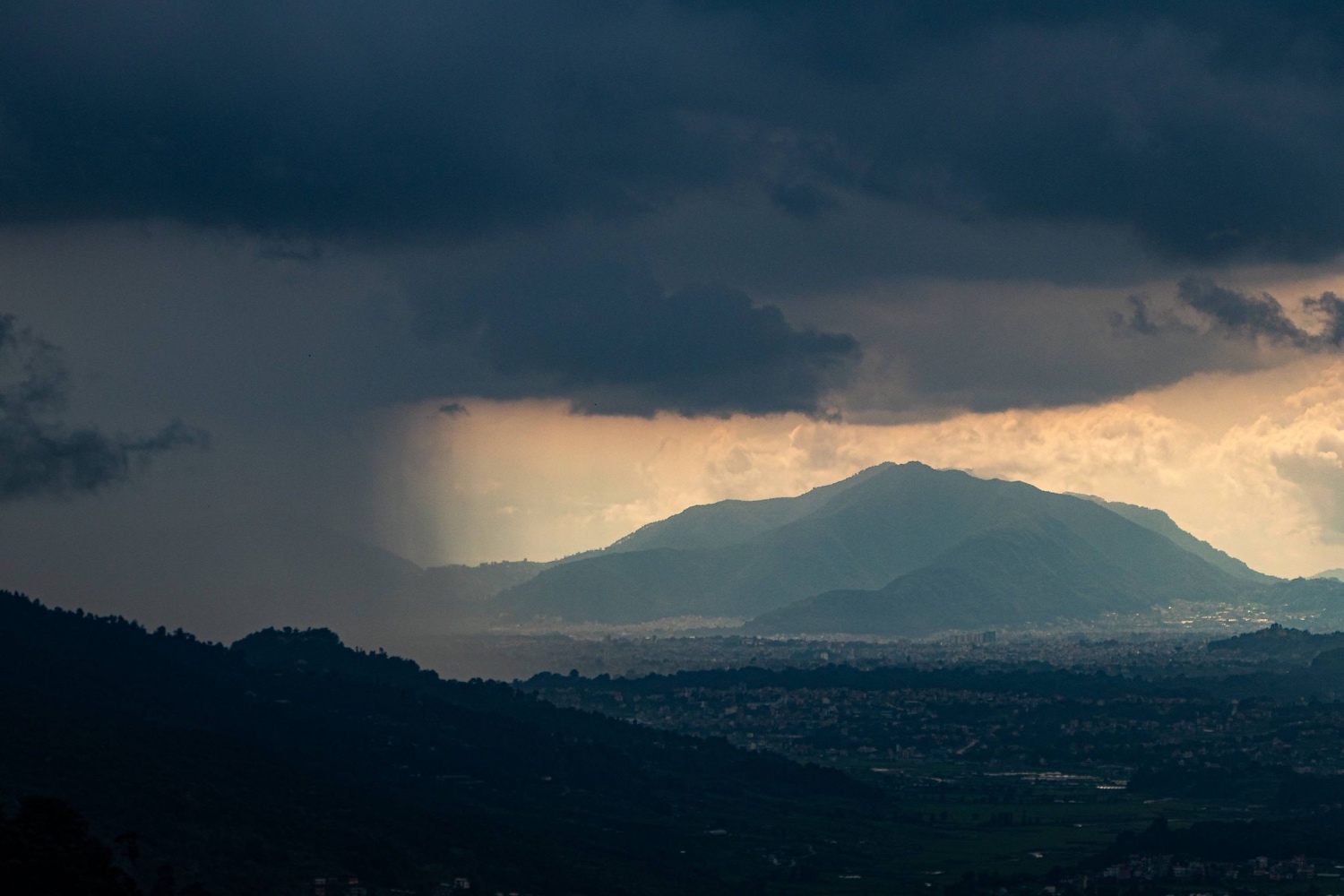
And when it rains, it pours. Most of South Asia's rains, eight of every ten centimetres, fall in just three months, mid-June to mid-September. This is the summer monsoon, the seasonal shift in the winds that, due to an overheated landmass surrounded by tropical waters, draws rain clouds toward the Subcontinent's dry plains and Himalayan slopes, where they dump their abundant moisture.
Most of this rain falls in just 100 hours of heavy intermittent downpour, in no regular pattern. ‘No comparably large number of human beings anywhere in the world,’ Amrith notes, "is so dependent on such intensely seasonal rainfall.’
Over the centuries, the monsoon has left deep marks on South Asian societies. Climate, Amrith says, is woven into the fabric of life, colouring the social, economic, and political patterns to an extent rarely seen elsewhere. Rivers here are revered as gods. Coursing with energy, they both sustain and destroy.
Perhaps no one expressed this doubleness better than the Japanese philosopher Watsuji Tetsuro, who visited India in the 1920s. With its heavy downpours, swollen rivers, and disastrous landslides, Tetsuro wrote, the monsoon ‘typifies the violence of nature’, displaying a ‘power...so vast that humans are obliged to abandon all hope of resistance’.
But the monsoon also wields positive power, the power ‘of giving life’. Monsoon rains nurture the rich rice paddies that maintain some of the planet's densest human settlement.
Indians have long been victims and beneficiaries of the monsoon's doubleness. But they have rarely been passive. Through the centuries, Amrith says, the monsoon has spurred ‘a unique source of human concern’ and even ‘fear’ among residents but also what he calls "adaptive ingenuity".
Communities from the ancient Indus civilisations through the Mughals have worked to lend order to the region's rivers and streams, to manage nature, to control it -- and not without some success.
That said, the nineteenth century saw unprecedented changes in South Asian water management, with the arrival of powerful new British technologies and ideas. In order to deliver Indian resources from forests and fields to British factories and return their finished products back to Indian consumers, the colonial government found new ways to master water and manage space.
Outpacing earlier efforts, they remade India's watery landscapes with more ambitious dreams, more robust tools, and a broader vision. Overseeing a transport revolution, they introduced new ways to tame the region's rivers and work around its monsoon. Doing so led them to see how the once far off Himalaya seemed deeply connected to the larger South Asian world.
A new technology, steam power, sparked this transport revolution. The first steam engine arrived in Calcutta in 1817 and was soon driving boats up and down north Indian rivers. By 1840, steamers could push the almost 800 miles from Calcutta to Allahabad in three weeks. Steam-powered boats shrank India.
Bullock carts could roll 20-30 km a day. Steamboats could go that far going upstream, against the current, despite a much bigger payload. Going downstream they could travel twice as far, 65 km a day.
But steamships paled in comparison to the steam-powered trains that arrived in India mid-century: railways could haul people and goods 600km a day. By 1870, India's rail workers had mapped, cleared, and levelled 24,000 miles of track (often using sal logs from the Nepal Tarai), linking Asia's largest railway network, the world's 4th largest.
Made with iron and powered by steam, Amrith notes, the railways ‘transformed the landscape’ of monsoon India: trains rolled in the dry season and through the rains. They spanned vast rivers, gorges, and mountains. They linked the country's wet and arid regions.
India grew smaller, shrinking by one engineer's estimate, to one-twentieth of its former size by the early 1890s. A smaller India was a more open, more connected India. The age-old walls of localised economy were said to be collapsing.
The century's steam-powered transport revolution ushered in a new scale of planning, bringing the Himalaya and other remote places far closer. ‘There can be no question that the scale of the works designed and built in the nineteenth century were without precedent,’ Amrith writes in his book.
This scale, this new vastness and sense of interconnection, he says, may have been the most lasting effect of British rule.
As rail was linking together India's disparate regions economically, scientists were beginning to learn how weather patterns had long linked them together ecologically. In the 19th and early 20th centuries, scientists, particularly meteorologists deploying the era's new transport and communications technologies, came to realise the grand stage upon which South Asia's climate played upon, a scale that extended up to and well beyond international borders.
People had once understood and measured the weather locally. With the naked eye, they watched storm clouds collect on the horizon. But in the 19th century, scientific observers, carefully comparing notes and data from farther and farther afield, began to see how far-off dynamics shaped monsoon rain patterns across South Asia.
By century's end, drawing upon the telegraph and a network of weather stations stretching across southern Asia, scientists learned that India's fierce cyclones usually originated in Southeast Asia near the Philippines.
A single astonishing map in John Eliot's Climatological Atlas of India showed how all the monsoon's pieces fit together -- highlighting how heat and energy moving between the Eurasian continent and the Indian Ocean shaped where and when rain would fall across India's plains and hills.
The expanding transport networks and new scientific understandings of the monsoon carried special import for the Himalaya. In the late 19th century, British and Indian alike began to see the mountains with new eyes. The northern mountains, Amrith says, ‘came more clearly into view in the last two decades of the nineteenth century’, becoming central to new geographic and geopolitical understandings.
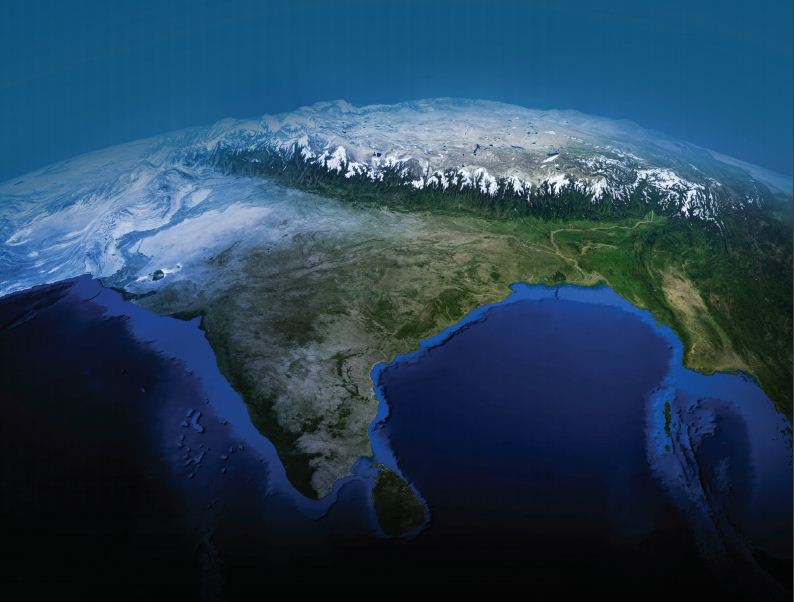
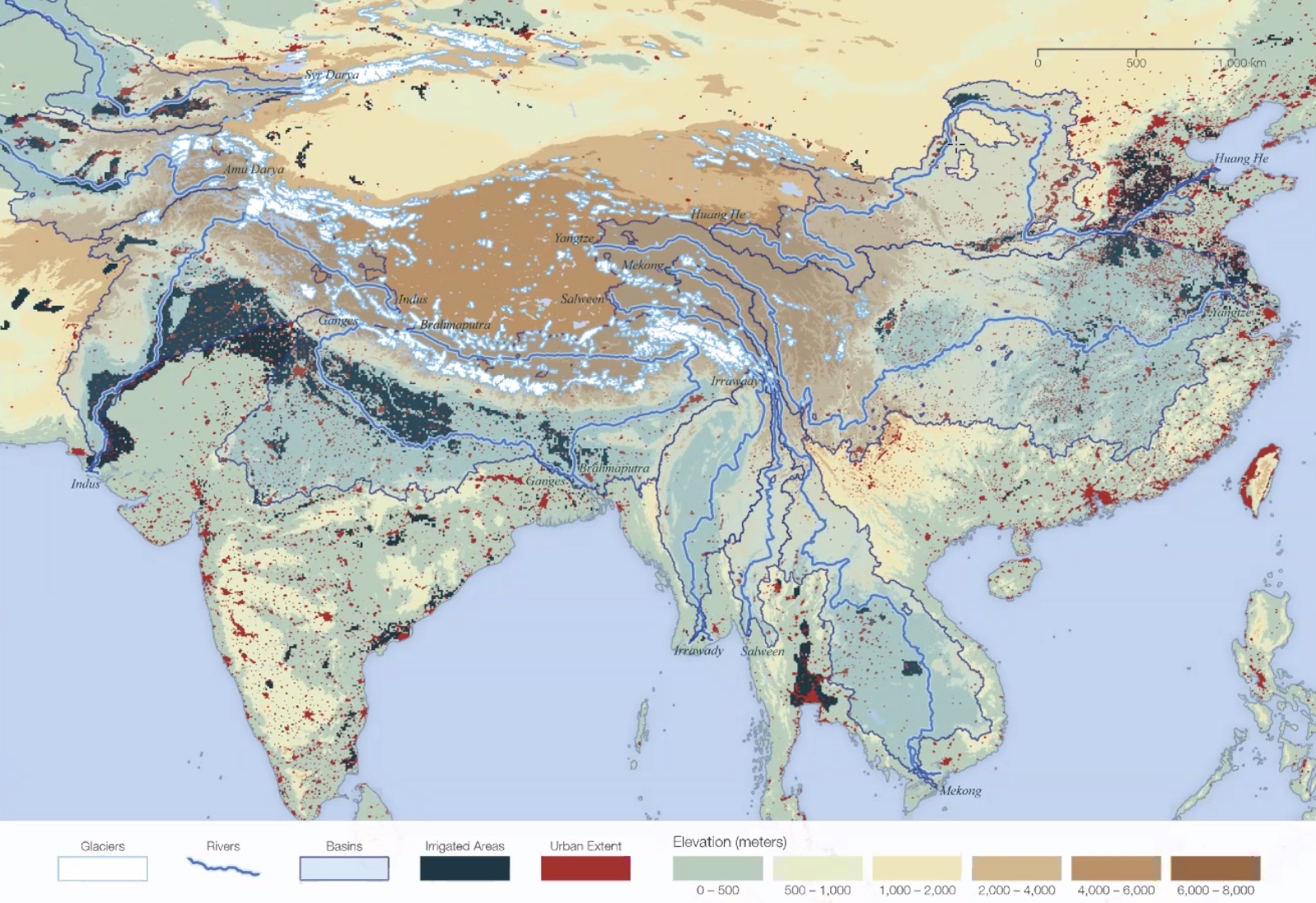
Scientists began to see how the plains and the Himalaya fit together as part of a single hydrological region. They began to speak of the Indian ‘Subcontinent’. New explorations helped them realise facts that today we think of as common knowledge -- that many of India's rivers flowed from the Himalaya. They also learned how much Himalayan landmasses shaped the monsoon, by both attracting and blocking monsoon rainclouds.
‘Advances in meteorological science,’ Amrith notes, ‘pointed to the awesome power of the monsoon climate, and sketched its continental span.’
The eight-volume Imperial Gazetteer (1881) showcased the Himalaya. ‘By India, we now imply not merely the wide continent which stretches southward from the Himalayas to Cape Comorin, but also the vast entourage of mountainous plateaux and lofty ranges,’ wrote meteorologist and ethnographer William Wilson Hunter.
Hunter gave two reasons why plains residents should care about the Himalaya: India's agricultural prosperity depended upon water from the mountains, and, as rail networks had spread north, the mountains had become doorways to the larger Asian continent, bringing opportunities but also threats.
Unquestionably, railways had transformed India. And yet, their power was not limitless. Despite their revolutionary speed and endurance, trains could never completely circumvent the monsoon's intense seasonal rain. ‘India's hydrology challenged every scheme,’ Amrith stresses.
As in previous centuries, crossing rivers and streams still posed trouble. In the summer rains, rivers roared down from the Himalaya, multiplying ten-fold or more, undercutting bridge foundations, spilling over their banks, even shifting course.
A nineteenth-century observer noted the ‘immense volumes of water periodically brought down’ by mountain rivers in ‘seasons of flood’, the ‘erratic and unstable character of their channels’, and the deep ‘scouring’ of bridge supports. As with steam boats, nature set boundaries within which humans and their trains operated.
Kipling's bridge builders in the 1880s and 1890s came face to face with the fury of monsoon floods. ‘However far the power of steam had advanced, the monsoon rivers retained the capacity to surprise," Amrith notes.
Famine, nature and nationalism
Nothing reminded Indians of the monsoon's unruliness, of nature's unpredictability, more cruelly than the famines that devastated India in the nineteenth century's final decades. Famines ravaged the Deccan Plateau and northwest India in 1876-1879, central India in 1896-97, and the Bombay region in 1899 and 1900.
Indians perished in staggering numbers. In the 1870s famines, starvation and associated disease felled 5 million people. Many millions more would die in subsequent decades. The pain and suffering from these vast human tragedies, owing to nature's whims but also human failings, defined Indian politics for over a century.
Some blamed the famines on nature, the ‘failing’ rains. What this really meant, Amrith notes, is that the rains ‘failed to behave as they were expected to -- they failed to fall when, as much, or where they usually did’. The rains failed to obey human plans.
But blaming nature was only a diversion. The famines had natural elements, of course, but were also man-made. As Amartya Sen and Mike Davis have argued, human decisions to spread market-based capitalism and new ‘improved’ forms of agriculture in India benefitted some groups but ravaged others, rendering them more vulnerable to famine.
Moreover, the British, obsessed with a ‘laissez faire’ faith that only markets should guide action, offered little or no relief to the starving. Indian critics such as Mahadev Govind Ranade and Romesh Chander Dutt attacked British policy as flawed and callous.
Indeed, nothing did more to spark Indian nationalism, which first ignited during these decades, than these man-made famines.
Many pointed to the need for more and better water policy. The main theme of the government's Famine Enquiry Commission's 1880 report was water. It downplayed the government's role in causing famine for political reasons, but called for more irrigation.
‘Among the means that may be adopted for giving India direct protection from famine arising from drought,’ it stressed, ‘the first place must unquestionably be assigned to works of irrigation.’ India's water resources needed better management.
The painful memories of hunger and unnecessary death did not fade easily. During the first decades of the twentieth century, ‘a fevered quest for water’ gripped India and most of Asia. To mobilise more water, India's government pioneered new water technologies: new canals and irrigation systems, new urban water systems, and new machine-powered pumps. In Madras, 750,000 pumps were soon at work pulling water from beneath the ground. In 1903, India's first hydroelectric plant was installed, in the princely state of Mysore.
Doubts still remained, of course. In 1909 India's finance minister described his budgets as, essentially, a ‘gamble on the rains’. But by the 1920s, rail, water pumps, canals, and dams had reshaped landscapes and boosted confidence across the subcontinent. Many believed that India had solved its age-old problems of famine.
No place showed the transformative power of technology and planning more dramatically than the Punjab. Starting in the 1880s, to make ‘waste’ land more productive, the colonial government began building what would eventually be nine Canal Colonies between the Beas and Sutlej and the Jhelum, providing life-giving water to 13 million acres.
They encouraged in-migration from other parts of the country, pushing aside herders who had grazed the land for generations. The largest of the canals, the Chenab canal, attracted a million new migrants. (The canals also attracted deadly, malaria-carrying Anopheles mosquitoes.) A new society sprouted, the product according to Amrith ‘of an engineer's vision backed by the power of the state’.
Leading Indians such as Bengali economist and poet Romesh Chander Dutt applauded such efforts but demanded more. In 1901, Dutt sent a blistering letter to India's viceroy Lord Curzon attacking British claims of lifting India out of poverty and spreading civilisation. In his lifetime alone, famine had struck down 15 million people.