
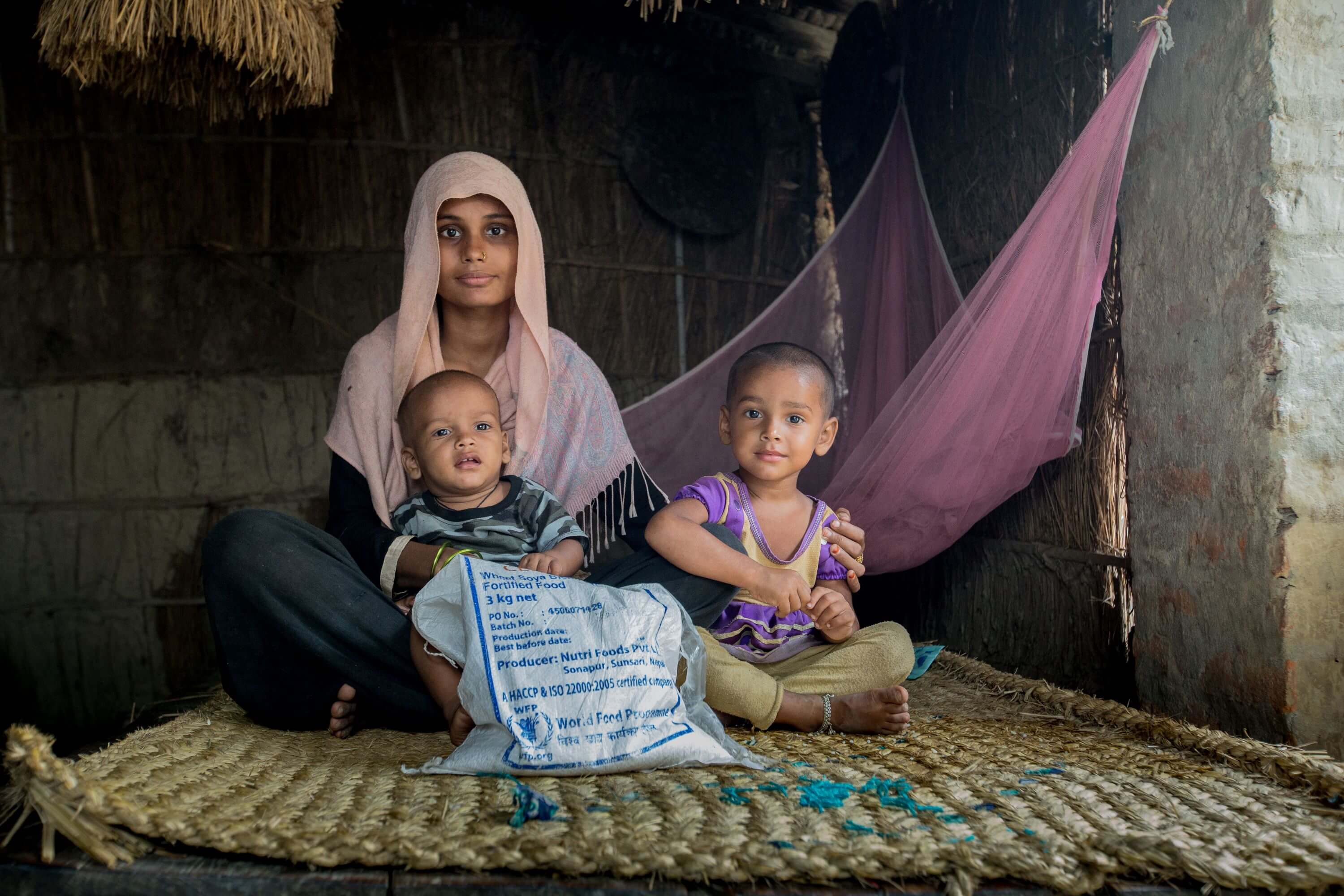
As the Covid crisis pushes millions of Nepalis back below the poverty line affecting their nutritional status, the UK government is funding supplemental food for mothers and children affected by the monsoon and Covid-19 pandemic in Nepal.
The additional £788,000 (Rs130 million) will allow the World Food Programme (WFP) to support 100,000 mothers and children with specialised nutritional supplement 'super cereal' for two months in eight districts in Province 2, Sunsari in Province 1, Jajarkot in Karnali and Kanchanpur in Far West. Mothers in target areas will also receive counselling on Covid-19 and nutrition.
“Natural hazards affect marginalised communities disproportionately, including women and children. Protecting the health of the Nepali people is a top priority for the UK Government,” says Nathanael Bevan, Director of Development at the British Embassy in Kathmandu. “The UK is glad to be supporting WFP’s efforts to make sure vulnerable Nepalis, especially mothers and children, receive proper food and nutrition.”
The Covid crisis has reversed Nepal’s gains in poverty reduction and childhood malnutrition achieved in the past ten years.
Children as well as pregnant and breastfeeding months in rural Nepal are among the hardest hit by the pandemic. Currently, over 15% of households in Nepal are food insecure, while around 39% of children between 6 to 23 months do not meet minimum dietary requirements.
A WFP report earlier this year found that Nepal had up to 1.84 million pregnant and lactating women who were malnourished. This in turn affects the growth of their children as they receive inadequate nutrition even before they are born.
And as newborns they get mothers’ milk lacking in nutrition, leading to a greater risk of dying before the age of five. More than one-third of children under five face stunted growth.
Many of the older children also relied on school lunches for a nutritious meals but prolonged school closure means that they are also deprived of this.