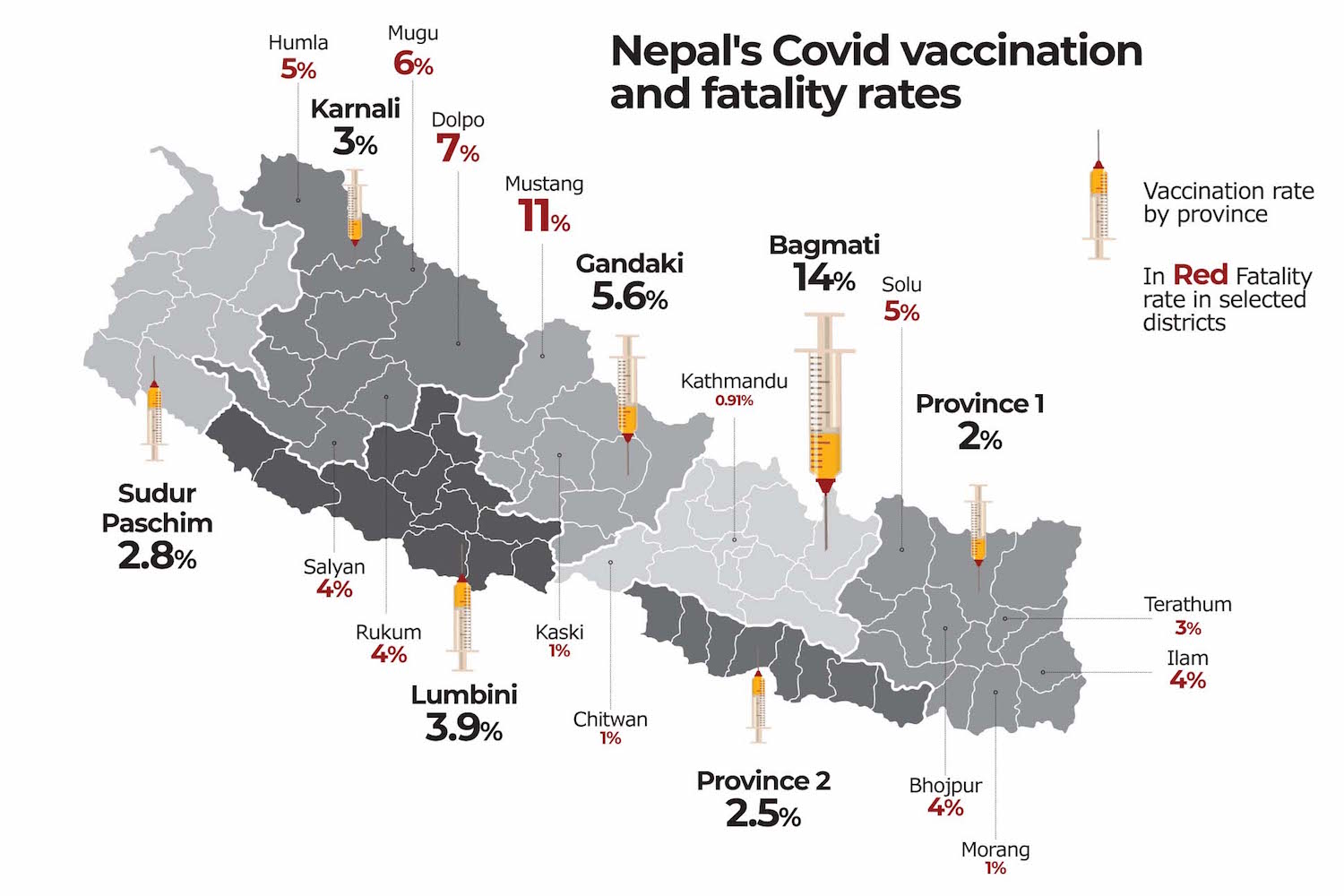
When Covid-19 cases started to fall last month and the government relaxed the lockdown, most public health experts warned that it was premature because not enough people had been vaccinated.
Sure enough, after falling steeply from 9,500 confirmed cases a day in mid-May to 1,500 cases, the daily caseload has now jumped to near 4,000 again. Daily fatalities dropped from 250 to 12 in mid-July, and have risen again to more than 30 a day. Active cases are once more passing 30,000. (See graph)
2AM is too late, Editorial
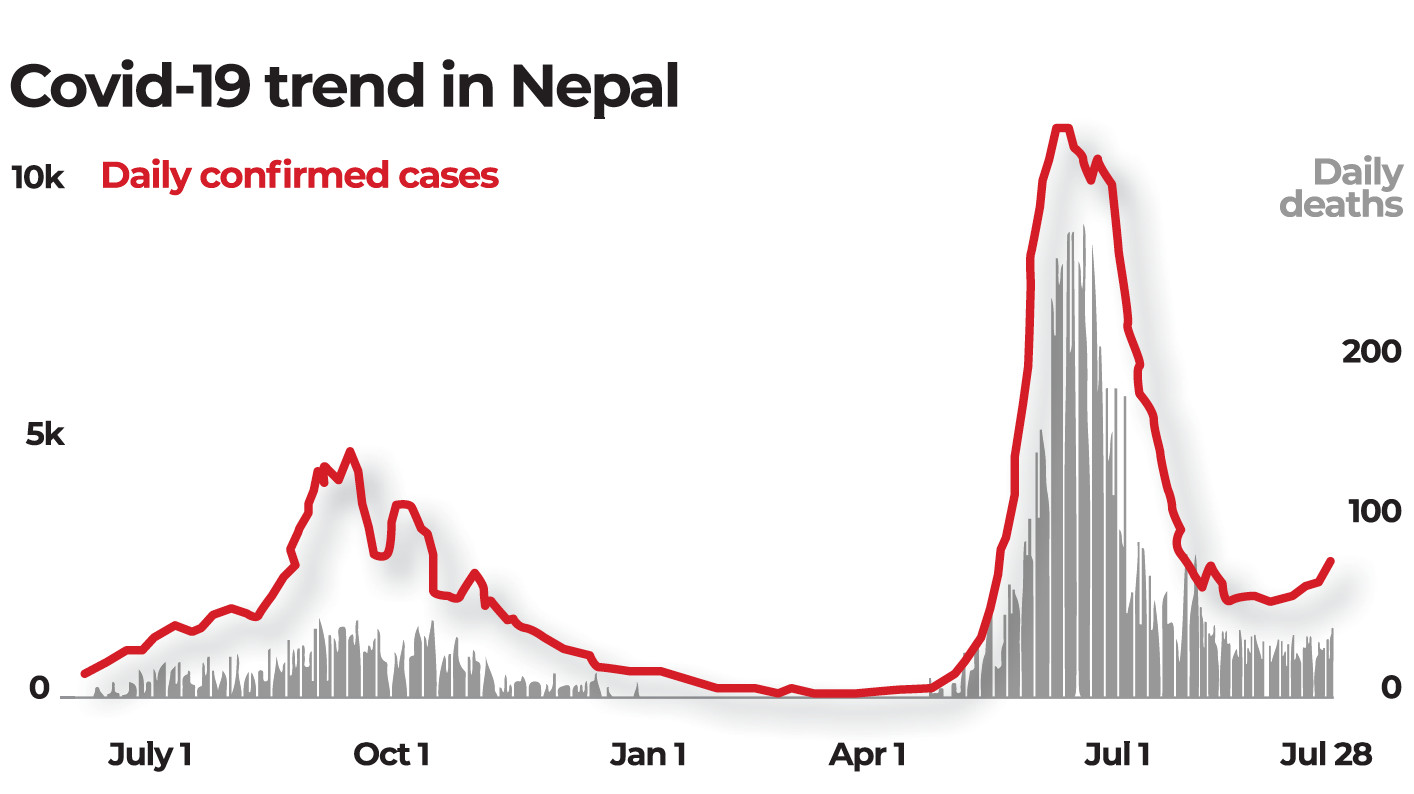
The current trend is similar to October 2020 at the peak of the first wave, when there were over 5,000 daily new cases and 30 deaths. The decline in second wave infections and fatalities have now stalled, and the case positivity rate has increased to 25%.
“After two months of lockdown, restrictions were suddenly lifted even though we were still reporting 2,000 cases. Everything is up and running and it is business as usual, crowding and no distancing,” says virologist Sher Bahadur Pun at Kathmandu’s Teku Hospital.
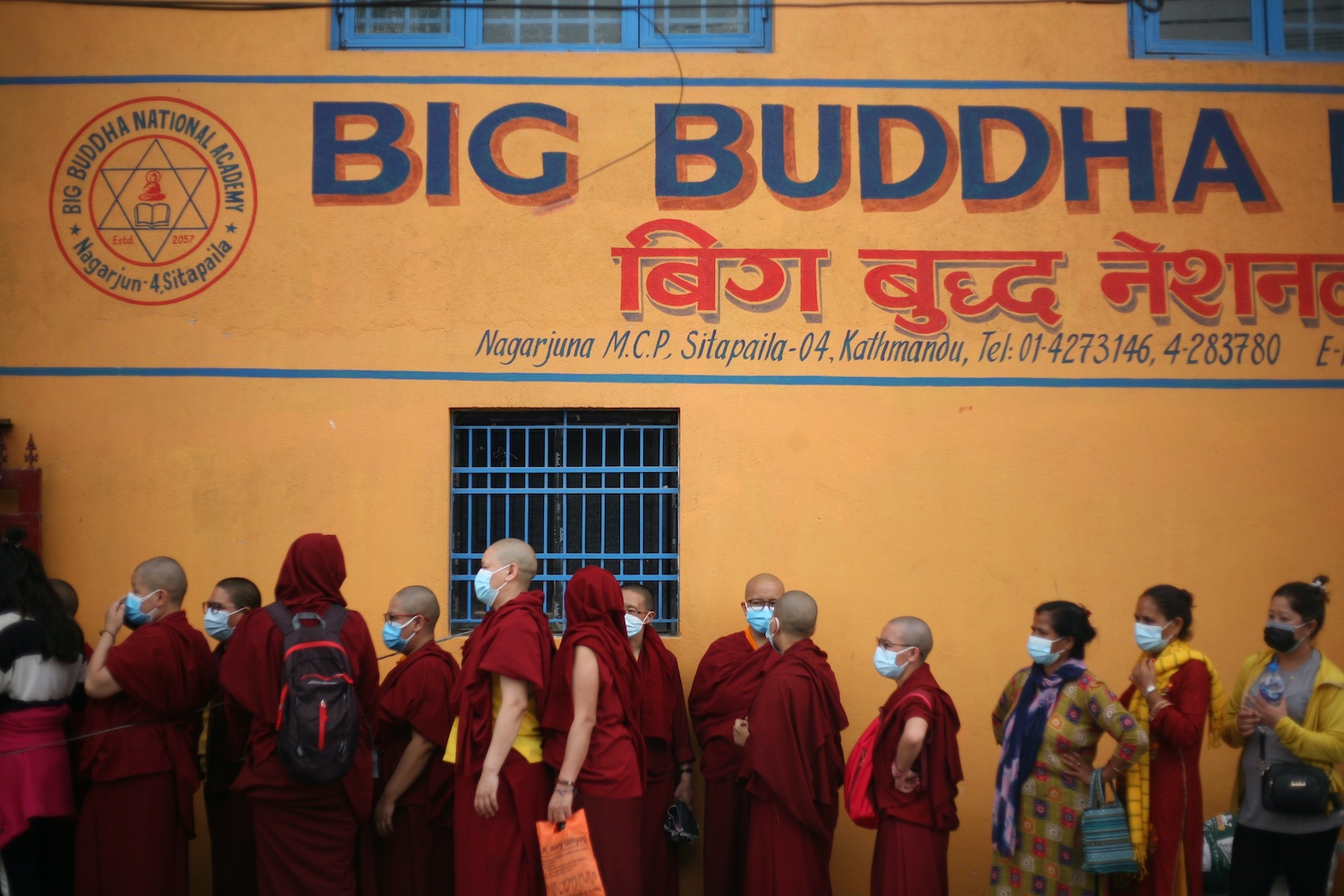
He adds: “Now we have vaccination centres which risk being virus hotspots. People who have not been infected, and those not vaccinated yet are at greater risk.”
The behaviour of the virus in Nepal has generally followed India’s pandemic trajectory after two weeks. After peaking at over 400,000 daily cases back in May, India has seen a decline in daily cases and fatalities. However, after registering less than 30,000 confirmed cases on 27 July, India registered 43,654 fresh cases the day after.
With only 7% of its 1.3 billion people fully vaccinated, recovery from the second wave has tapered off in India, with states like Kerala are seeing a new surge.
A recent survey showed that India’s seroprevalence rate is about 70% -- the proportion of the population infected in the recent past who carry antibodies. The rate is highest in the bordering states of Bihar (75%) and Uttar Pradesh (71%).
The antibodies provide some immunity against the coronavirus, which is why Kerala is seeing a spike because the seroprevalence rate there is India’s lowest, at 44%.
A seroprevalence survey is currently being carried out in Nepal, and experts predict that antibody rates will be similar to India, at least in the Tarai. However, they caution that this may not mean Nepal is protected by herd immunity.
Nepal is administering more than 55,000 doses of Covid vaccines a day, but the government’s assurance that more vaccines are on the way may have sent the wrong message to people.
“People who are vaccinated are being careless, they have stopped wearing masks and distancing themselves. I know of at least 10 acquaintances who with their families were fully vaccinated, but are now in quarantine,” says epidemiologist Lhamu Yangchen Sherpa. “Jabs protect us from hospitalisation, but we could still get infected and continue the chain of infection.”
But despite projections of a new surge in late August, public health experts both in India and Nepal are cautiously optimistic that it will not be as deadly as the second wave unless a new variant of concern emerges before a large portion of the population is vaccinated.