
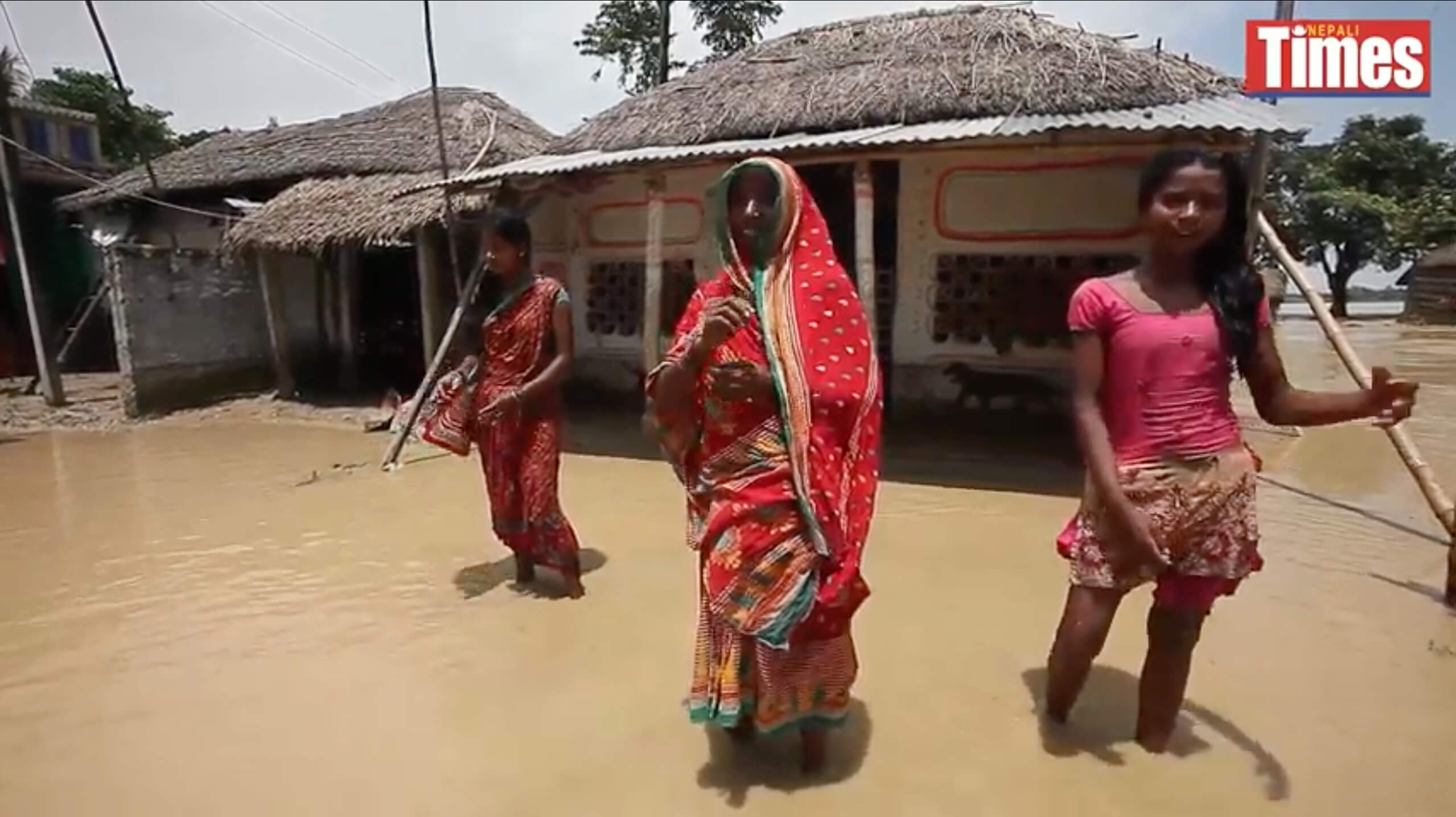
Thirty-seven people were killed when a landslide on 12 July tore through the settlement of Lidi of Sindhupalchok district. More than half of them were women. When another landslide in nearby Barabise on 11 August killed 31 people, 20 were women. Most of the 15 still buried under the debris are women.
A month later, another massive flashflood in Dhorpatan of Baglung district washed away nearly the entire village, 22 people were killed and 15 are still missing. Of the dead and missing, 21 are women and 16 men. More women have been killed also in landslides in Myagdi of Tanahu and Parbat districts earlier this year.
Nepal’s fragile Himalayan terrain gives it one of the highest fatality rates in the world from landslides and flash floods. And 2020 has been particularly destructive with three times more casualties compared to previous years. So far 291 people have lost their lives, 67 are still missing, and 223 have been injured in 481 landslides across the country between 1 April to 13 September.
Women bear the brunt of most disasters like floods, earthquakes and landlsides in Nepal because the countryside has been ‘feminised’ by the outmigration of men. And it is the women who tend to be inside the house more often than men.
For example, the 25 April 2015 earthquake struck just before noon on a spring day. The men were mostly out in the fields sowing maize, while women were indoors cooking or doing home chores.
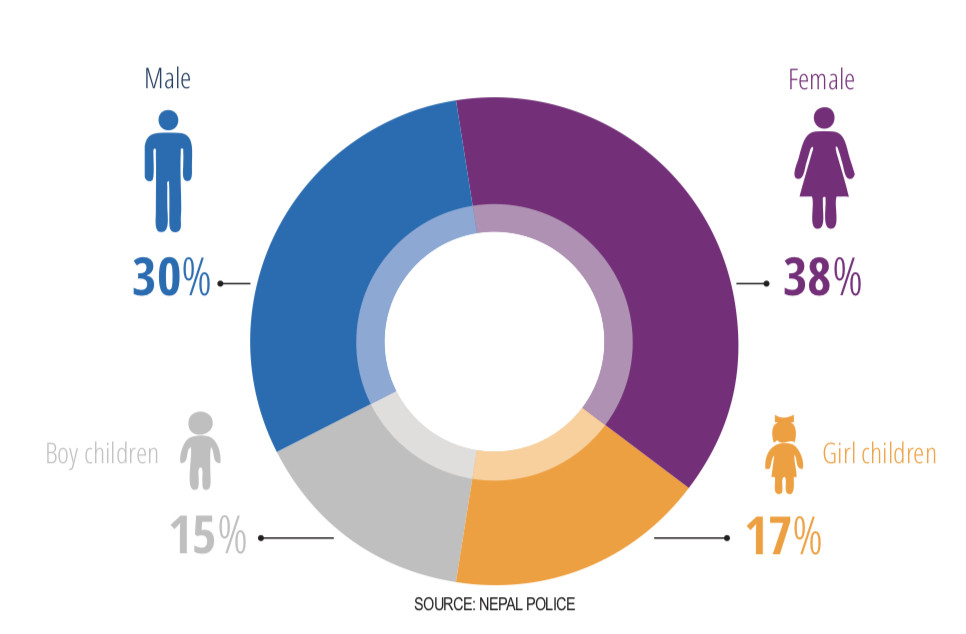
Of the total 8,193 fatalities in the 2015 earthquake, 55% (4,497) were women. Even among the children killed, girls (17%) outnumbered boys (15%). It was only in Kathmandu city that more men than women were kiled five years ago.
"Women are more likely than men to die from an outbreak or a disaster because they have less access to information and seldom participate in disaster learning skills,” says Sirjana Tamang, vice-chair of Jugal village of Sindhupalchok which saw multiple landslides this monsoon. “Socio-cultural perceptions of sexuality and traditional beliefs about gender responsibility also put women at greater risk in disasters.”
This trend is prevalent worldwide. The Asian Development Bank's 2013 study found that women had higher mortality rates than men in major disasters in Asia. Of those killed in the April 1991 cyclone in Bangladesh, 91% were women, and 67% of the casualties in Aceh of Indonesia in the 2004 tsunami were women.
Researchers from the London School of Economics and the University of Essex studied major outbreaks in 141 countries around the world from 1981 to 2002. They concluded more women than men died in the disasters.
The Kathmandu-based International Centre for Integrated Mountain Development (ICIMOD) also concluded that women are more at risk from disasters than men. The findings were published in its 2019 report ‘The Hindu Kush Himalayan Assessment’ which analysed statistics from the 2015 and of other natural disasters of the last few decades in the Himalaya.