
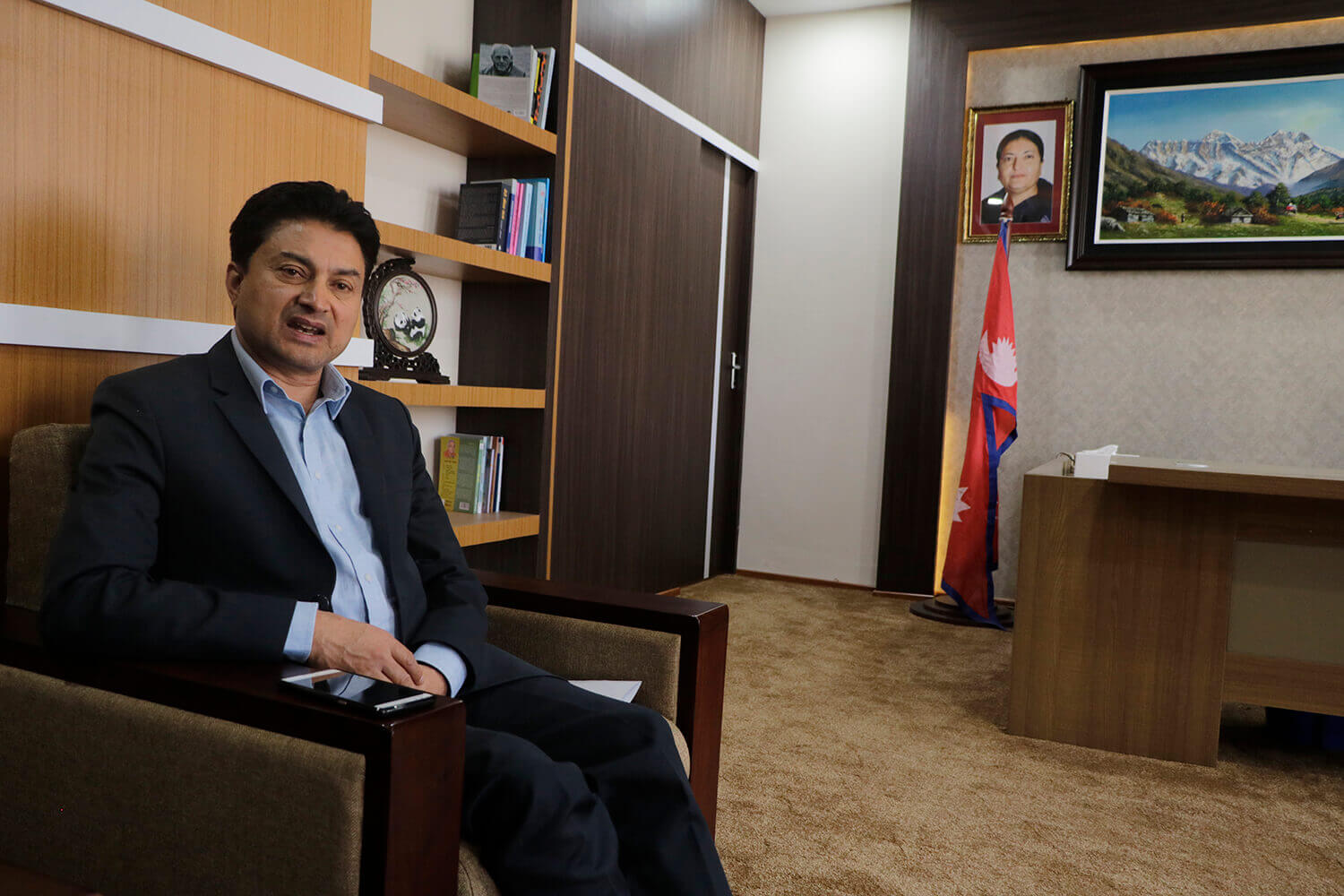
As chair of the Colombo Process, Nepal is hosting the 5th ministerial meeting of this network of 12 labour-sending countries in Kathmandu on 15-16 November. Labour Minister Gokarna Bista spoke to Nepali Times about the recent labour pact with Malaysia, and how this loose forum can promote safe migration. Excerpts:
Nepali Times: How will Nepali migrant workers and Malaysian employers benefit from the bilateral MoU you signed?
Gokarna Bista: Malaysia had been hiring migrant workers from Nepal for over two decades, but the two countries never had a written agreement. Our workers therefore faced problems like lack of minimum pay, social security and workplace safety. Malaysian employers had their own grievances. But we never had a legal or policy framework to address these issues. Now we finally have an agreement that not only protects Nepali migrants but also helps Malaysia manage foreign workers in a dignified way. The pact is even more important for us because it requires Malaysian employers to bear airfare, insurance, visa and security clearance fees previously charged to Nepal’s workers. It also makes it mandatory for employers to deposit the minimum salaries into bank accounts of Nepali workers within the first week of every month. It binds employers to grant workers a 15-day leave if anyone dies in their families.
Read also:
Bargaining power, Editorial
Paying an arm and a leg, Om Astha Rai
But aren’t there challenges in implementing these points?
Those who have been exploiting poor migrant workers probably want to foil this agreement, but I am sure it will be implemented because it reflects the common interests of Nepal and Malaysia, and both governments are committed to promoting safe and dignified migration.
Is this model now going to be applied with Gulf states as well?
We have labour agreements with a few Gulf countries, but they are obsolete. Some do not have provisions for social security, forcing Nepali migrants to work for less than minimum wages. They cannot return home because their passports are controlled by employers. We need to renew and update these agreements with Qatar, UAE, Saudi Arabia, Oman and Kuwait, incorporating new measures to tackle new challenges.