

We must all look beyond these times of fear and uncertainty and plan forward to Dasain, Tihar and Chhat festivals. This year Dasain is 24-27 October, Tihar 13-16 November and Chhat a week later.
These are family and community festivals, a time for get-togethers at a time when we should be careful about getting together. Last week’s Bisket Jatra in Bhaktapur was cancelled, Machindranath chariot pulling is unlikely and even Indra Jatra looks iffy. WE will be locked in our homes for Nepali New Year Day on 13 April.
So far, Nepal has been lucky. But to keep the virus from spreading in our communities we need to take steps today. Keep strictly to lockdown rules, maintain physical distance even within the family, not so much to protect ourselves but to protect others.
These actions have to be at the level of the individual and community, as well as at all three levels of government. The idea is simple. You plant marigold, you harvest it after the monsoon, make garlands, sell it and pay for the family to have new clothes and sweet dishes. If you do nothing now, it will be a miserable festival. And Nepal’s festivals are intimately tied to our crop cycles.
The rains have been good to Nepal this winter, and we have to believe that the monsoon will arrive on time and stay strong. The current maize-planting season and the upcoming rainy season are opportunities to ensure that no Nepali goes hungry and ensure food security for Nepal at these difficult and uncertain times. The government should be proactively telling farmers that the lockdown does not include them, as long as they maintain physical distance.
Oral lore tell us that Kathmandu Valley once suffered a 12-year drought and the Boudhanath stupa was built with dew drops and hence called Khasti – the dew drop stupa. Droughts are nothing new, but they may get more severe and frequent in future with the climate crisis.
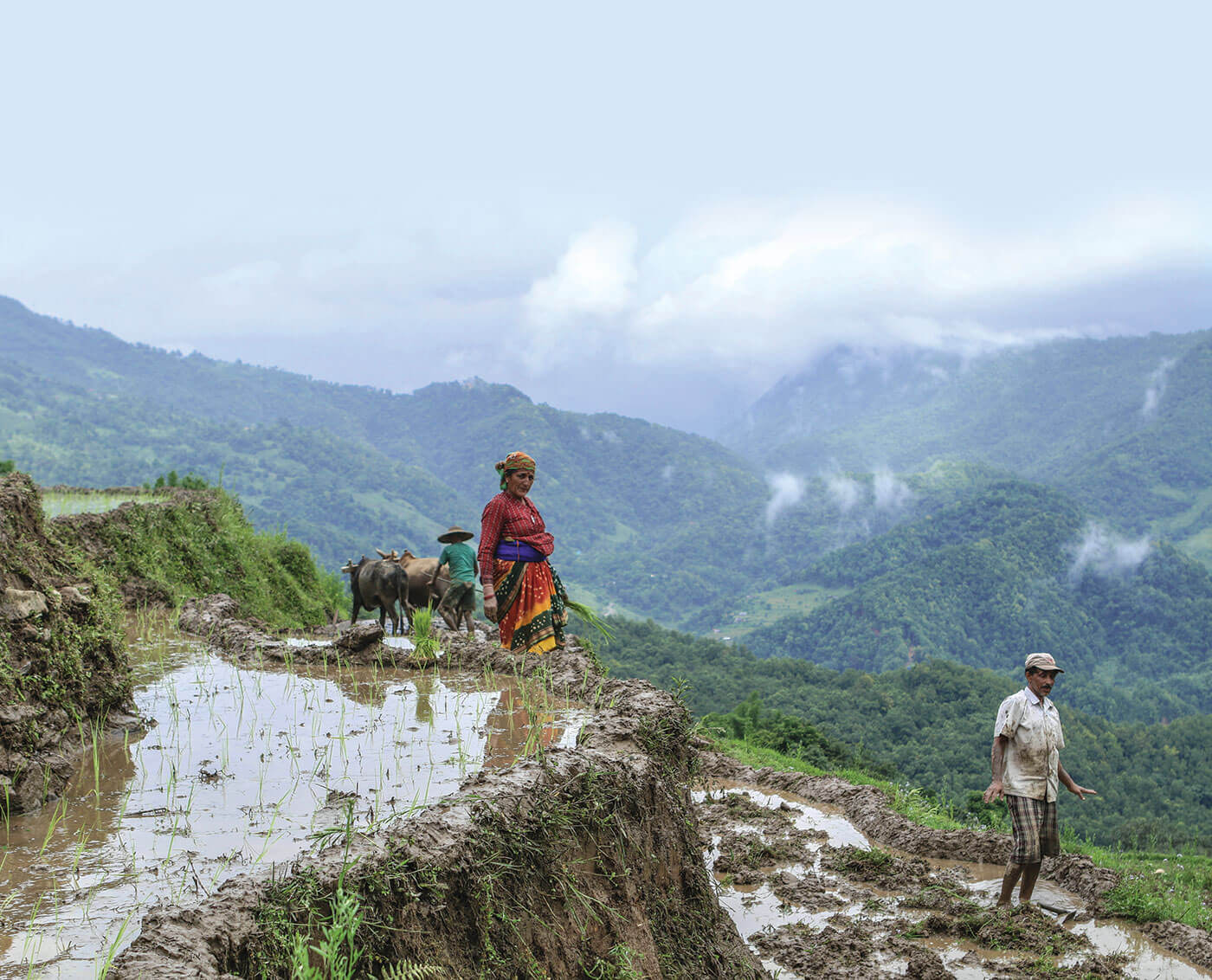
Rice seedlings and the terrace farms must be prepared for the monsoon paddy planting season. But this year, we must also prepare for a possible shortage of workers. The COVID-19 slowdown will drive wages up, and increase the price of fresh vegetables and staples. For farmers this is not necessarily bad news, but we have to adapt to a new post-coronavirus economy.