
Nepalis had much to look forward to in 2022. The pandemic had abated, tourism was picking up, and the second series of elections under the federal system were set to take place.
Barely two months into the year, Russia invaded Ukraine and the war hit Nepal’s struggling economy hard. A steep rise in the petroleum import bill further depleted state coffers, and widened the trade gap. Political disarray led to ministerial mis-steps and delayed government response.
Local elections in May consolidated the coalition, but the strong showing of the independents in federal elections shook the established parties. However, the leaders have ignored the national mood and in a repeat of 2017, Nepal’s Communist parties have joined forces to form another coalition government, this time of seven parties with Pushpa Kamal Dahal as the Prime Minister for the third time.
Nepali politics continues to be defined by a coalition governments devoid of ideology and incapable of solving urgent problems like creating jobs, curbing pollution, or addressing the climate crisis.
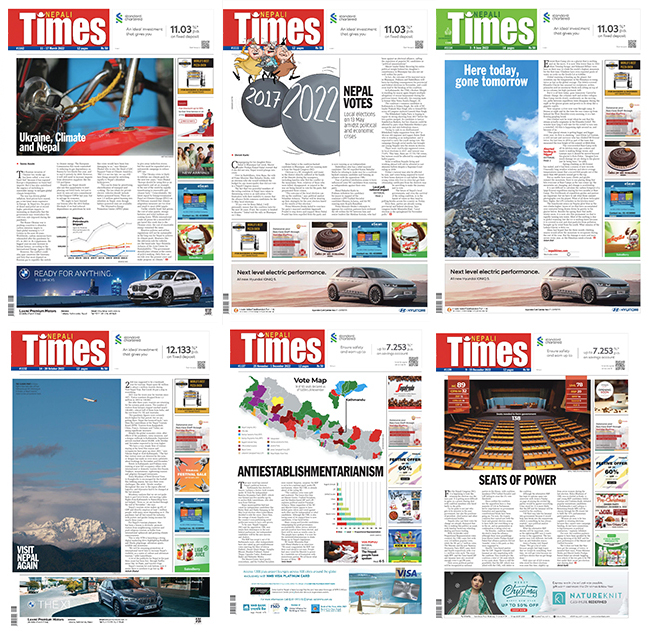
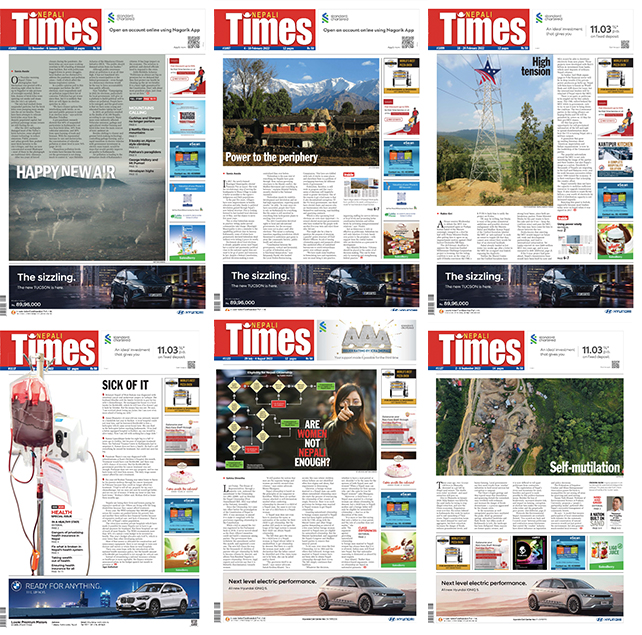
A recap of the year that was through the 12 front pages of Nepali Times in 2022:
Pollution and exploitation
Nepali Times’ first issue for 2022 carried an image of brick kilns spewing smoke. That, combined with vehicular emissions and open burning meant that Kathmandu residents were breathing the dirtiest air in the world, reducing their lifespans by 4 years.
Garbage piled up on the streets of the capital even as the rivers and mountains were ravaged by illegal quarries and sand mining. As the country plunged headlong from a Covid pandemic into a dengue epidemic.