
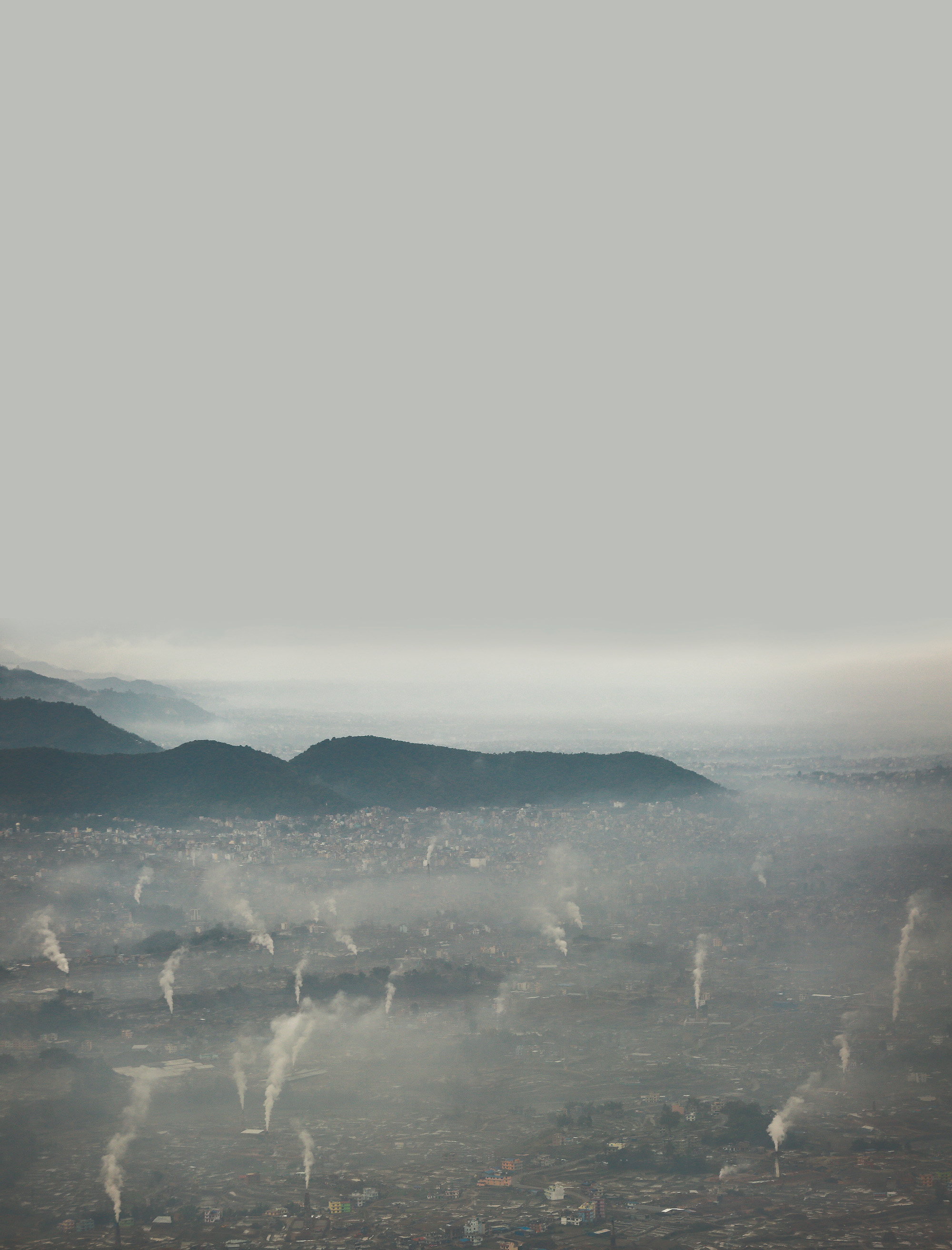
On Thursday morning, Nepali Times photographer Amit Machamasi was greeted with a shocking sight when he drove up to Nagarkot to take pictures of overnight snowfall. Below him, dozens of brick kilns were spewing out smoke and steam into the city’s air (photo).
The rain had washed down suspended particles, but the brick kilns were pumping more smoke into the air we breathe. There have been attempts to relocate brick kilns away from the densely-populated capital, but political patronage means owners are still fouling the air.
After the 2015 earthquake damaged most of the Valley’s brick factories, some adopted cleaner technology to reduce emissions. Public pressure and urban growth then pushed most brick factories to the city’s fringes, and they are now concentrated around Bhaktapur – most of those in the photograph are traditional dirty chimneys.
After two years of forced closure during the pandemic, the brick kilns are once more working overtime to fill a backlog of demand from builders. But with politicians bogged down in power struggles, local leaders are too distracted to address the pandemic and pollution crises – both of which affect the human respiratory system.
In a public opinion poll in this newspaper just before the 2017 elections, most respondents said air pollution topped their list of concerns. Pollution has gotten worse since then, but it is unlikely that dirty air will figure in election speeches in 2022.
“We have cleaner options like interlocking earth bricks, so we just need public pressure to make it an election issue,” says environmentalist Bhushan Tuladhar.
A pre-pandemic research showed that 40% of suspended particulates in Kathmandu’s air was from brick kilns, 30% from vehicular emissions, and 20% from open burning of trash and biomass. With the exponential increase in cars and motorcycles, the concentration of vehicular pollution at street level is now 70%.