Seldom do we see the smaller things, read between the lines, and realise that the little, fleeting moments are what shape our realities.
As we trace the light & dust, Haru Art Collective’s first group exhibition at Dalai-la Art Space revisits the value of these moments. Through the works of ten artists, the exhibition details our everyday, ordinary lives, making viewers relate, reflect, and bask in nostalgia.
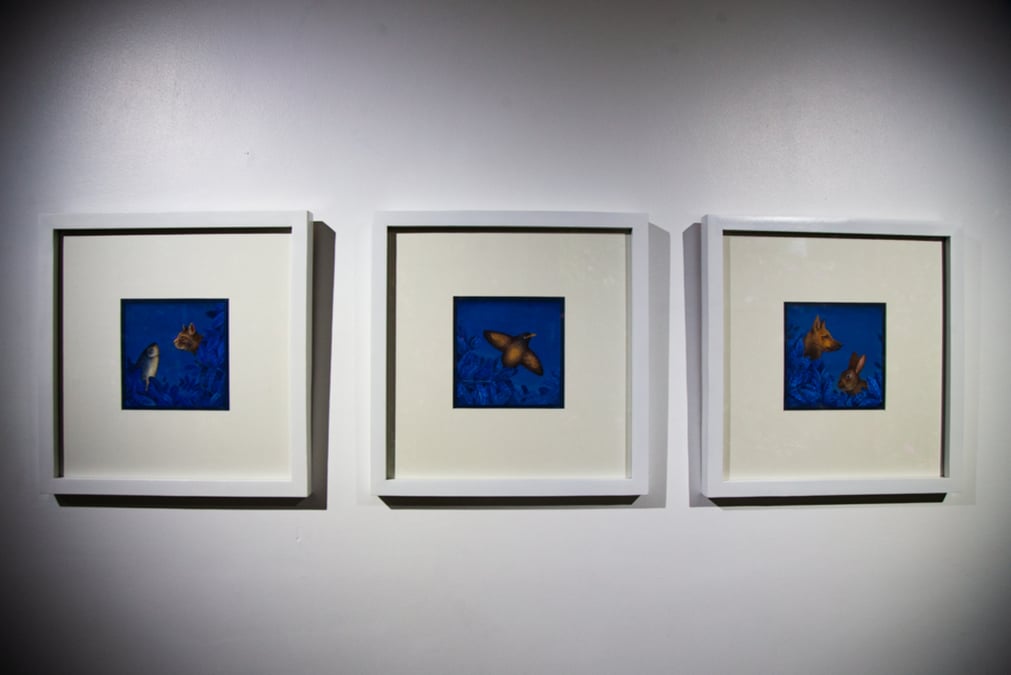
One such piece is Moulik Limbu’s यादहरु सपना जस्तो लाग्छ, a dreamy blue landscape rendered in watercolor and gouache where birds and animals emerge subtly through still, royal-azure leaves.
As children, Limbu would stay up late with his brother, imagining fantastical creatures from the shadows outside their window, but at dawn, they would discover they were just leaves. Those quiet nights formed lasting memories that continue to tug at Limbu’s heart which he now preserves in his art.
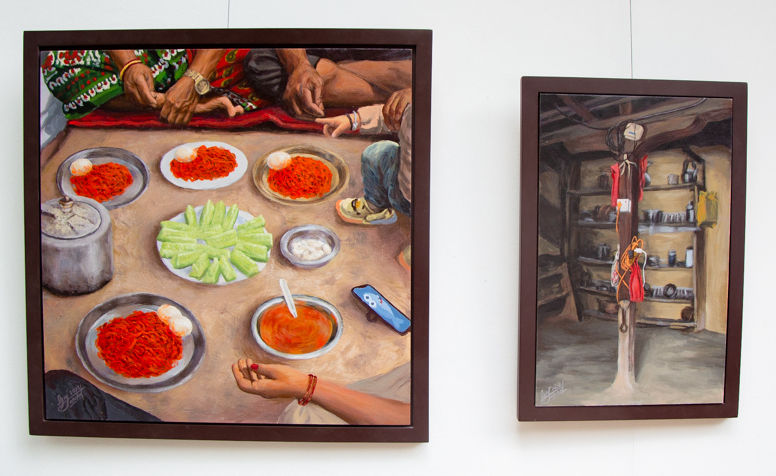
Nischal Gurung’s Familiar Echoes captures the soft emotions of togetherness. Whether it is a person or familiar household objects we often overlook, they stay with us. In काक्रा र करेन्ट, the warmth of huddling together for a meal is carefully portrayed, highlighting how closeness often unfolds in the most mundane of moments.
In another piece, Anil Nepali’s work explores the haziness of distant memories. What seems like a normal painting from afar becomes increasingly blurred up close, much like how traffic lights lose clarity when seen through misty eyes.
This visual metaphor mirrors Nepali’s own experience of fading recollections from home which he reconstructs through pixelated squares and muted monochrome tones. The result is a powerful reflection on the fragile, fading nature of memory.
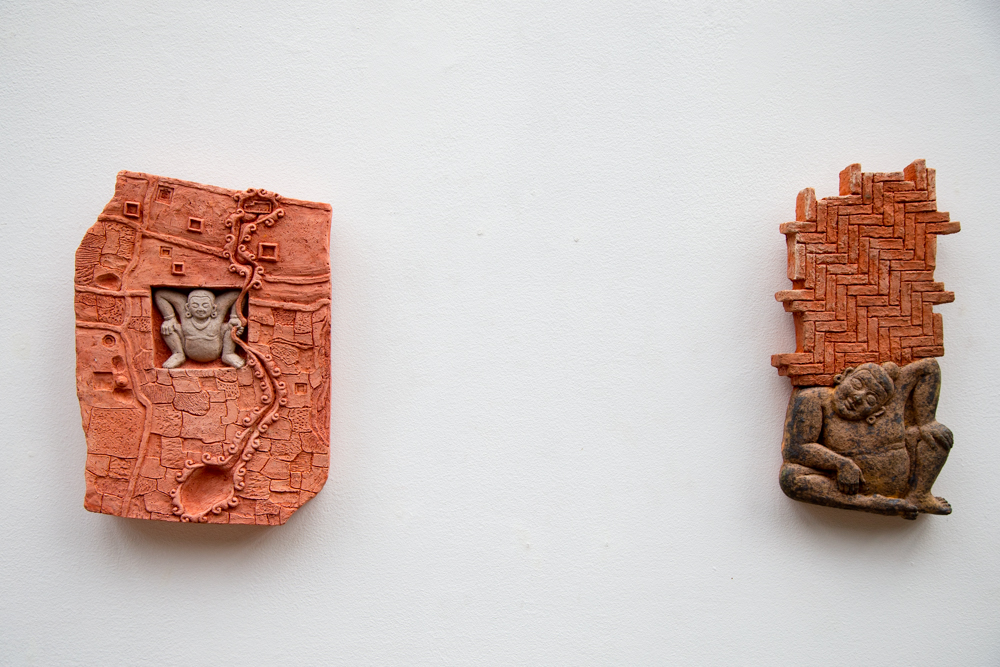
Viewers will see the attempt to reconnect with ancestral roots and traditional practices. The Arrival of Bun-Dyo by Kabir Kayastha, depicts the rain god Bunga Dyo during the Rato Maytsendranath Jatra. Meanwhile, Shrayam Shakya explores his lineage's deep connection with land and water in his piece, From the Ground.
“The oral traditions and stories of my ancestors become the remnants of the land and the knowledge that existed,” he tells us. At the centre of his exploration is the Yaksha – a nature spirit that embodies land and governs the essence of water. For Shakya, the Yaksha is not just a mythological being but also a symbol of ancestry.