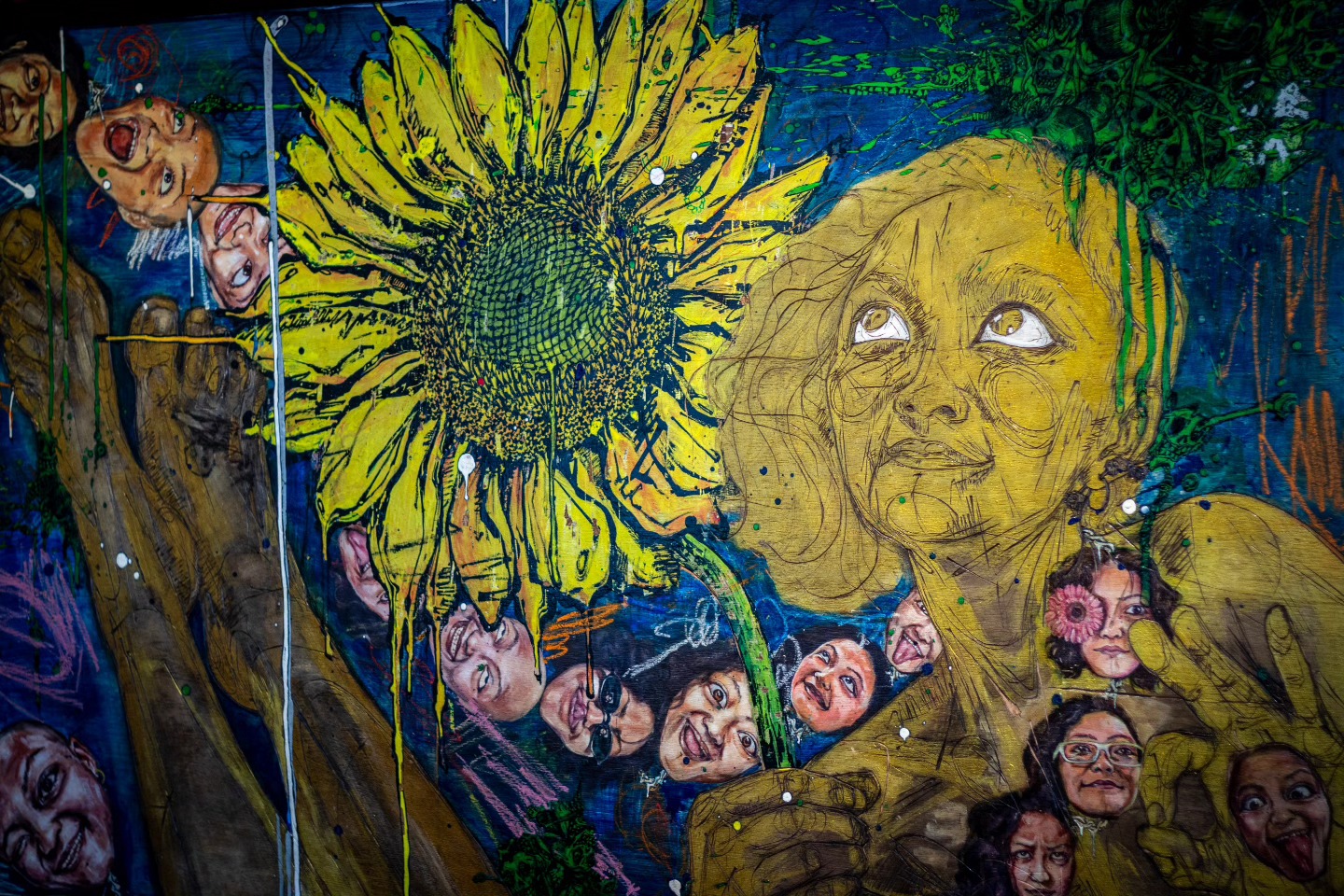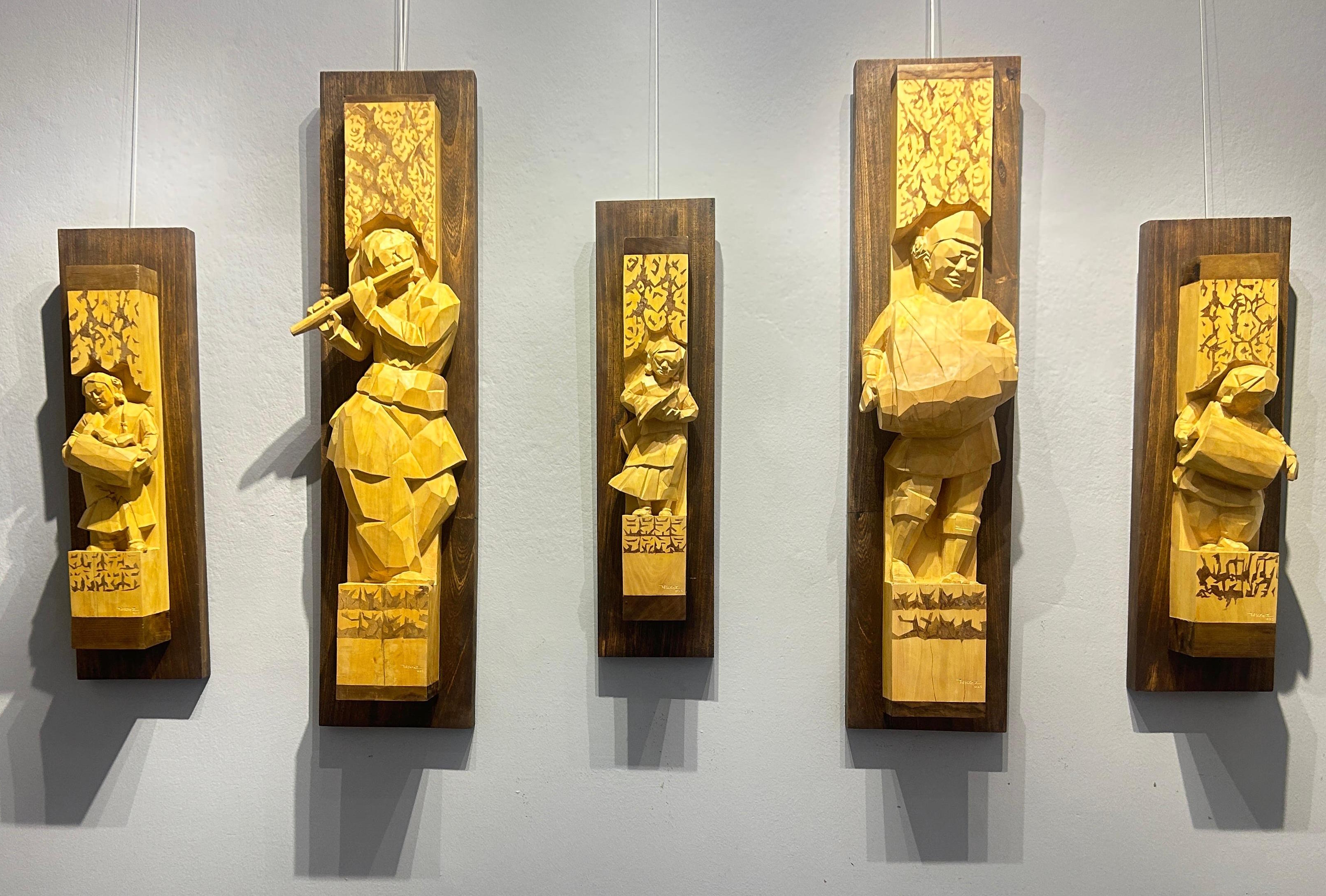
Bhaktapur is all about ritual, resistance, and remembrance. Now a new generation of artists is exploring the city of devotees through art.
Balkrishna Banmala was a child deity dancer who performed sacred tantric rituals. But what many saw as divine honour for Banmala was a time stolen from his childhood.
“On the surface, it looked beautiful to be honoured with offerings and prayers,” Banmala tells us. “But behind the masks and the barefoot dances, we were children denied a normal life. No school, no shoes, no time to play.”
Banmala is now an artist and his canvases are part of the Chitra Katha exhibition at Siddhartha Art Gallery. His artwork blur the line between the sacred and the everyday: a masked deity riding a bicycle, a divine child licking an ice cream cone. Some of these images have sparked outrage in his own community.
“When I first exhibited these works, community leaders saw them as betrayal,” adds Banmala. “Some even tore up my paintings. A police complaint was filed. But I believe art must speak the truth even when it is uncomfortable.”
His paintings at Chitra Katha incorporate circular motifs inspired by the Navadurga Jatra where Banmala weaves cosmological cycles into his paintings, saying, “In the cycle of life: Brahma creates, Vishnu sustains, and Shiva destroys. My work reflects this cycle--today, tomorrow, and beyond.”
Read also: Old art meets new, Sikuma Rai
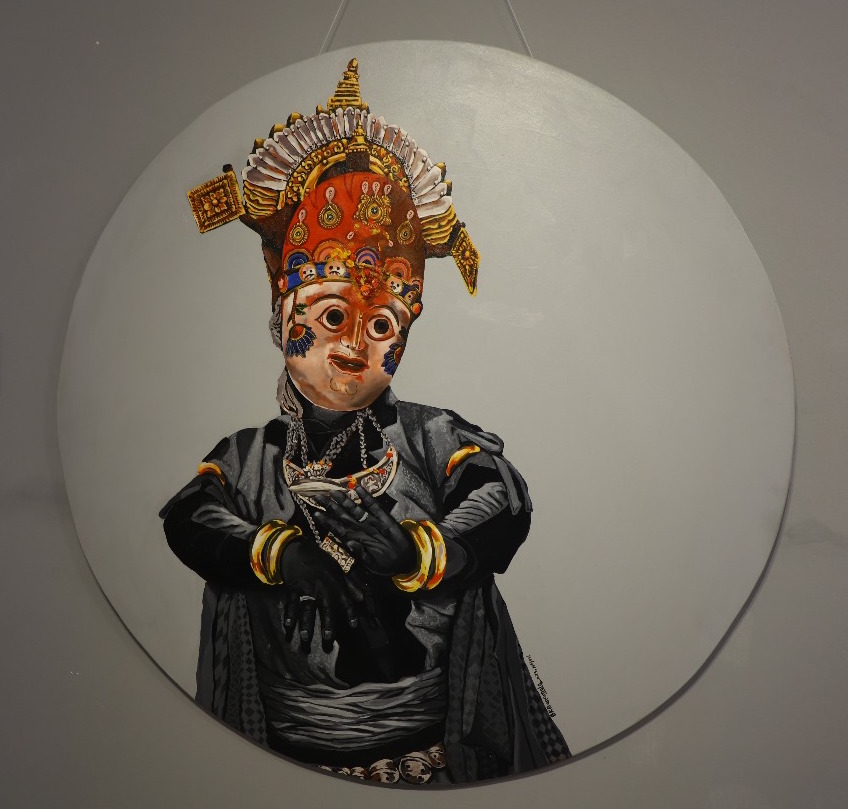
For Banmala, art has become a form of therapy, a step to healing the inherited burdens of tradition. “Children in my community continue to be worshipped at the cost of their dreams. I want them to have what I didn’t. My art is my protest, my hope, and my prayer.”
Altogether, 28 artists from Bhaktapur are exhibiting their works at Siddhartha Art Gallery with everyday stories of the city in the form of paintings, drawings, ceramics, printmaking, light installations. Many works use local materials like terracotta, wood and cement, grounding their expressions both literally and metaphorically in Bhaktapur’s soil.
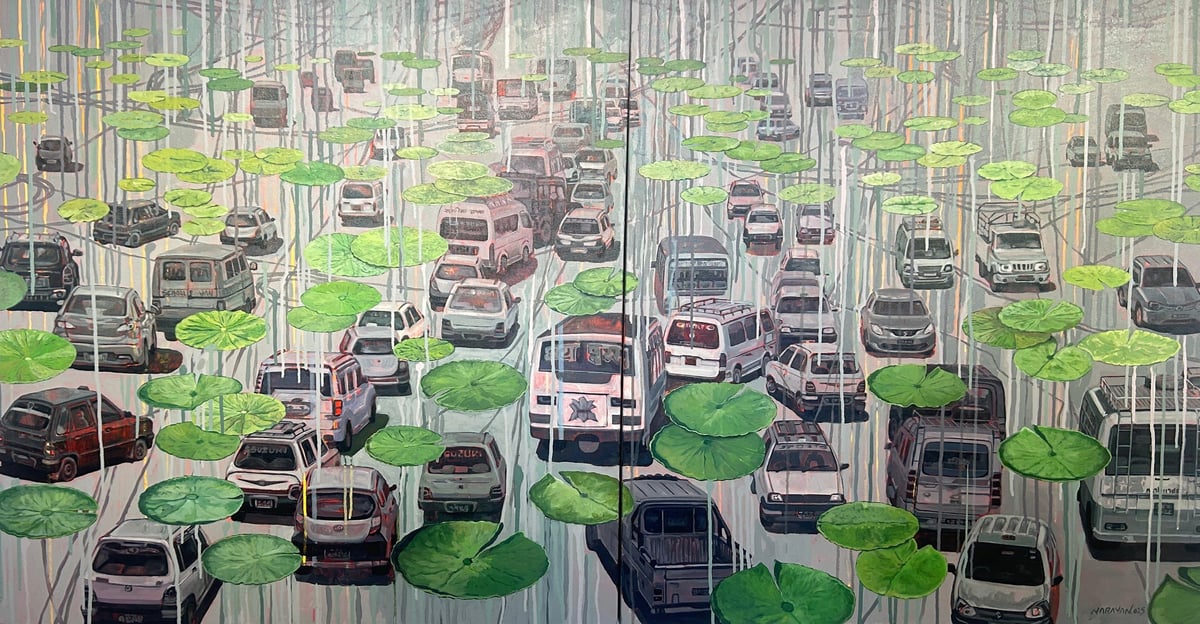
Narayan Bohaju’s diptych Floating Hopes II offers a dreamlike view of urban chaos. Public vehicles float alongside lotus leaves. The visual texture almost resembles Studio Ghibli, and invites onlookers to romanticise even the most distressing reality, thereby offering some hope even in unexpected places.
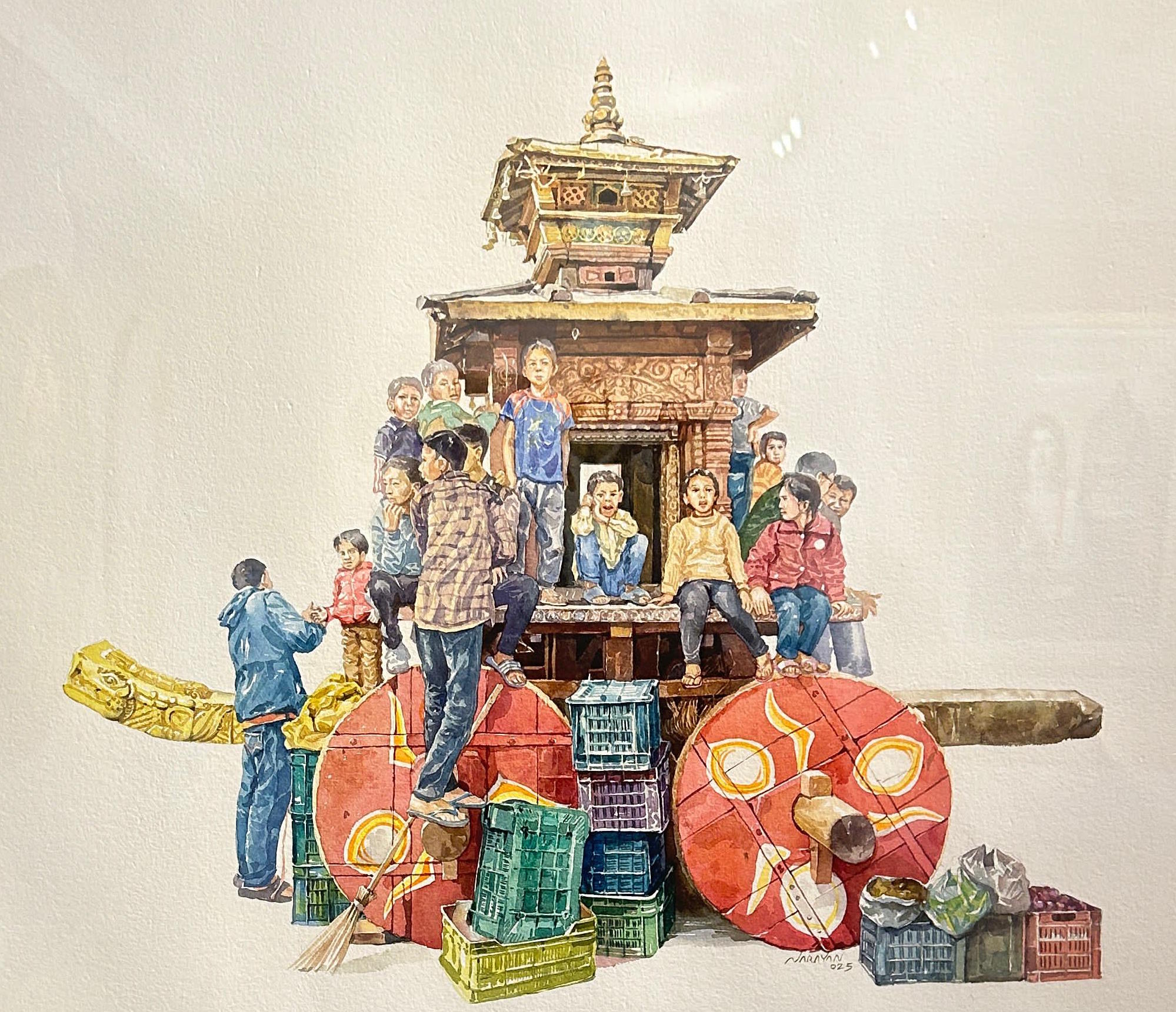
In Echoes of Childhood Community, Bohaju returns to Bhaktapur’s spiritual core. A towering temple-like chariot teems with figures in communion: local vendors, families, fruit baskets, religious icons--anchoring a city where sacred and mundane coexist.
Meanwhile, Pooja Duwal’s series Custodians of the Ephemeral celebrates the beauty in the ordinary. Rendered in oil, her scenes capture fleeting moments of men in dhaka topi, elders sipping tea, neighbours chatting at street corners. Her remarkable works showcase unremarkable everyday scenes.