
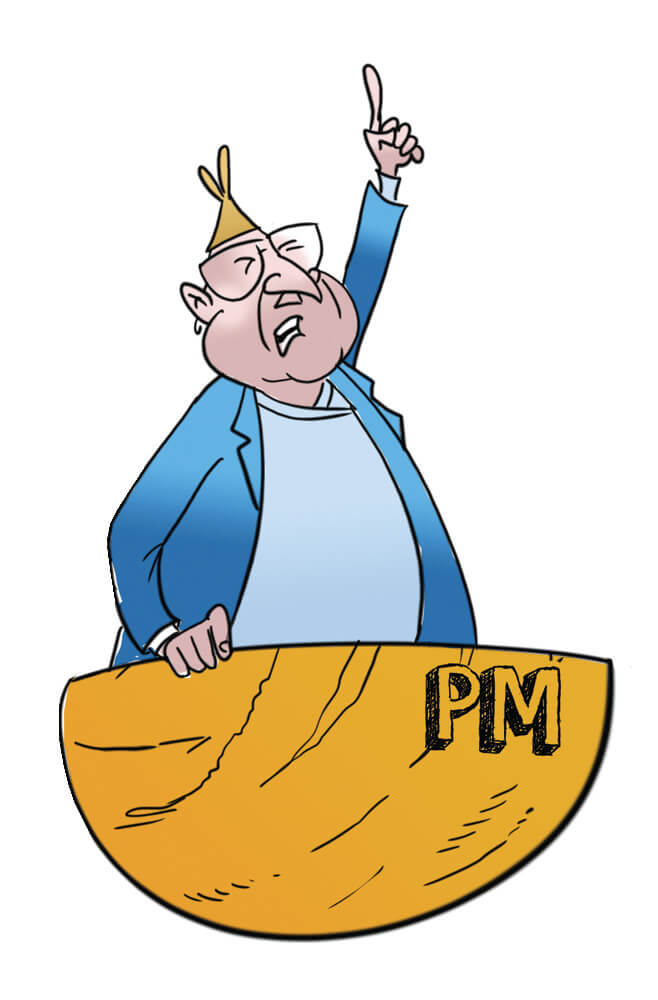
Politics is supposed to be a mechanism through which the most competent leaders are selected to manage a nation state for a time-bound period. The selection is made by election, so that the candidates who show most promise through stated goals or performance get voted to power and gain legitimacy.
But politics often degenerates into a cynical game of attaining and retaining power. Having power then becomes an end in itself, with no larger goal. And if the stakes are high enough, some will use violence to attain that power. History is replete with massacres, assassinations, wars and revolutions aimed at regime change by force.
In Nepal, barely six years after the pro-democracy street protests turned the king into a constitutional monarch, the Maoist faction of the Nepal Communist Party got so impatient for power that it waged an armed struggle. Stalemated with the army ten years later at great human cost, the Maoists signed a ceasefire, contested two elections, won and lost, and then merged with the centre-left UML in 2017 under the new Constitution.
In the past two-and-half years the NCP has been in power, there has been constant jostling between the two main leaders in the party: Prime Minister K P Oli and co-Chair Pushpa Kamal Dahal. Like all apha males may beat their chests and talk tough, both are deeply insecure about their positions and fear public distrust.
Dahal got former UML leaders who never liked Oli anyway over to his side, including ex-prime ministers Madhav Kumar Nepal and Jhalnath Khanal as well as Bhim Rawal and Bamdev Gautam. For his part, Oli wooed former Maoists by giving them ministerial berths in his Cabinet.
The wily Oli had become dominant by riding a nationalist wave following the Indian blockade, and keeps resorting to that formula when he is politically cornered. Which is what he did in the ‘war of the maps’ against India last month over the Limpiyadhura dispute.
With his back against the wall as the rebellion spread within the NCP, he deliberately escalated the dispute with India to buy time. It worked. Not only did that defuse the crisis, but he even got unprecedented unity across party lines to back Nepal’s claim to the piece of territory occupied by India.