We have long speculated on the moment when the shift of global leadership from the United States to China would take place. From Washington to Beijing for the political power, from New York to Shanghai for the economic one. It seems that we are witnessing it now.
Some saw the Beijing Olympics (2008), others marked the Asian Investment and Infrastructure Bank (2015) to replace the Bretton Woods system, a fundamental pillar of North American hegemony.
Presidents Obama and Xi Jinping confirmed a de facto bipolar global regime manifested in the two leaders’ pact on climate change that made the 2015 Paris Agreement feasible.
However, with the arrival of Donald (Make America Great Again) Trump there was an escalation of this quarrel for global leadership. The trade war between the two countries, with the World Trade Organisation held hostage, or the open battle over the control of 5G, with the Huawei controversy at its the core were two recent examples.
Climate connection to COVID-19, Rastraraj Bhandari
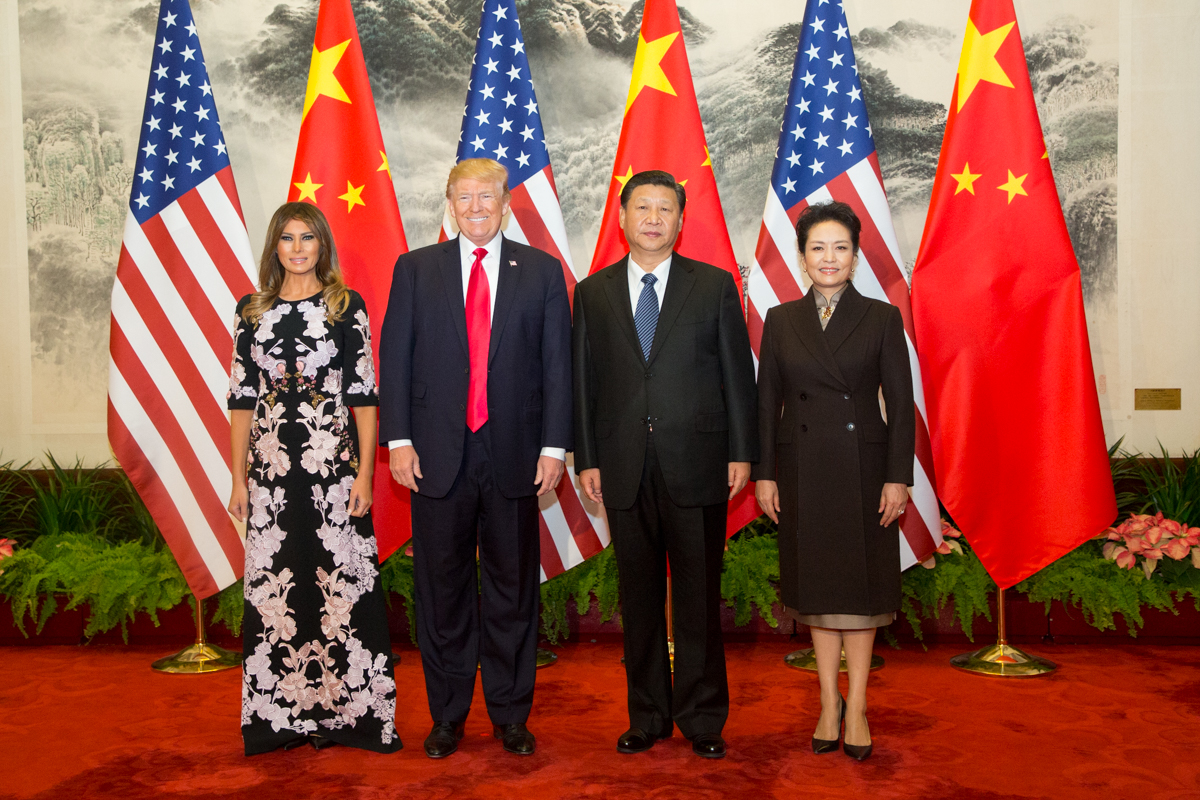
China is on a full-fledged offensive to increase its presence and influence in the multilateral system to fill a vacuum left by the Trump administration, by obtaining important positions to influence these institutions. The US administration has vacated for more than three years the position of ambassador in Geneva, a city with most diplomatic activity in the world.
China stepped in by appointing a new high political-profile ambassador in November last year. However, the positions of the battles for the future of the WTO or the leadership of the International Telecommunication Union (key in the management of satellite orbits, the management of radio space or digital world governance) were already well advanced at that time.
Then, in November last year something happened in the Huanan market in Wuhan. But it was not until 31 December that an ‘outbreak of an unknown pneumonia’ in this city was reported to the World Health Organization (WHO).
Pompeo accuses WHO of “failing in basic duty”, Kunda Dixit
The Huanan market was closed down on 1 January. The following day the new virus was confirmed, with the technical name of SARS-CoV-2. On 16 January, Japan reported its first case, on the 17th it was Thailand did. Taiwan and the United States reported first cases on 21 January, and France on 24th.
On 30 January the WHO declared an International Public Health Emergency, the same day that Italy reported its first case. The next day it was Spain at the same time that the virus was already spread in India, Russia, the Philippines or Australia. On 11 March the WHO declared the global pandemic and, while the world trembles, global leadership transits.