

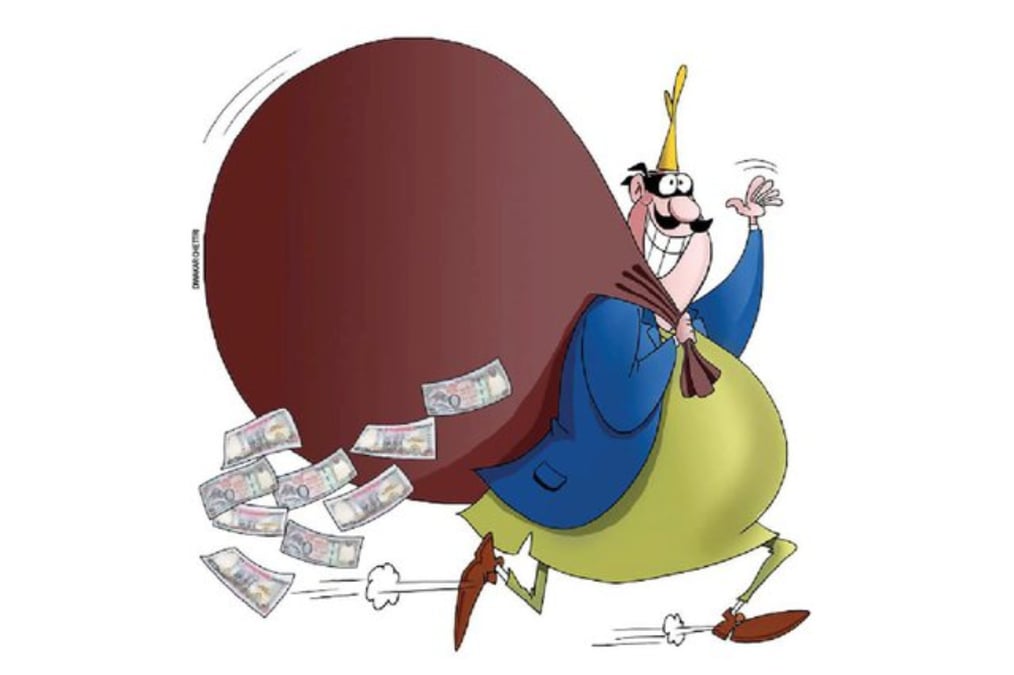
I have just finished reading the recently published Cuckooland: Where the Rich Own the Truth, by Tom Burgis that was recently reviewed in this paper, and examines the phenomenon of corruption across several continents, and the career of powerbroker Mohamed Amersi.
In the Nepal section, the focus is on Amersi’s links with prominent Nepali ‘businessman’ Ajeya Sumargi, the activities of the Nordic telecommunications giant TeliaSonera and its Nepali network Ncell, and Amersi’s relationship first with the royal family and after 2006, with certain prominent politicians, including the Maoist leader formerly known as ‘Prachanda’.
It is well recognised in Nepal that corruption in high places is one of the major features of Nepal’s political economy. In February, while I was visiting Kathmandu for the first time in five years, there was an editorial in The Kathmandu Post headed ‘Rotting from the Head’ which suggested that ‘frustration with corruption, mismanagement and bad governance is reaching a boiling point’.
The latest Transparency International report showed that the corruption perception index (CPI) for Nepal was 34 out of 100, marginally lower than the previous year. In the review period, Prachanda (the CPN Maoist Centre chair Pushpa Kamal Dahal) was prime minister until mid-July 2024 when he was replaced in the merry-go-round of Nepali politics, by UML chief K P Oli, the current prime minister.
Several decisions of the Oli-led government, including one to build his party’s central office with funds from Min Bahadur Gurung of Bhatbhateni and the Giribandhu Tea Estate scam related to the illegal use of land exceeding the prescribed ceiling, were just the latest corruption cases linked to the prime minister.
Pushpa Kamal Dahal claimed that the two other major parties, the Nepali Congress (NC) and the UML had plotted his removal because of his ‘campaign against corruption’, but he himself was compromised by colleagues like Krishna Bahadur Mahara, who was implicated in a gold smuggling case and, arguably, by his own dealings with Ajeya Sumargi and TeliaSonera, that are discussed by Tom Burgis in Cuckooland.
The Rastriya Swatantra Party (RSP) emerged dramatically as the fourth largest party in the House of Representatives in 2022 on a platform of corruption control and good governance. But its president, Rabi Lamichhane, had been suspended as a lawmaker and faces charges of embezzlement of the deposits of cooperatives in five districts.