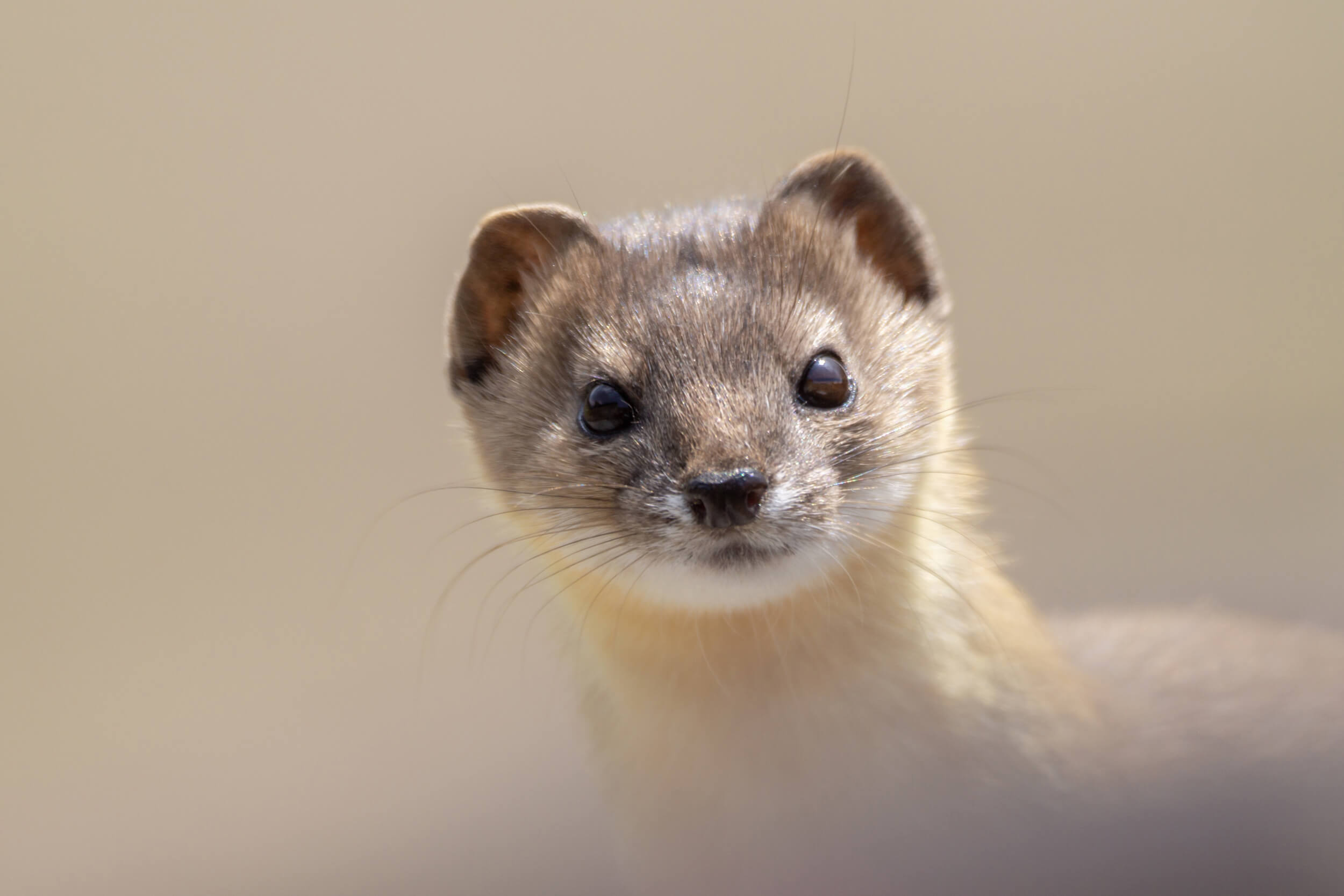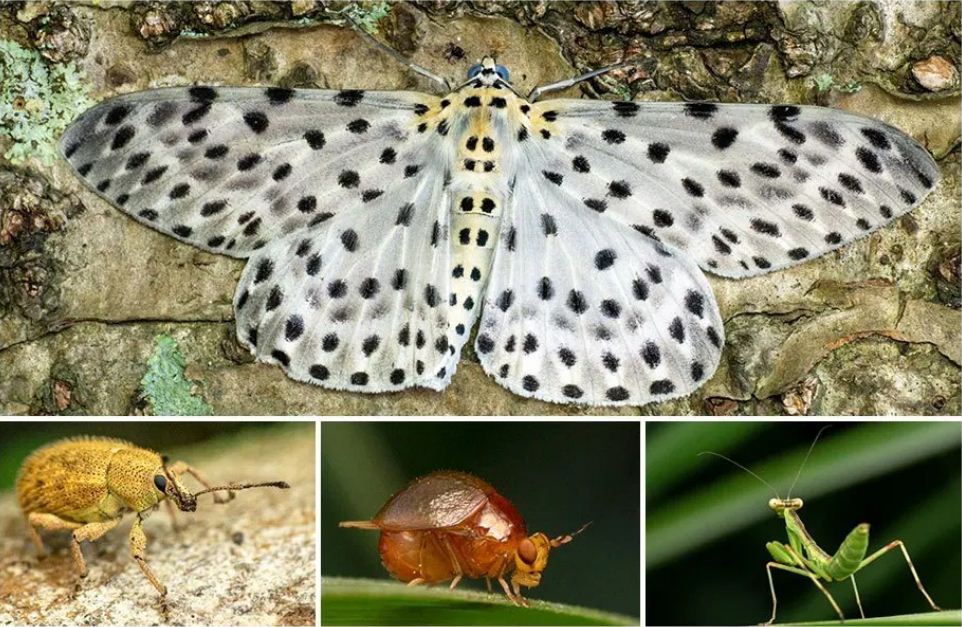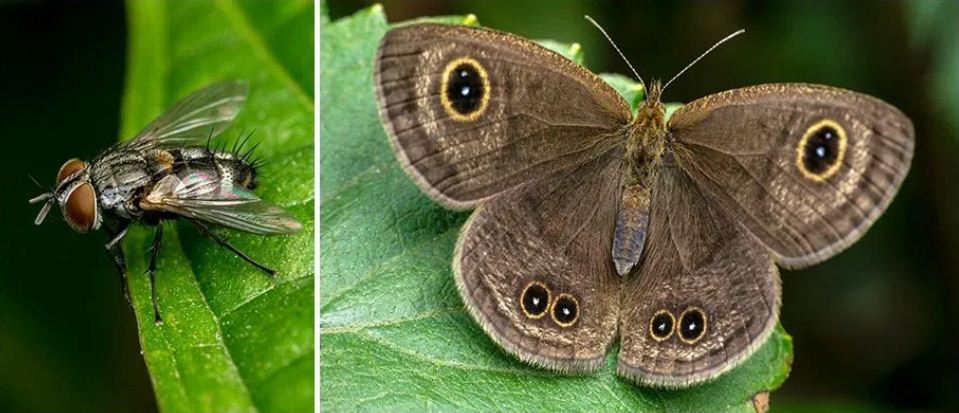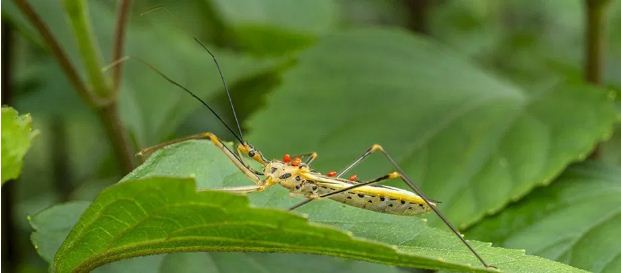
We have been home now for more than four months, and as a blogger, nature and wildlife photographer, the shelter in place restrictions have been excruciating. The great outdoor was always my comfort zone, and now being confined within the home has forced me to reflect on the work I was doing and explore ways to enhance it.
The whole world is suffering from the COVID-19 pandemic, and Nepal is also affected by the great disruption. The spread of the virus was supposedly being controlled by the lockdown, but now it seems otherwise. The total number of cases and fatalities in Nepal continue to rise.
With all assignments and projects probably cancelled for the rest of the year, I fell back on macro photography, which was what got me started into capturing images of nature and wildlife in the first place back in 2008. It was time to challenge myself again.
And where better than the small patch of greenery outside my home in Kathmandu. It is alive with insects, arthropods, reptiles of various shapes and sizes walking, hopping, buzzing, fluttering, and flying around under the monsoon sky. The patch is bursting with life, especially during the rainy months.
Many people recoil at the sight of insects and spiders, and we are culturally hardwired to regard them as being harmful. Some of you might get goosebumps and a chills down the spine even thinking about them. I share this feeling when it comes to leeches, I admit, but insects and other critters in the garden form a complex urban ecosystem. The very fact that they are still around means we have not completely obliterated them with chemicals of mass destruction like insecticides.
Charismatic mammals like tigers, pandas and rhinos get all the attention in nature programs. The smaller members of the animal kingdom tend to disappear underfoot. But when we talk about conservation, forests, and wildlife, we have to include everything in it, because they are all inherently interlinked. Even the tiniest insects are part of a larger whole in nature, each of them contributing in their small way to biodiversity and the health of nature. The aphid is as important as the bat, if not more. And we are not even talking about microscopic organisms that cannot even be seen with the human eye.
And as the COVID-pandemic has shown, we ignore nature at our own peril. The spread of zoonotic infections is happening because of modern industrial society ignoring and destroying the natural world. The biosphere is being sterilised with urban sprawl, monoculture crops, or plantations. Factory farms are mass producing meat, and there are 25 billion broiler chicken worldwide at any given time. Chicken bones will be the lasting legacy of the anthropocene era.
"Teaching a child not to step on a caterpillar is as valuable to the child as it is to the caterpillar," says agronomist Bradley Miller.
Nature at home
Lockdown mornings in Kathmandu start early for me as I am awoken by the kooo–ooooo kooo–oooooo song of the Asian Koel that perches on the Persian Lilac tree nearby. This bird has been visiting this neighbourhood every March to April, and makes its presence known far and wide.
You must have heard of the cuckoo that was geo-tagged and followed on its annual 12,000km migration from southern Africa, across the Arabian Sea, the Indian Subcontinent, and through most of Asia to its breeding ground in Mongolia – the longest bird migration ever recorded. I don’t know where our Koel migrates from.
These mornings the song of the Asian Koel is often overlapped by the Oriental Magpie Robin’s long symphonies from a treetop which opens up the dawn into a beautiful brand new day. Because of the lack of traffic till recently, the cacophony of vehicle horns, machines, loud music, construction nearby was replaced by an all-day silence – broken only by bird songs. And if you hear them, you can also see them.
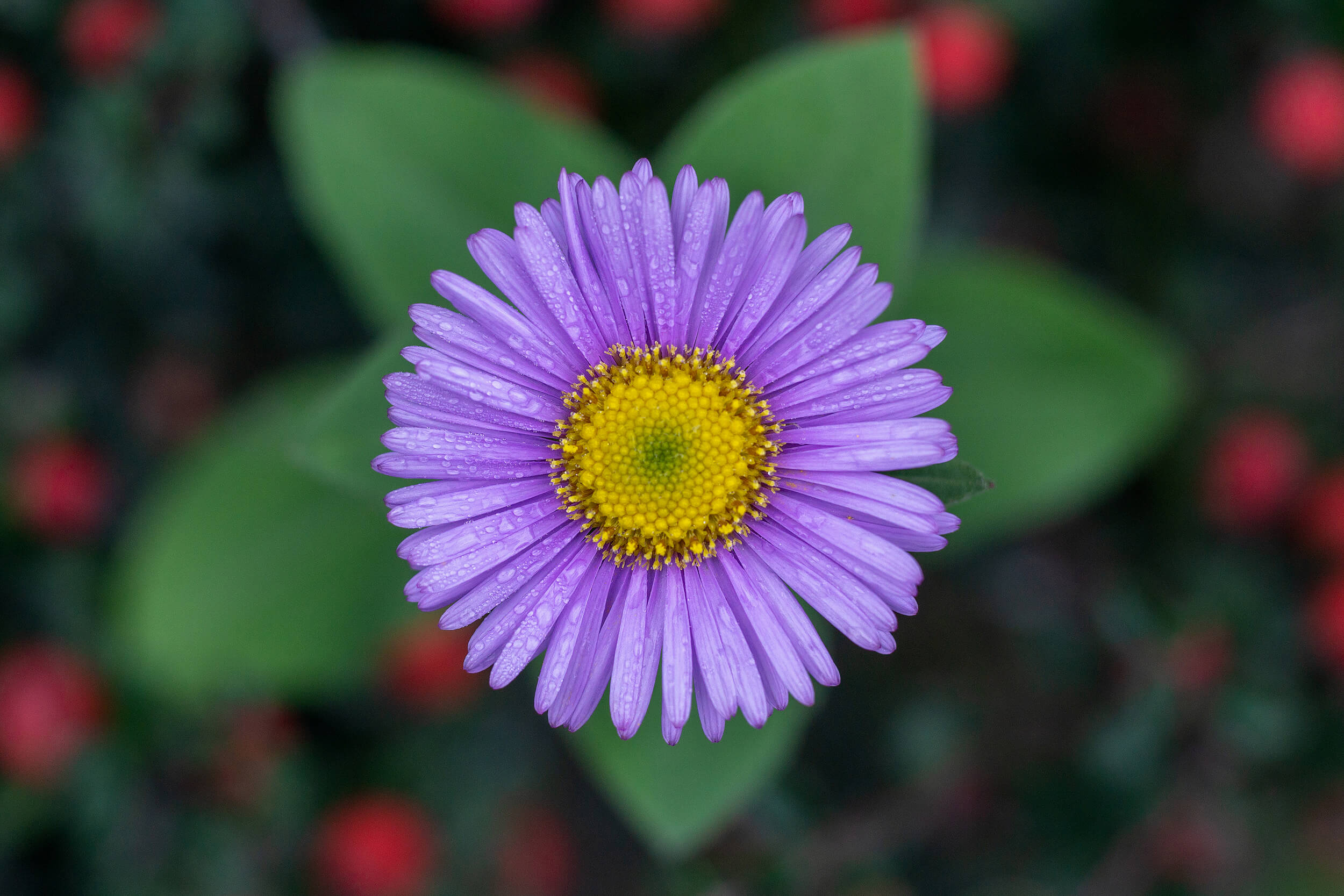
With the first rays of the sun hitting the dew-moist flowers, Honey Bees are out busily buzzing about. A soft and moist breeze pushes through the Holy Basil, disrupting tiny Sweat Bees from landing on the small flowers – they navigate to land on the swaying stamens while pollen sticks to their tiny hair (scopae) and then rides to the next flower to pollinate it, a process repeated over and over.
As I sit nearby observing their daily rituals, a parasitoid Spider Hunting Wasp (an insect whose larvae live as parasites which eventually kill their hosts) lands on the ground, and moves around from one shaded area to the other searching for prey and ultimately making its way to my thigh before flying away.
A moment later it is dragging a paralyzed spider towards its burrow in the nearby grass patch. The parasitoid wasp will lay its egg on the abdomen of the spider, and the larvae will feed on the spider as it grows.
While I explore this magnificient macro world, the life cycle of insects become even more interesting, and I realise how human disturbance can hamper a species, which in turn can affect the food chain.
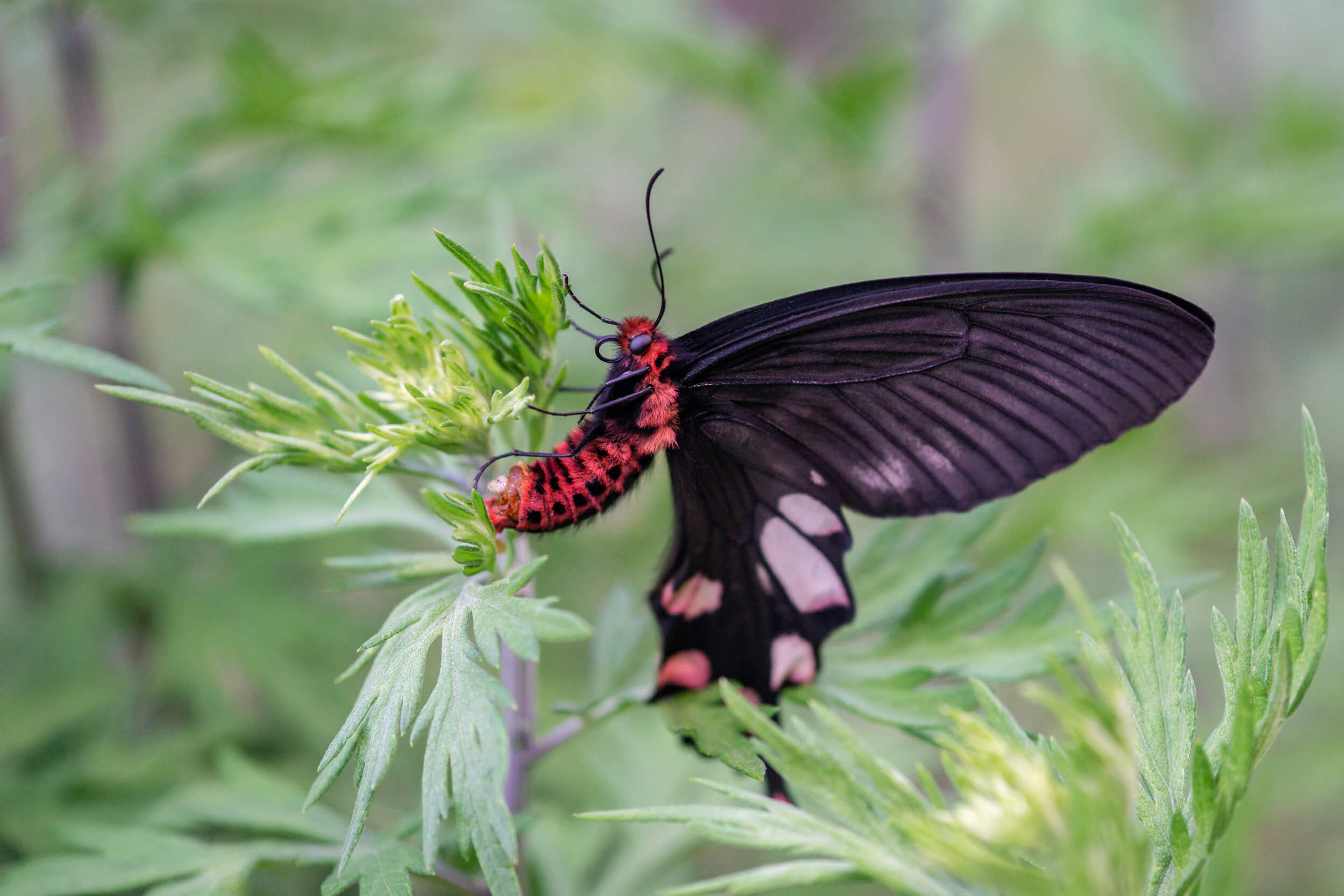
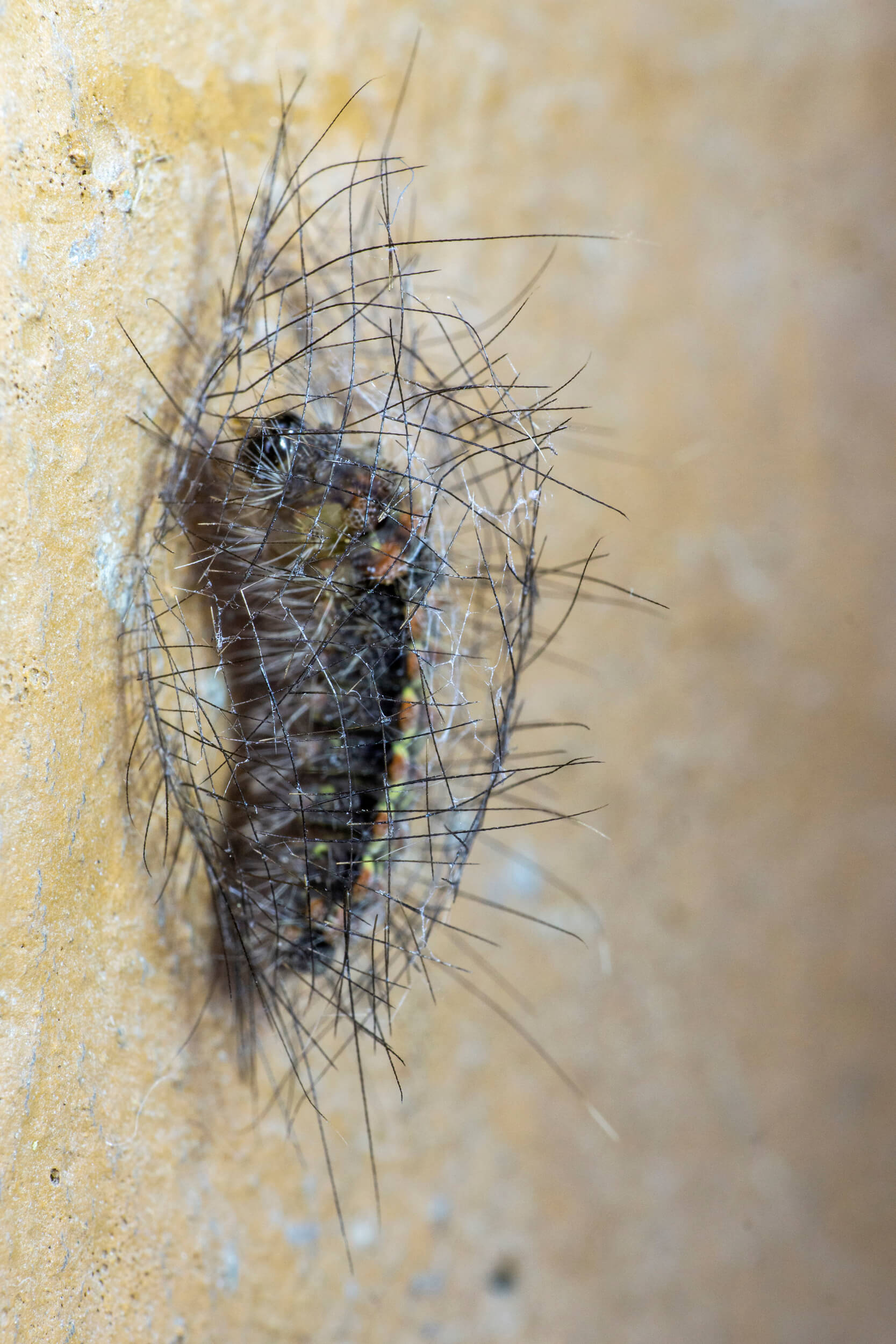
This is also the season for butterflies, and they are flapping about in force. I observe a caterpillar constructing a cocoon cage before going into the pupa incarnation of its metamorphosis. The constructed cage looks very elaborate, and this was my second time seeing such a structure after almost six years. As I slowly get accustomed to the patterns in the foliage with daily observations, I notice more life forms and in their small worlds.
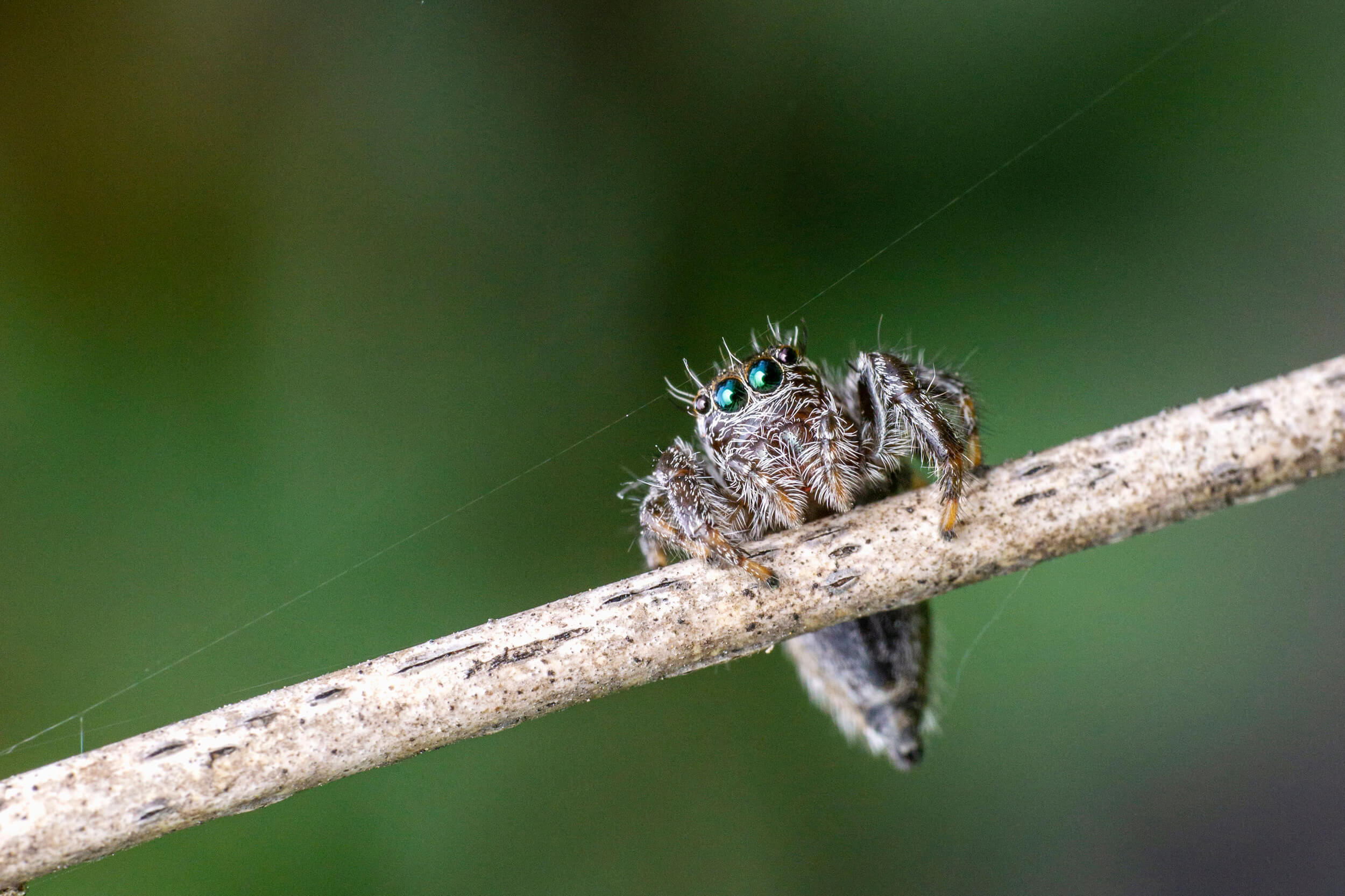
Documentation through video also became a priority during the lockdown. I stumble upon a jumping spider, and this became a moment for the next two days of seeing the world from its perspective. I started filming it from the instant it emerged from a dead leaf where it was sheltering, scanning around for prey, and strutting around gingerly.
It felt like I was filming a character following a script, but this actor absconded on the third day and thus my film script for this character stayed incomplete. Documenting nature is difficult when you are filming on your subject's terms and conditions, not yours. This is how it is supposed to be, should be and, how I like it to be.
As I look around the garden for other bugs to take portraits of, I am surprised to find so many species of spiders in such a small area. One of them is a tiny orb-weaving spider, making its web. The engineering instinct with which it instinctively wove the flimsy silk into the web with its hind legs was fascinating.
While the small world can take up all my attention, from time to time I look up at the nearby tree for the tsee-tsee notes of the Oriental White-eyes making a hopping flight from another tree in the distance. The bird cautiously jumps from one branch to the other, browsing through the countless flower buds for nectar, and also dining on hapless insects that are also trying to do the same.
Common Tailorbirds also frequent my tree to feed, and sing at the top of their voices cheeup-cheeup-cheeup before vanishing again. They must be taking a strand of leaf to weave into a nest that they are meticulously crafting on another nearby tree. Far in the distance, the Koel is once more calling for a mate, but has been hard to spot after May when it seems to have moved on. It could on its way to Mongolia after its brief stopover.
The days close with flocks of parakeets streaking across the sky like fighter bombers, to their nesting tree. They are always on the same flight path, in formation on an eastweard heading and announcing their passage with loud self-important squawks.
They seem to be proliferating. Ichangu and Nagarjun have resident Slaty Headed Parakeets, and on the eastern edges of Kathmandu Valley there are Rose-Ringed Parakeets along with Alexandrine Parakeets.
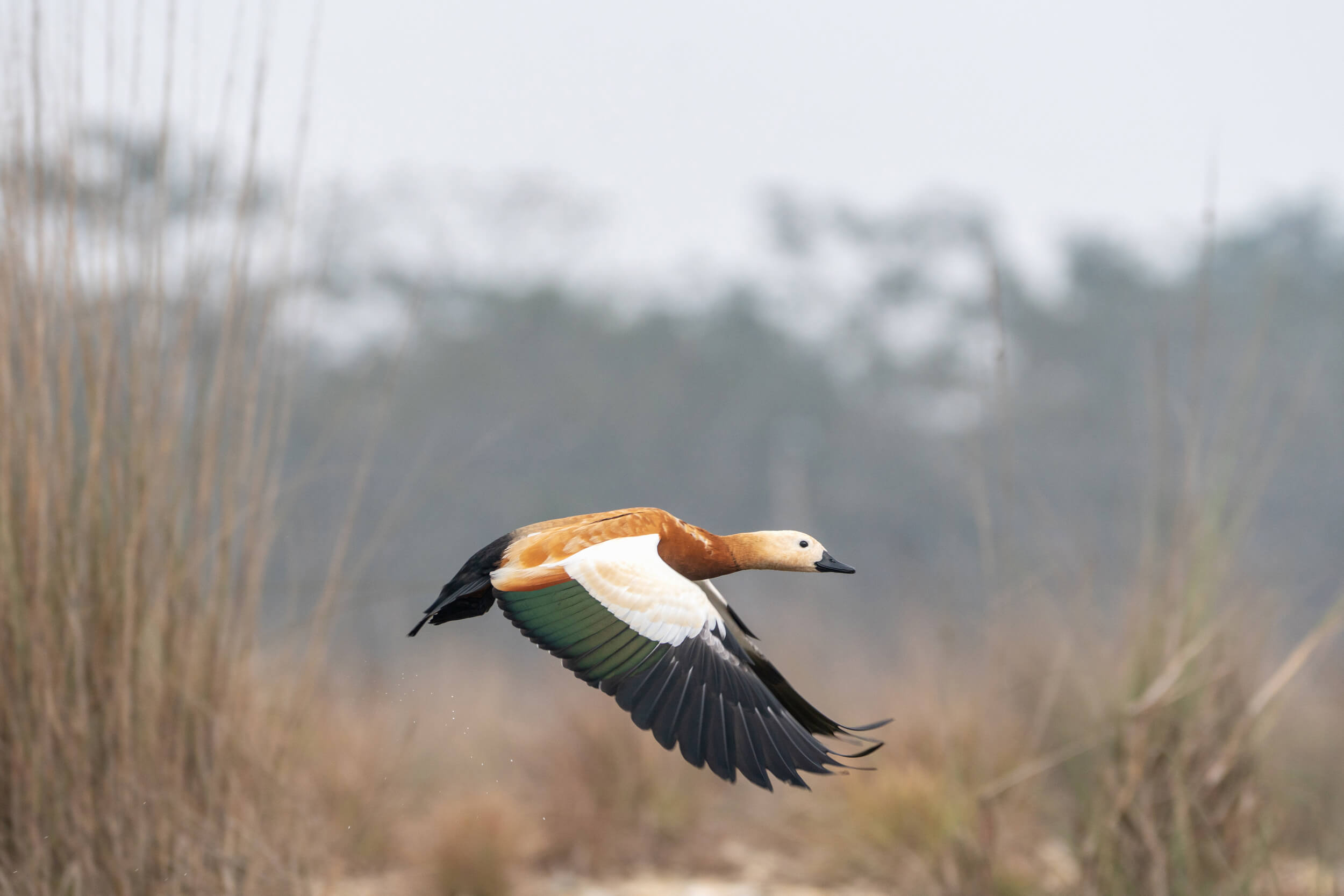
Seeing new birds around where I live is encouraging. The decrease in noise level along with fewer people moving around during the lockdown has made it possible to notice them. I was able to spot a Grey Treepie, Blue-throated Barbet, Spotted Dove, and more Red-vented Bulbuls in the past months – birds that were relatively rare before.
Then there are the many species of bees, hornets and wasps, damselflies and butterflies. There are insects that amazingly walk on water, so light that they keep afloat through surface tension. The dragonflies on their jagged flight plans swoop down to take a sip of water while airborne, creating tiny ripples on the water from the propwash.
And at night, the Black-spined Toads are up and about croaking loudly, hoping that there are some eager females within earshot. They navigate their way through the maze of potted plants on the porch, and then hop away in search of a pond to plop into.
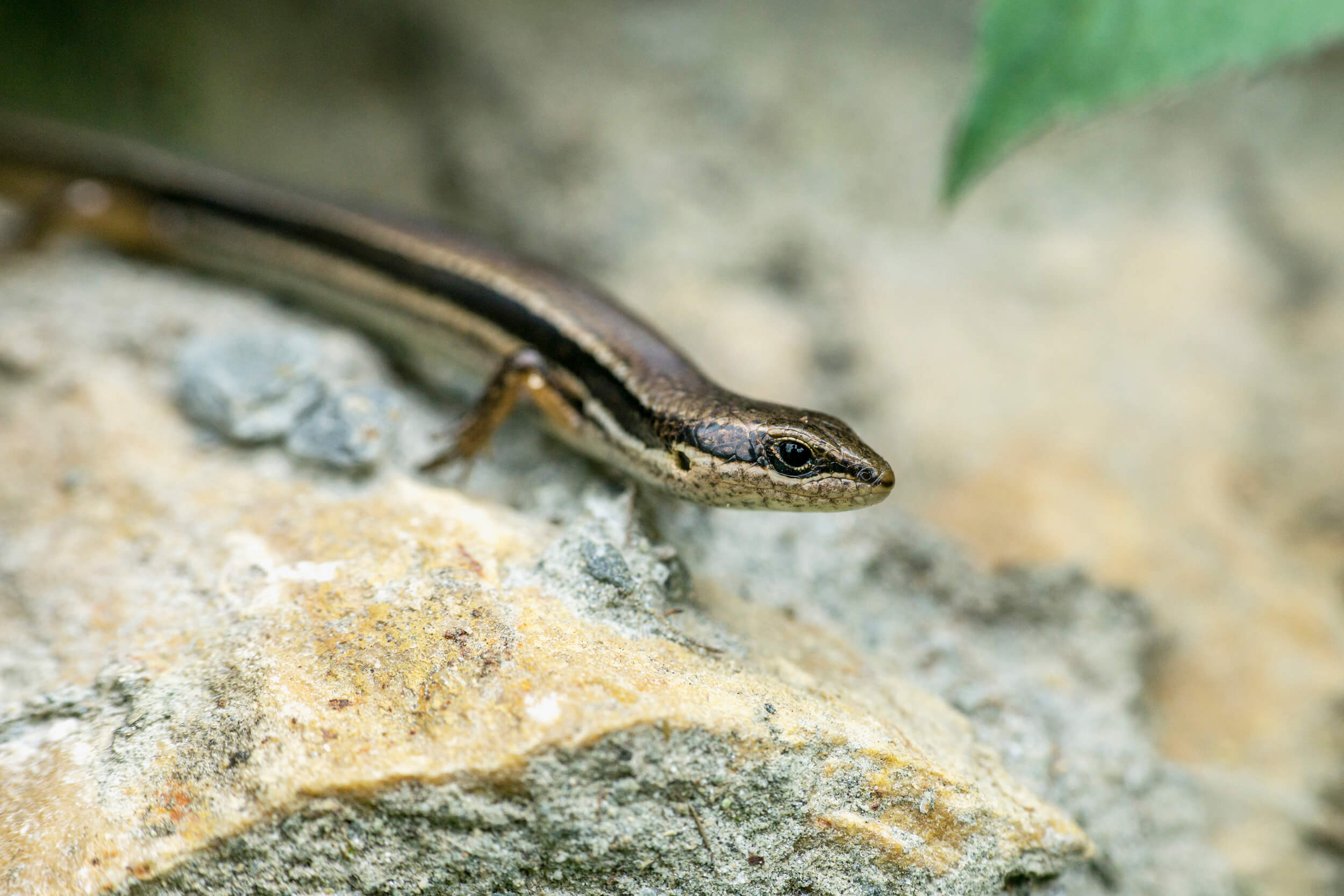
The male Garden Lizards appear in the early morning sun to greet the sun, and showing off their crimson head and black throats to attract females who seem to go for that kind of pigment. A ground Skink pokes its body out from a crack in the rock wall to bask in the warm sun, and I take a closeup look at the guy since I had not seen him in such proximity in my location.
The monsoon is also the Slug season, and they are making their ultra-slow locomotion across the green patch, and if it has rained overnight they seem to want to climb the wall of the house for no explicable reason. Sometimes the sun comes up before they are where they want to go, and they dry up, their dessicated bodies falling down to the grass below. There used to be lots of Ground Beetle larvae that loved to hunt and feast on slugs when we were kids, but it is rare to seem them these days.
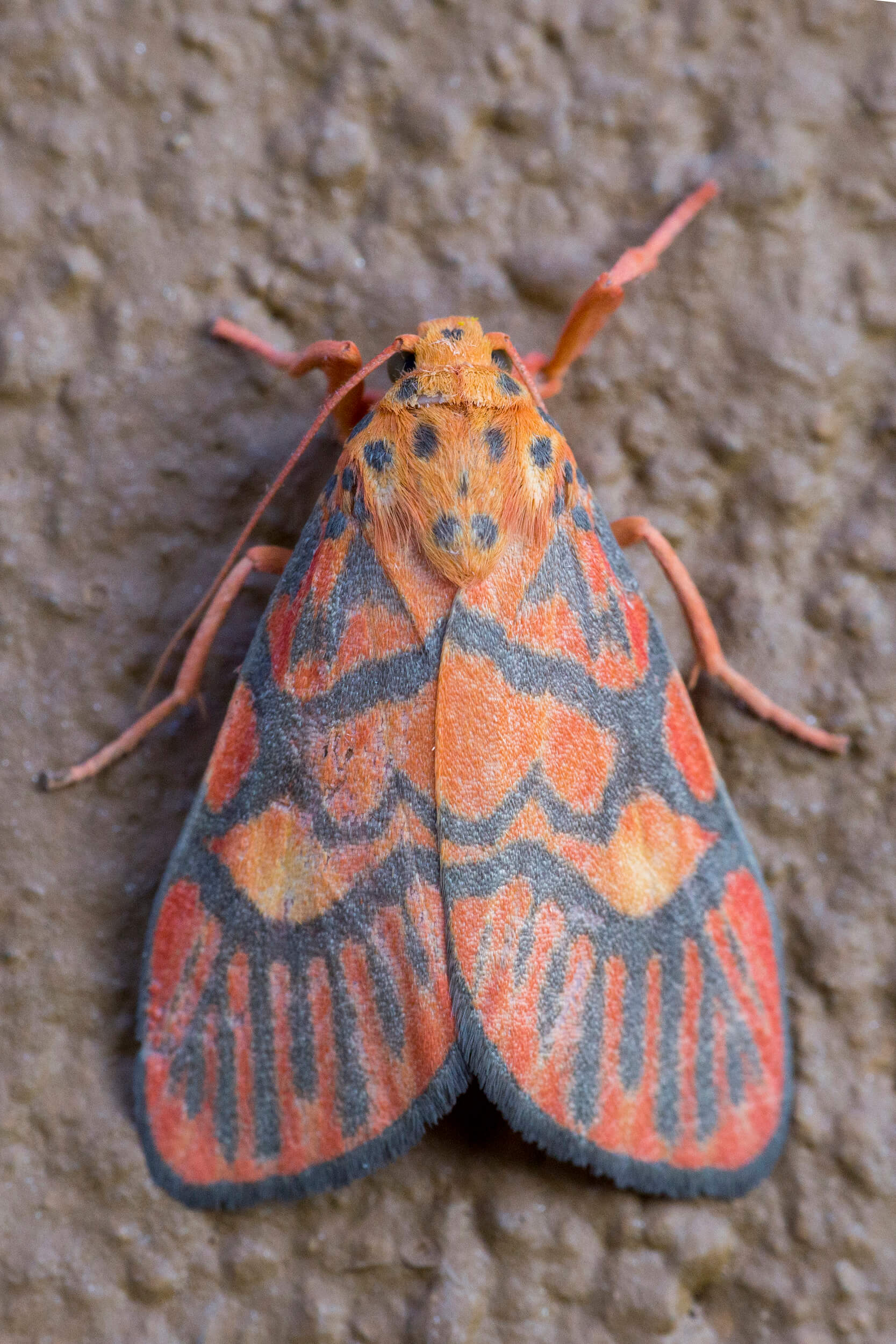
As the day comes to a close, there are many variants of moths that are attracted by the fluorescent light in the porch. The sheer number of moth species is staggering, a vastness and richness of wing patterns that is much more than I ever expected. By this time, our resident Barred Owlet is up and about. After being hungry all day, it is in a hurry to feed and is giving a wild shriek from its perch on an electric pole on the street.
Despite becoming more and more a concrete jungle, Kathmandu still has hidden small worlds where wild life clings on to patches of nature. It just needs a keen observer to find them, and to get the reassurance that despite everything they are going about their business in a human-dominated world.