
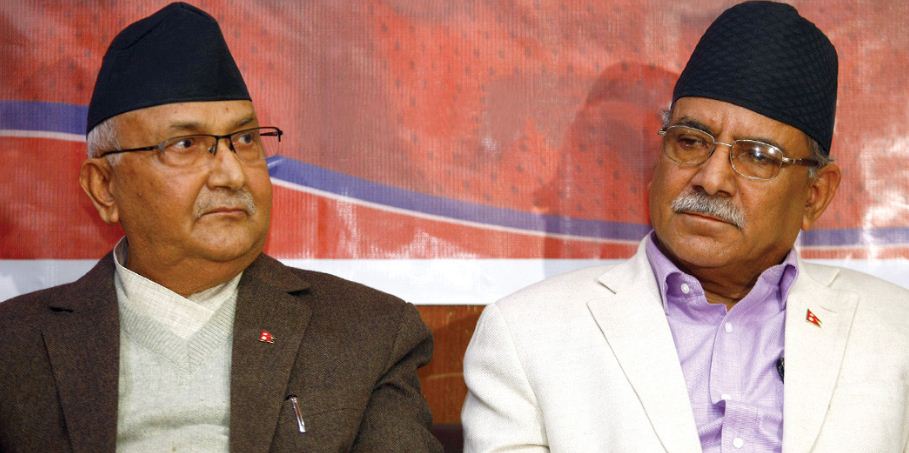
Why Prime Minister K P Oli decided to use the birth anniversary of Nepali poet Bhanubhakta Acharya on Monday to get embroiled in what he should have known would create a huge backlash in India is not known. We can only speculate.
Oli put forth the wild theory that the mythical Hindu god Ram was born in Nepal, and that the kingdom of Ayodhya where his family ruled was actually in present day Chitwan district near the Indian border. Never mind that neither Nepal nor India existed at that time.
The prime minister may have unintentionally blurted it out because he had a sympathetic physically-distanced and mask-wearing audience that was laughing at all his previous repartees. After all, it was a function celebrating the Nepali language as one of the unifying pillars of nationhood.
Either that or the reference to Ayodhya was a trial balloon and an attempt to fall back on ultra-nationalism. This has always been his default button whenever he faces a domestic political crisis, or challenge to his authority from rivals within his own Nepal Communist Party (NCP).
Either way, the remarks have been greeted with understandable outrage in India which is governed by Prime Minister Narendra Modi’s Hindu-right BJP that has itself politicised the Babri Masjid-Ram Janmabhoomi temple at Lord Ram’s nativity site.
In Nepal also, the utterance backfired on the prime minister who has been ridiculed non-stop on social media. Even Oli’s own supporters have called the remarks ill-timed and detrimental in getting Nepal-India relations back on track.
If it was a calculated move on Oli’s part, it could have been an attempt to get back at Indian television news channels which have been demonising him ever since he confronted India over a sliver of territory on Nepal’s remote northwestern corner that is occupied by India.
Faced with brewing mutiny led by co-chair Pushpa Kamal Dahal in May, Oli used the anger in Nepal against the Indian move and defied New Delhi by getting all parties to amend the constitution and use the new map in Nepal’s national emblem.
That bought him some time, but faced with another challenge in the party’s Standing Committee last month, he accused New Delhi of trying to unseat him, and threatened to split away from the party by re-registering the old UML at the Election Commission.
Chinese Ambassador in Nepal Hou Yanqi then became active, and started a slew of meetings with Nepal’s President Bidya Devi Bhandari, Dahal and NCP comrades opposed to Oli. She carried a message from Chinese President Xi Jinping saying that splitting the part would be a bad idea. Such open involvement by a Chinese ambassador in an internal party power struggle used to be unheard of.